
Cholatse Expedition
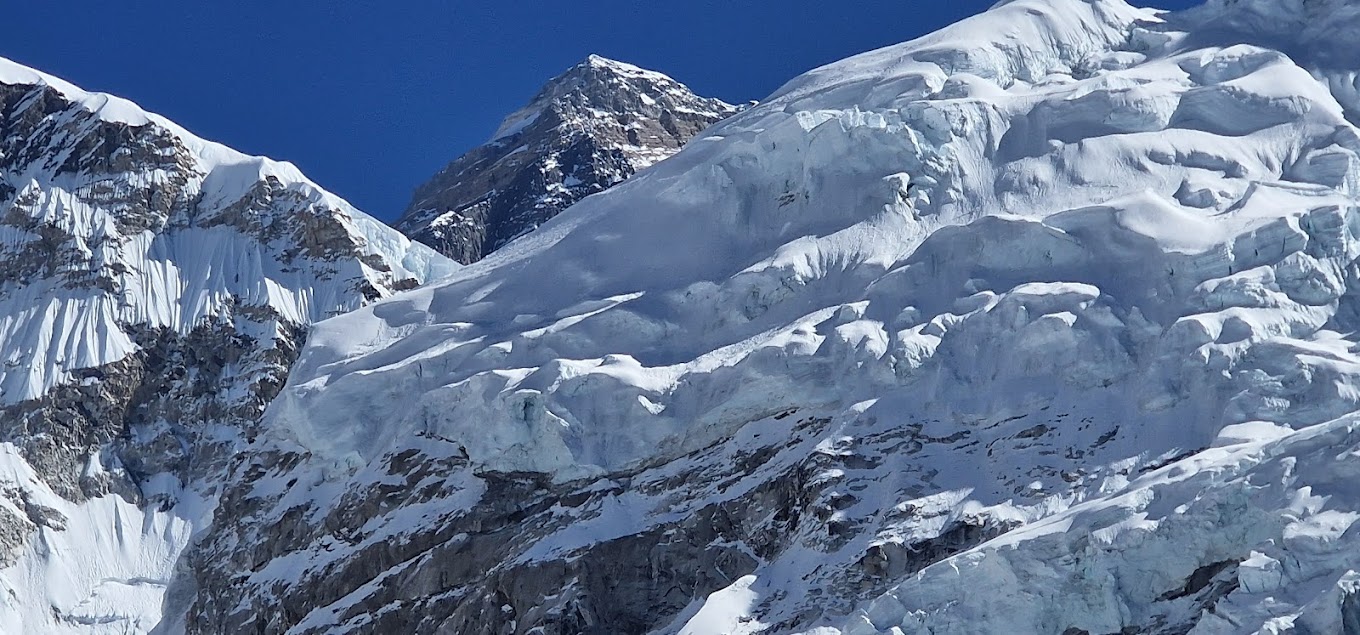
Cholatse Peak (6,440m) — a striking technical summit in Nepal’s Khumbu region, rising above the Dudh Koshi Valley and surrounded by the dramatic peaks of Everest, Ama Dablam, Taboche, and Lobuche.
Expedition Overview
What is the Cholatse Expedition?
Cholatse stands at 6,440 metres in the Khumbu region of Nepal, rising between the Gokyo and Khumbu valleys as one of the most technically demanding 6,000m peaks in the country. Also known as Jobo Lhaptshan, Cholatse is connected by a long ridge to neighbouring Taboche, and its southwest ridge route is widely regarded by climbing operators as harder than Ama Dablam, graded WI2+ M3-4 A1-2, a level of mixed ice, snow, and rock climbing that places it firmly outside the standard NMA trekking-peak category.
AltiPro's Cholatse Expedition follows the classic Khumbu approach through Namche and the Gokyo valley before descending to a dedicated Base Camp below the mountain's southwest ridge. From Base Camp, the route negotiates a glacier approach and a steep, fluted headwall to Camp 1 at 5,750m, then continues along an exposed, sinuous ridge of mixed rock and snow to a high camp before the final summit push at 6,440m. The expedition spans 22 days from Kathmandu to return.
Cholatse is rated Serious to Advanced. AltiPro requires climbers to have prior experience on comparable technical peaks, such as Ama Dablam or Baruntse, along with multi-pitch rock climbing to 5.9–5.10 and ice climbing to WI2–WI4. A previous NMA trekking peak alone, such as Island Peak or Lobuche East, is not sufficient preparation for Cholatse, and AltiPro does not recommend this expedition as a first Himalayan technical climb.
About Cholatse — One of the Khumbu's Great Technical Peaks
Cholatse rises between the Gokyo and Khumbu valleys, connected by a long ridge to Taboche (6,495m), with the Chola glacier descending from its east face. The approach follows the same trail used for the Gokyo Lakes and Cho La Pass trek as far as the upper Khumbu, before dropping into the quieter country around Dzongla and Dragnag, an area that sees a fraction of the traffic on the main Everest Base Camp trail.
Cholatse was first climbed in 1982, and its southwest ridge remains the standard line today: a serious undertaking involving a glacial approach, a 200m steep fluted headwall to Camp 1, and a long, exposed ridge of mixed rock and snow above. Climbing operators consistently rank it as technically harder than Ama Dablam, which is why AltiPro treats it as a next-stage objective for climbers who have already completed comparable technical peaks rather than a standard trekking-peak progression.
From high on the mountain, climbers look across at Everest, Lhotse, Cho Oyu, Makalu, and Ama Dablam, with the remote, rarely visited Gokyo valley spread out below.
Why Choose AltiPro Adventures for Cholatse?
Senior Climbing Sherpas on a Serious Route
Cholatse demands guides with genuine technical mountaineering credentials, not just high-altitude trekking-peak experience. AltiPro only runs Cholatse with senior climbing Sherpas experienced on the southwest ridge, and reviews each climber's technical background before confirming a booking.
Small, Focused Teams
AltiPro caps Cholatse expeditions at 6 climbers, allowing tight rope management on exposed ridge sections and a pace suited to serious alpine climbing rather than a standard trekking-peak group.
A Genuinely Remote Khumbu Objective
The approach through Dzongla and Dragnag sees far fewer climbers than the main Everest Base Camp corridor, and can be extended with a side trip through the Gokyo Lakes and Cho La Pass route for additional acclimatization and some of the finest views in the Khumbu.
Full Technical Equipment and Support
All technical climbing equipment is provided by AltiPro: ice tools, crampons, harness, helmet, rope, and mixed-terrain protection, along with cook staff at Base Camp. Climbers bring their own personal technical gear reflecting their experience level, which AltiPro reviews in advance.
Medical Support
A full medical kit at Base Camp and higher camps, with satellite communication for emergency coordination. The well-established Khumbu helicopter evacuation network provides rapid access to Lukla or Kathmandu if required.
Spring and Autumn Options
AltiPro operates Cholatse in both spring (March–May) and autumn (September–November), the two stable weather windows for the southwest ridge, though the Khumbu's weather can shift quickly at this altitude regardless of season.
The Southwest Ridge Route (6,440 m)
The standard route on Cholatse follows the upper Khumbu trail before dropping to a dedicated Base Camp and climbing the mountain's southwest ridge, one of the more serious technical lines among Nepal's 6,000m peaks.
-
Kathmandu to Namche Bazaar via Lukla (1,400m to 3,440m)
Flight from Kathmandu to Lukla, then trek through Phakding to Namche Bazaar, the Sherpa capital of the Khumbu, with a rest day for acclimatisation.
-
Namche to Gokyo via Dole and Machhermo (3,440m to 4,790m)
The trail climbs the Gokyo valley through Dole and Machhermo to Gokyo, with an acclimatization day and an optional ascent of Gokyo Ri for views across four of the world's highest peaks.
-
Gokyo to Dzongla via Dragnag and the Cho La (4,790m to 4,830m)
Cross the Cho La, a glaciated high pass, and descend to Dzongla, entering the quieter country below Cholatse's southwest face.
-
Dzongla to Cholatse Base Camp (4,830m to 5,100m)
A short trek leads to AltiPro's established camp below the southwest ridge, with several days built in for gear preparation, technical training, and acclimatization before the climb begins.
-
Base Camp to Camp 1 (5,100m to 5,750m)
The route crosses a lower glacier before a steep, 200m fluted snow and ice headwall leads to Camp 1 on the southwest ridge proper, the technical crux of the lower mountain.
-
Camp 1 to Summit (5,750m to 6,440m)
Above Camp 1, a long, exposed ridge of mixed rock sections and sinuous snow terrain leads toward the summit, with a high camp established before the final push. Summit day follows the narrowing ridge to the top of Cholatse at 6,440m, with sweeping views across Everest, Lhotse, Cho Oyu, Makalu, and Ama Dablam.
How Difficult is the Cholatse Expedition?
Cholatse is graded WI2+ M3-4 A1-2, broadly equivalent to alpine grade D+/–, or rock climbing in the 5.9–5.10 range, and is widely considered more technical than Ama Dablam. The climb demands sustained mixed climbing skill, comfort on steep, exposed terrain with significant drops, and prior experience on comparable technical peaks. AltiPro does not recommend Cholatse for climbers whose only prior experience is a standard trekking peak.
Best Season for the Cholatse Expedition
Spring (March–May): Generally stable conditions on the southwest ridge, though the Khumbu's weather can change quickly at this altitude and season length is closely monitored.
Autumn (September–November): The more commonly favoured window, with settled post-monsoon weather and firmer ridge conditions. October and early November are considered the preferred period. AltiPro operates both seasons, contact for current dates and route conditions.
Cholatse Expedition Cost
Full-service Cholatse expedition — Khumbu approach, all technical climbing equipment, and full Sherpa support included.
Includes NMA climbing permit, Sagarmatha National Park entry, TIMS card, Government Liaison Officer, full Sherpa support to summit, Base Camp and higher-camp climbing equipment (fixed ropes, ice tools, crampons, harness, helmet), Base Camp cook service, and a complete medical kit. International flights, personal technical gear, and Lukla domestic flights are not included. Contact AltiPro for a complete Cholatse climbing cost breakdown.
Cholatse Expedition — Frequently Asked Questions
Common questions about climbing Cholatse with AltiPro Adventures.
How difficult is Cholatse?
Cholatse is graded WI2+ M3-4 A1-2, roughly equivalent to alpine grade D+/– or rock climbing at 5.9–5.10, and is widely considered more technical than Ama Dablam. It involves a glacial approach, a steep fluted headwall to Camp 1, and a long, exposed mixed ridge above.
Is Cholatse suitable for a first Himalayan climb?
No. AltiPro requires prior experience on comparable technical peaks, such as Ama Dablam or Baruntse, plus multi-pitch rock climbing to 5.9–5.10 and ice climbing to WI2–WI4. A standard NMA trekking peak alone, such as Island Peak or Lobuche East, is not sufficient preparation.
What is the Cholatse climbing cost?
AltiPro's full-service package includes permits, a liaison officer, Sherpa support, Base Camp and climbing equipment, and Base Camp services. Contact AltiPro for a current, detailed cost breakdown.
Can Cholatse be combined with the Gokyo Lakes or Everest Base Camp trek?
Yes. The approach shares the trail used for the Gokyo Lakes and Cho La Pass trek, and AltiPro can extend the itinerary toward Everest Base Camp for climbers wanting additional acclimatization before the technical phase begins.
What technical skills are needed to climb Cholatse?
Solid mixed climbing ability across snow, ice, and rock, fixed-rope and multi-pitch experience, and comfort on steep, exposed ridge terrain with significant drops are all essential. AltiPro assesses each climber's technical background before confirming a Cholatse booking.
How long is the Cholatse expedition?
22 days from Kathmandu to return, including the Lukla flight, the approach through Namche and Gokyo, the technical climbing phase from Base Camp to Camp 1 and above, and the summit attempt on Cholatse (6,440m).
What are the summit views like from Cholatse?
The summit ridge delivers sweeping views across Everest, Lhotse, Cho Oyu, and Makalu, with Ama Dablam prominent to the south and the remote Gokyo valley spread out below.
What permits are required to climb Cholatse?
A Nepal Mountaineering Association (NMA) climbing permit, Sagarmatha National Park entry, a TIMS card, and a Government Liaison Officer, mandatory for this category of expedition. AltiPro manages all permit applications from Kathmandu.
Detailed Itinerary
Click on each day to view details
| Day | Program | Meals | Accom. | |||||||||||||||||||||||||||||||||||||||||||||||||||||||||||||||||||||||||||||||||||||||||||||||||||||||||||||||||||||||||||||||||||||||||||||||||||||||||||||||||||||||||||||||||||||||||||||||||||||||||||||||||||
|---|---|---|---|---|---|---|---|---|---|---|---|---|---|---|---|---|---|---|---|---|---|---|---|---|---|---|---|---|---|---|---|---|---|---|---|---|---|---|---|---|---|---|---|---|---|---|---|---|---|---|---|---|---|---|---|---|---|---|---|---|---|---|---|---|---|---|---|---|---|---|---|---|---|---|---|---|---|---|---|---|---|---|---|---|---|---|---|---|---|---|---|---|---|---|---|---|---|---|---|---|---|---|---|---|---|---|---|---|---|---|---|---|---|---|---|---|---|---|---|---|---|---|---|---|---|---|---|---|---|---|---|---|---|---|---|---|---|---|---|---|---|---|---|---|---|---|---|---|---|---|---|---|---|---|---|---|---|---|---|---|---|---|---|---|---|---|---|---|---|---|---|---|---|---|---|---|---|---|---|---|---|---|---|---|---|---|---|---|---|---|---|---|---|---|---|---|---|---|---|---|---|---|---|---|---|---|---|---|---|---|---|---|---|---|
| 1 | Arrival in Kathmandu | Dinner | Hotel | |||||||||||||||||||||||||||||||||||||||||||||||||||||||||||||||||||||||||||||||||||||||||||||||||||||||||||||||||||||||||||||||||||||||||||||||||||||||||||||||||||||||||||||||||||||||||||||||||||||||||||||||||||
|
Arrive at Kathmandu Tribhuvan International Airport. Transfer to hotel, welcome dinner, and Cholatse Expedition briefing.
2
|
Kathmandu – Permit Processing & Expedition Briefing |
Breakfast / Dinner |
Hotel |
|
|
Process NMA climbing permit, Sagarmatha National Park entry, TIMS card, and liaison officer arrangements, gear check, and technical route briefing.
3
|
Fly Kathmandu → Lukla (2,840m) – Trek to Phakding (2,610m) |
Breakfast / Lunch / Dinner |
Lodge |
|
|
35-minute mountain flight to Lukla. Meet the climbing team and trek down the Dudh Koshi valley to Phakding.
4
|
Trek Phakding → Namche Bazaar (2,610m to 3,440m) |
Breakfast / Lunch / Dinner |
Lodge |
|
|
Cross the Dudh Koshi on suspension bridges and climb steadily into Sagarmatha National Park to the Sherpa capital, Namche Bazaar.
5
|
Acclimatization Day at Namche Bazaar (3,440m) |
Breakfast / Lunch / Dinner |
Lodge |
|
|
Rest day with an acclimatization hike to Everest View Hotel (3,880m) for first views of Everest, Lhotse, and Ama Dablam.
6
|
Trek Namche → Dole (3,440m to 4,200m) |
Breakfast / Lunch / Dinner |
Lodge |
|
|
Branch off the main Everest Base Camp trail into the quieter Gokyo valley, climbing through forest and pasture to Dole.
7
|
Trek Dole → Machhermo (4,200m to 4,470m) |
Breakfast / Lunch / Dinner |
Lodge |
|
|
Continue up the Gokyo valley through yak pastures with growing views of Cho Oyu to the north.
8
|
Trek Machhermo → Gokyo (4,470m to 4,790m) |
Breakfast / Lunch / Dinner |
Lodge |
|
|
Follow the Ngozumpa glacier, Nepal's largest, past the turquoise Gokyo Lakes to the village of Gokyo.
9
|
Acclimatization Day at Gokyo – Gokyo Ri (4,790m to 5,357m) |
Breakfast / Lunch / Dinner |
Lodge |
|
|
Rest day with an ascent of Gokyo Ri for panoramic views of Everest, Lhotse, Makalu, and Cho Oyu, then return to Gokyo.
10
|
Trek Gokyo → Dragnag (4,790m to 4,700m) |
Breakfast / Lunch / Dinner |
Lodge |
|
|
Cross the Ngozumpa glacier to Dragnag, positioning for the Cho La crossing the following day.
11
|
Cross Cho La (5,420m) to Dzongla (4,700m to 4,830m) |
Breakfast / Lunch / Dinner |
Lodge |
|
|
Cross the glaciated Cho La pass and descend to Dzongla, entering the quieter country below Cholatse.
12
|
Trek Dzongla → Cholatse Base Camp (4,830m to 5,100m) |
Breakfast / Lunch / Dinner |
Tent |
|
|
Short trek to AltiPro's established camp below Cholatse's southwest ridge, with gear issue for the technical climbing phase.
13
|
Acclimatization & Technical Training at Base Camp (5,100m) |
Breakfast / Lunch / Dinner |
Tent |
|
|
Rest and altitude adaptation at Base Camp, with climbing Sherpa route briefing, ice tool and fixed-rope technique review, and equipment checks.
14
|
Climb Base Camp → Camp 1 (5,100m to 5,750m) |
Breakfast / Lunch / Dinner |
Tent |
|
|
Cross the lower glacier and ascend the steep, fluted 200m headwall to Camp 1 on the southwest ridge proper, the technical crux of the lower mountain.
15
|
Climb Camp 1 → High Camp (5,750m to approximately 6,050m) |
Breakfast / Lunch / Dinner |
Tent |
|
|
Continue along the exposed, mixed rock and snow ridge to a high camp positioned below the final summit section.
16
|
Summit Day – Cholatse (6,440m) |
Breakfast / Lunch / Dinner |
Tent |
|
|
Pre-dawn departure from High Camp. Follow the narrowing summit ridge to the top of Cholatse at 6,440m, then descend fully to Base Camp.
17
|
Rest & Recovery at Base Camp (5,100m) |
Breakfast / Lunch / Dinner |
Tent |
|
|
Rest and recovery at Base Camp. Post-summit celebration.
18
|
Trek Base Camp → Pheriche via Dzongla (5,100m to 4,240m) |
Breakfast / Lunch / Dinner |
Lodge |
|
|
Descend from Base Camp through Dzongla to Pheriche, rejoining the main Everest Base Camp trail.
19
|
Trek Pheriche → Namche Bazaar via Tengboche (4,240m to 3,440m) |
Breakfast / Lunch / Dinner |
Lodge |
|
|
Descend through Pangboche and Tengboche, retracing the Everest Base Camp trail back to Namche Bazaar.
20
|
Trek Namche Bazaar → Lukla (2,840m) |
Breakfast / Lunch / Dinner |
Lodge |
|
|
Final descent day, following the Dudh Koshi valley back to Lukla.
21
|
Fly Lukla → Kathmandu |
Breakfast / Dinner |
Hotel |
|
|
Fly from Lukla to Kathmandu. Transfer to hotel, farewell dinner, and Cholatse climbing certificate presented.
22
|
Final Departure from Kathmandu |
Breakfast |
|
|
|
Transfer to Kathmandu Tribhuvan International Airport for international departure.
| ||||||||||||||||||||||||||||||||||||||||||||||||||||||||||||||||||||||||||||||||||||||||
Services
Includes
Excludes
Gear Lists & Useful Information
No Gear Lists Available
Gear lists and additional information for this expedition will be available soon.
Been on this expedition?
Your feedback helps other travelers plan their adventure of a lifetime. Share your experience with us!
Chulu East Expedition
Chulu East (6,584m) — a remote Annapurna summit above the Manang Valley, ringed by Annapurna II, III, IV, and Gangapurna.
Chulu West Expedition
Chulu West (6,419m) — an ice wall and glacier ridge above the Annapurna Circuit, paired with a classic Thorong La crossing.
Dhampus peak expedition
Dhampus Peak (6,012m) — also known as Thapa Peak, a two-pass Himalayan crossing linking Mustang to the Annapurna Circuit.
Hiunchuli Peak Expedition
Hiunchuli (6,441m) — guardian of the Annapurna Sanctuary, one of Nepal's most serious trekking peaks.
Island Peak Expedition
Island Peak (6,189m) — Imja Tse, the Khumbu's classic training summit, ringed by Lhotse, Nuptse, and Ama Dablam.
Kyajo Ri Expedition
Kyajo Ri (6,186m) — one of the Khumbu's quietest summits, a technical step up hidden in an isolated valley off the main trails.
Larkya Peak Expedition
Larkya Peak (6,249m) — Manaslu's quiet neighbour above the Larkya La, a natural warm-up for the big mountain itself.
 6000m
6000m
Lobuche East Expedition
Lobuche East (6,119m) — the Khumbu's most technical trekking peak, rising above the Everest Base Camp trail.
Lobuche West Expedition
Lobuche West (6,145m) — the higher, far less climbed of Lobuche's two summits, a serious expedition-grade South Ridge.
Taboche Peak Expedition
Taboche (6,495m) — a serious rock and ice ridge climb above Pheriche, directly across the valley from Ama Dablam.
Ready to Start Your Adventure?
Contact us to book your expedition or get more information