
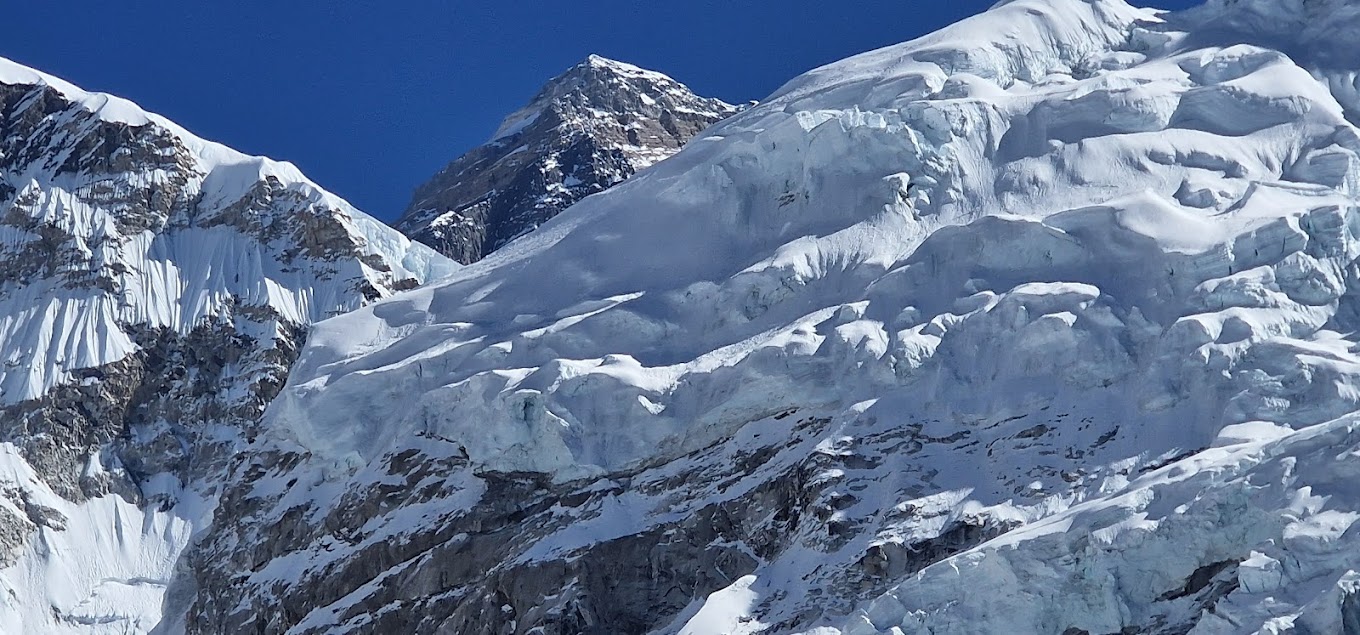
Dhampus peak expedition
Dhampus Peak (6,012m) — also known as Thapa Peak, a two-pass Himalayan crossing linking Mustang to the Annapurna Circuit.
Expedition Overview
What is the Dhampus Peak Expedition?
Dhampus Peak, also known as Thapa Peak, stands at 6,012 metres in the Dhaulagiri region of Nepal, positioned on the remote boundary between Upper Mustang and Upper Dolpo, northeast of Dhaulagiri itself. Classified as a Group B trekking peak by the Nepal Mountaineering Association, Dhampus Peak is widely regarded as one of the most accessible 6,000m summits in Nepal, non-technical in nature, with altitude rather than climbing difficulty as the main obstacle.
AltiPro's Dhampus Peak Expedition follows the Kali Gandaki valley from Jomsom through Marpha and Kagbeni before crossing the Dhampus (Thapa) Pass at 5,244m to Base Camp at approximately 5,100m. High Camp is established at around 5,600m for the summit push. From the summit, the descent continues over the high Thorong La pass at 5,416m toward Muktinath and the Manang side of the Annapurna Circuit, linking two of Nepal's classic high passes into a single expedition. The trip spans 19 days from Kathmandu to return.
Dhampus Peak is rated Moderate. No prior 6,000m experience is required, but AltiPro recommends previous high-altitude trekking above 5,000m and comfort with crampons, ice axe, and jumar for the summit push from High Camp. The main demand is sustained altitude exposure across two high passes rather than technical climbing.
About Dhampus Peak — Thapa Peak on the Roof of the Mustang Borderlands
Dhampus Peak sits on the remote ridge separating Upper Mustang and Upper Dolpo, flanked by Tukuche Peak and the Dhaulagiri massif. The approach follows the Kali Gandaki gorge, the deepest in the world, through Marpha and Kagbeni, and can be combined with a visit into Upper Mustang or linked to the wider Dhaulagiri Circuit depending on the season and route AltiPro selects.
The name “Thapa Peak” is used interchangeably with Dhampus Peak across most Nepali operators and the NMA permit system itself; there is no separate Thapa Peak summit, so the two names refer to the same 6,012m climb. This is different from naming situations on peaks like Lobuche or Chulu, where East and West or East and Far East refer to genuinely distinct summits.
From the summit, climbers look out across one of the widest high-altitude panoramas available on any Nepal trekking peak: Dhaulagiri I, Annapurna I, Nilgiri, Tukuche Peak, Tilicho Peak, and Machhapuchhre, with the arid folds of Upper Mustang visible to the west.
Why Choose AltiPro Adventures for Dhampus Peak?
An Accessible First 6,000m Summit
Dhampus Peak's non-technical route makes it one of the most approachable 6,000m objectives in Nepal for climbers stepping up from high-altitude trekking. AltiPro's Sherpa guides run crampon and jumar training at Base Camp ahead of the summit push.
A Two-Pass Himalayan Journey
AltiPro's standard itinerary links the summit with a crossing of the Thorong La, one of Nepal's most celebrated high passes, connecting the Dhampus climb directly into the Annapurna Circuit route toward Manang.
The Deepest Gorge in the World
The approach through the Kali Gandaki valley, past Marpha and Kagbeni, is one of the most dramatic walk-ins in Nepal, with the option to extend into Upper Mustang for climbers wanting more time in the region beforehand.
Full Sherpa Support and Equipment
All technical summit equipment is provided by AltiPro: crampons, harness, ice axe, jumar, and rope, along with cook staff at Base Camp and High Camp. Climbers do not need to own or bring technical climbing gear.
Medical Support
A full medical kit at Base Camp and High Camp, with satellite communication for emergency coordination. Helicopter evacuation to Pokhara or Kathmandu can be arranged if required during the expedition.
Spring and Autumn Options
AltiPro operates Dhampus Peak in both spring (March–May) and autumn (September–November), the two stable weather windows for the Kali Gandaki approach and summit push.
The Thapa Pass Route (6,012 m)
The standard route on Dhampus Peak follows the Kali Gandaki valley before crossing the Thapa Pass to Base Camp, with the option to continue over the Thorong La on descent for a genuine two-pass Himalayan crossing.
Fly Pokhara to Jomsom — Trek to Marpha (2,743m to 2,670m)
A short scenic flight from Pokhara to Jomsom, followed by a gentle trek along the Kali Gandaki to the apple-orchard village of Marpha.
Marpha to Kagbeni (2,670m to 2,800m)
Follow the Kali Gandaki gorge north through Thakali villages to Kagbeni, gateway to Upper Mustang and the last major settlement before the climb begins.
Kagbeni to Dhampus Peak Base Camp via the Thapa Pass (2,800m to 5,100m)
The route climbs steadily out of the Kali Gandaki valley, crossing the Thapa Pass (5,244m) before descending slightly to Base Camp on the flank of Dhampus Peak.
Base Camp to High Camp (5,100m to 5,600m)
A steady climb over rock and snow slopes leads to High Camp, used for the final summit push, with crampon and jumar training carried out en route.
High Camp to Summit and Descent toward Thorong La (5,600m to 6,012m to 5,416m)
Summit day follows moderate snow slopes with no technical barriers to the top of Dhampus Peak at 6,012m. Descent continues toward the Thorong La at 5,416m, one of Nepal's highest trekking passes, before dropping to Muktinath and the Manang side of the Annapurna Circuit.
How Difficult is the Dhampus Peak Expedition?
Dhampus Peak is graded Moderate and is considered non-technical for a 6,000m summit, with no advanced climbing skills required. The main challenges are sustained altitude exposure across the Thapa Pass, Base Camp, and the Thorong La, plus long trekking days through remote terrain on the Mustang borderlands.
Best Season for the Dhampus Peak Expedition
Spring (March–May): Stable pre-monsoon conditions on the Kali Gandaki approach, with clear views across the Mustang borderlands. Mustang sits in a rain shadow, so trail conditions are generally reliable.
Autumn (September–November): Crisp post-monsoon conditions with excellent visibility for the summit and the Thorong La crossing. October is considered the ideal month. AltiPro operates both seasons, contact for current dates.
Dhampus Peak Expedition Cost
Full-service Dhampus Peak expedition — Kali Gandaki approach, Thorong La descent, all technical summit equipment, and full Sherpa support included.
Includes NMA trekking peak permit, Annapurna Conservation Area Permit (ACAP), TIMS card, Pokhara to Jomsom domestic flight, full Sherpa support to summit, all technical equipment for summit day (crampons, harness, jumar, rope, ice axe), Base Camp and High Camp cook service, and a complete medical kit. International flights, extra Pokhara transport, and personal trekking equipment are not included. Contact AltiPro for a complete Dhampus Peak climbing cost breakdown.
Dhampus Peak Expedition — Frequently Asked Questions
Common questions about climbing Dhampus Peak with AltiPro Adventures.
Is Dhampus Peak the same as Thapa Peak?
Yes. Dhampus Peak and Thapa Peak are two names for the same 6,012m summit, used interchangeably across Nepali trekking operators and the NMA permit system. There is no separate Thapa Peak climb.
How difficult is Dhampus Peak?
Dhampus Peak is graded Moderate and is one of the more accessible 6,000m trekking peaks in Nepal, with no advanced technical climbing skills required. The main challenge is sustained altitude exposure across the Thapa Pass, Base Camp, and the Thorong La rather than technical terrain.
What is the Dhampus Peak climbing cost?
AltiPro's full-service package includes permits, the Kali Gandaki approach, the Pokhara to Jomsom flight, Sherpa support, all technical summit equipment, and Base Camp/High Camp services. Contact AltiPro for a current, detailed cost breakdown.
Can Dhampus Peak be combined with Upper Mustang or the Annapurna Circuit?
Yes. The approach through Kagbeni sits at the gateway to Upper Mustang, and AltiPro's standard descent continues over the Thorong La into the Annapurna Circuit route toward Manang, linking the climb naturally with either extension.
What technical skills are needed to climb Dhampus Peak?
Basic crampon and jumar technique, used from High Camp to the summit, along with comfort on sustained high-altitude terrain across two passes. AltiPro's Sherpa guides run technical training at Base Camp before the summit push.
How long is the Dhampus Peak expedition?
19 days from Kathmandu to return, including the flight to Jomsom, the Kali Gandaki approach through Marpha and Kagbeni, the summit attempt on Dhampus Peak (6,012m), and the descent over the Thorong La toward Manang.
What are the summit views like from Dhampus Peak?
The summit delivers one of the widest panoramas available from any Nepal trekking peak, taking in Dhaulagiri I, Annapurna I, Nilgiri, Tukuche Peak, Tilicho Peak, and Machhapuchhre, with the arid Upper Mustang landscape visible to the west.
What permits are required to climb Dhampus Peak?
A Nepal Mountaineering Association (NMA) trekking peak permit, the Annapurna Conservation Area Permit (ACAP), and a TIMS card for the Mustang and Manang approach. AltiPro manages all permit applications from Kathmandu.
Detailed Itinerary
Click on each day to view details
| Day | Program | Meals | Accom. | |||||||||||||||||||||||||||||||||||||||||||||||||||||||||||||||||||||||||||||||||||||||||||||||||||||||||||||||||||||||||||||||||||||||||||||||||||||||||||||||||||||||||||||||||||||
|---|---|---|---|---|---|---|---|---|---|---|---|---|---|---|---|---|---|---|---|---|---|---|---|---|---|---|---|---|---|---|---|---|---|---|---|---|---|---|---|---|---|---|---|---|---|---|---|---|---|---|---|---|---|---|---|---|---|---|---|---|---|---|---|---|---|---|---|---|---|---|---|---|---|---|---|---|---|---|---|---|---|---|---|---|---|---|---|---|---|---|---|---|---|---|---|---|---|---|---|---|---|---|---|---|---|---|---|---|---|---|---|---|---|---|---|---|---|---|---|---|---|---|---|---|---|---|---|---|---|---|---|---|---|---|---|---|---|---|---|---|---|---|---|---|---|---|---|---|---|---|---|---|---|---|---|---|---|---|---|---|---|---|---|---|---|---|---|---|---|---|---|---|---|---|---|---|---|---|---|---|---|---|---|---|
| 1 | Arrival in Kathmandu | Dinner | Hotel | |||||||||||||||||||||||||||||||||||||||||||||||||||||||||||||||||||||||||||||||||||||||||||||||||||||||||||||||||||||||||||||||||||||||||||||||||||||||||||||||||||||||||||||||||||||
|
Arrive at Kathmandu Tribhuvan International Airport. Transfer to hotel, welcome dinner, and Dhampus Peak Expedition briefing.
2
|
Kathmandu – Permit Processing & Expedition Briefing |
Breakfast / Dinner |
Hotel |
|
|
Process NMA climbing permit, Annapurna Conservation Area Permit (ACAP), and TIMS card, gear check, and expedition briefing.
3
|
Drive or Fly Kathmandu → Pokhara (1,400m to 820m) |
Breakfast / Lunch / Dinner |
Hotel |
|
|
Travel to Pokhara, gateway to the Annapurna and Dhaulagiri regions, with final gear checks before the trek begins.
4
|
Fly Pokhara → Jomsom – Trek to Marpha (2,743m to 2,670m) |
Breakfast / Lunch / Dinner |
Lodge |
|
|
A short scenic flight to Jomsom, then a gentle trek along the Kali Gandaki to the apple-orchard village of Marpha.
5
|
Trek Marpha → Kagbeni (2,670m to 2,800m) |
Breakfast / Lunch / Dinner |
Lodge |
|
|
Follow the Kali Gandaki gorge north through Thakali villages to Kagbeni, gateway to Upper Mustang.
6
|
Trek Kagbeni → Chhusang (2,800m to 3,800m) |
Breakfast / Lunch / Dinner |
Lodge/Tent |
|
|
Climb out of the Kali Gandaki valley toward the approach terrain for the Thapa Pass, entering more remote high-altitude country.
7
|
Trek Chhusang → Thapa Pass Approach Camp (3,800m to 4,500m) |
Breakfast / Lunch / Dinner |
Tent |
|
|
Continue climbing toward the base of the Thapa Pass, with a rest and acclimatization stop built into the day.
8
|
Cross Thapa Pass (5,244m) to Dhampus Peak Base Camp (4,500m to 5,100m) |
Breakfast / Lunch / Dinner |
Tent |
|
|
Cross the Thapa Pass and descend slightly to AltiPro's established camp at Dhampus Peak Base Camp.
9
|
Acclimatization & Climbing Training at Base Camp (5,100m) |
Breakfast / Lunch / Dinner |
Tent |
|
|
Rest and altitude adaptation at Base Camp, with climbing Sherpa route briefing, crampon fitting, and jumar training.
10
|
Trek Base Camp → High Camp (5,100m to 5,600m) |
Breakfast / Lunch / Dinner |
Tent |
|
|
Ascend steady rock and snow slopes to High Camp, used for the final summit push.
11
|
Summit Day – Dhampus Peak (6,012m) |
Breakfast / Lunch / Dinner |
Tent |
|
|
Pre-dawn departure from High Camp. Ascend moderate snow slopes to the summit of Dhampus Peak at 6,012m, then descend to Base Camp.
12
|
Trek Base Camp → Thorong La Approach Camp (5,100m to 5,000m) |
Breakfast / Lunch / Dinner |
Tent |
|
|
Traverse toward the Thorong La side of the route, positioning for the pass crossing the following day.
13
|
Cross Thorong La (5,416m) to Muktinath (5,000m to 3,760m) |
Breakfast / Lunch / Dinner |
Lodge |
|
|
Cross the Thorong La, one of Nepal's highest trekking passes, and descend to the pilgrimage town of Muktinath.
14
|
Drive or Trek Muktinath → Manang (3,760m to 3,540m) |
Breakfast / Lunch / Dinner |
Lodge |
|
|
Continue onto the Manang side of the Annapurna Circuit, entering the Marshyangdi valley.
15
|
Trek Manang → Chame (3,540m to 2,710m) |
Breakfast / Lunch / Dinner |
Lodge |
|
|
Descend the Marshyangdi valley through Pisang to Chame, the administrative headquarters of the Manang district.
16
|
Drive Chame → Besisahar (2,710m to 760m) |
Breakfast / Lunch / Dinner |
Lodge |
|
|
Jeep drive down the Marshyangdi valley to Besisahar.
17
|
Drive Besisahar → Kathmandu |
Breakfast / Dinner |
Hotel |
|
|
Drive from Besisahar back to Kathmandu. Farewell dinner and Dhampus Peak climbing certificate presented.
18
|
Buffer Day – Weather or Logistics Reserve |
Breakfast |
Hotel |
|
|
Reserved buffer for weather delays, a second summit window, or flight and road disruptions along the approach.
19
|
Final Departure from Kathmandu |
Breakfast |
|
|
|
Transfer to Kathmandu Tribhuvan International Airport for international departure.
| ||||||||||||||||||||||||||||||||||||||||||||||||||||||||||||||||||||||||||||
Services
Includes
Excludes
Gear Lists & Useful Information
No Gear Lists Available
Gear lists and additional information for this expedition will be available soon.
Been on this expedition?
Your feedback helps other travelers plan their adventure of a lifetime. Share your experience with us!
Cholatse Expedition
Cholatse Peak (6,440m) — a striking technical summit in Nepal’s Khumbu region, rising above the Dudh Koshi Valley and surrounded by the dramatic peaks of Everest, Ama Dablam, Taboche, and Lobuche.
Chulu East Expedition
Chulu East (6,584m) — a remote Annapurna summit above the Manang Valley, ringed by Annapurna II, III, IV, and Gangapurna.
Chulu West Expedition
Chulu West (6,419m) — an ice wall and glacier ridge above the Annapurna Circuit, paired with a classic Thorong La crossing.
Hiunchuli Peak Expedition
Hiunchuli (6,441m) — guardian of the Annapurna Sanctuary, one of Nepal's most serious trekking peaks.
Island Peak Expedition
Island Peak (6,189m) — Imja Tse, the Khumbu's classic training summit, ringed by Lhotse, Nuptse, and Ama Dablam.
Kyajo Ri Expedition
Kyajo Ri (6,186m) — one of the Khumbu's quietest summits, a technical step up hidden in an isolated valley off the main trails.
Larkya Peak Expedition
Larkya Peak (6,249m) — Manaslu's quiet neighbour above the Larkya La, a natural warm-up for the big mountain itself.
 6000m
6000m
Lobuche East Expedition
Lobuche East (6,119m) — the Khumbu's most technical trekking peak, rising above the Everest Base Camp trail.
Lobuche West Expedition
Lobuche West (6,145m) — the higher, far less climbed of Lobuche's two summits, a serious expedition-grade South Ridge.
Taboche Peak Expedition
Taboche (6,495m) — a serious rock and ice ridge climb above Pheriche, directly across the valley from Ama Dablam.
Ready to Start Your Adventure?
Contact us to book your expedition or get more information