
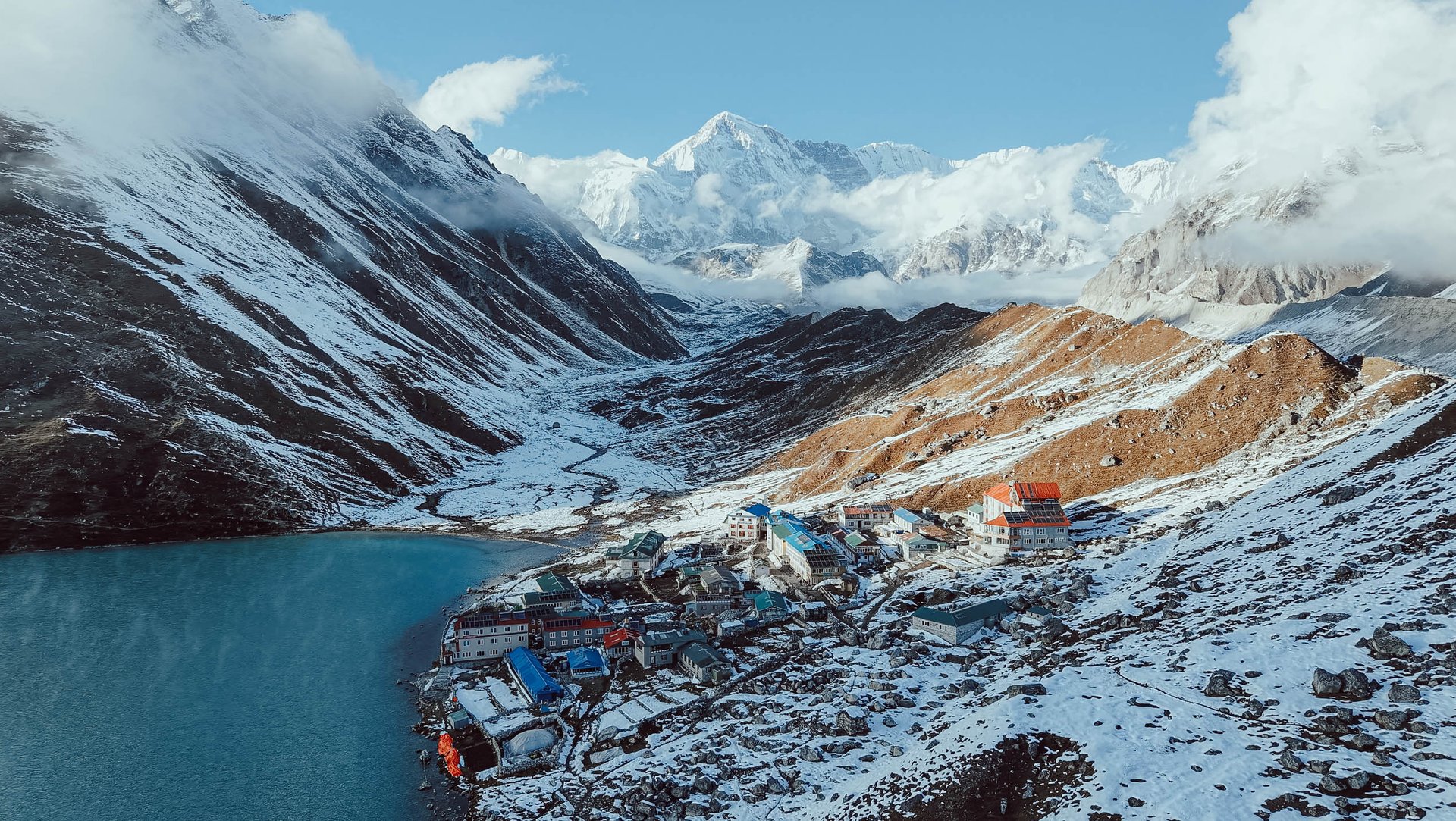
Gokyo Lakes + Cho La Pass + Everest Base Camp Trek
Three High Points of Khumbu in One Trek — Gokyo Lakes, Cho La Pass & Everest Base Camp
Trek Overview
What is the Gokyo Lakes + Cho La Pass + EBC Trek?
The Gokyo Lakes + Cho La Pass + Everest Base Camp Trek is the most comprehensive single route in the Khumbu region — threading together three of the Everest region's finest destinations in one continuous traverse. The route visits the five turquoise glacial lakes of the Gokyo Valley (4,750 m–4,990 m), ascends Gokyo Ri (5,357 m) for one of the great 8,000 m peak panoramas, crosses the technical Cho La Pass (5,420 m / 17,782 ft) on glacier, reaches Everest Base Camp (5,365 m / 17,598 ft) on the Khumbu Glacier moraine, and finishes with the pre-dawn Everest sunrise from Kala Patthar (5,555 m / 18,209 ft). No steps are repeated — each day opens a new facet of the Khumbu.
The trek begins with the dramatic 35-minute mountain flight from Kathmandu to Lukla (2,840 m / 9,317 ft), then heads north up the Dudh Koshi River to Namche Bazaar (3,440 m) — the Sherpa heartland — before turning northwest into the quieter Gokyo Valley. After the Cho La crossing, the route joins the classic EBC trail at Dzongla, passes through Lobuche and Gorakshep, and descends via Tengboche, Namche and Lukla for the return flight to Kathmandu.
Two permits are required — Sagarmatha National Park Entry Permit and Pasang Lhamu Rural Municipality Permit — both processed by AltiPro in Kathmandu. This is a challenging route best suited to trekkers with prior high-altitude experience. Those planning their first Himalayan trek are advised to complete the standard EBC Trek first.
Why Choose the Gokyo + Cho La + EBC Route with AltiPro Adventures?
Five Gokyo Lakes — Glacial Perfection
The Gokyo Valley holds five high-altitude glacial lakes shimmering in shades of turquoise — from Longponga to Ngozumpa Tsho (4,990 m) at the snout of the Ngozumpa Glacier, the longest glacier in the Himalayas at 36 km. A landscape of extraordinary, otherworldly beauty.
Gokyo Ri — Finest Everest View on Earth
Many experienced Himalayan trekkers consider Gokyo Ri (5,357 m / 17,575 ft) the finest high-altitude viewpoint in Nepal. Four of the world's six highest peaks — Everest (8,849 m), Cho Oyu (8,188 m), Lhotse (8,516 m) and Makalu (8,485 m) — are visible simultaneously, together with the full sweep of the Ngozumpa Glacier below.
Cho La Pass — A Genuine High-Altitude Crossing
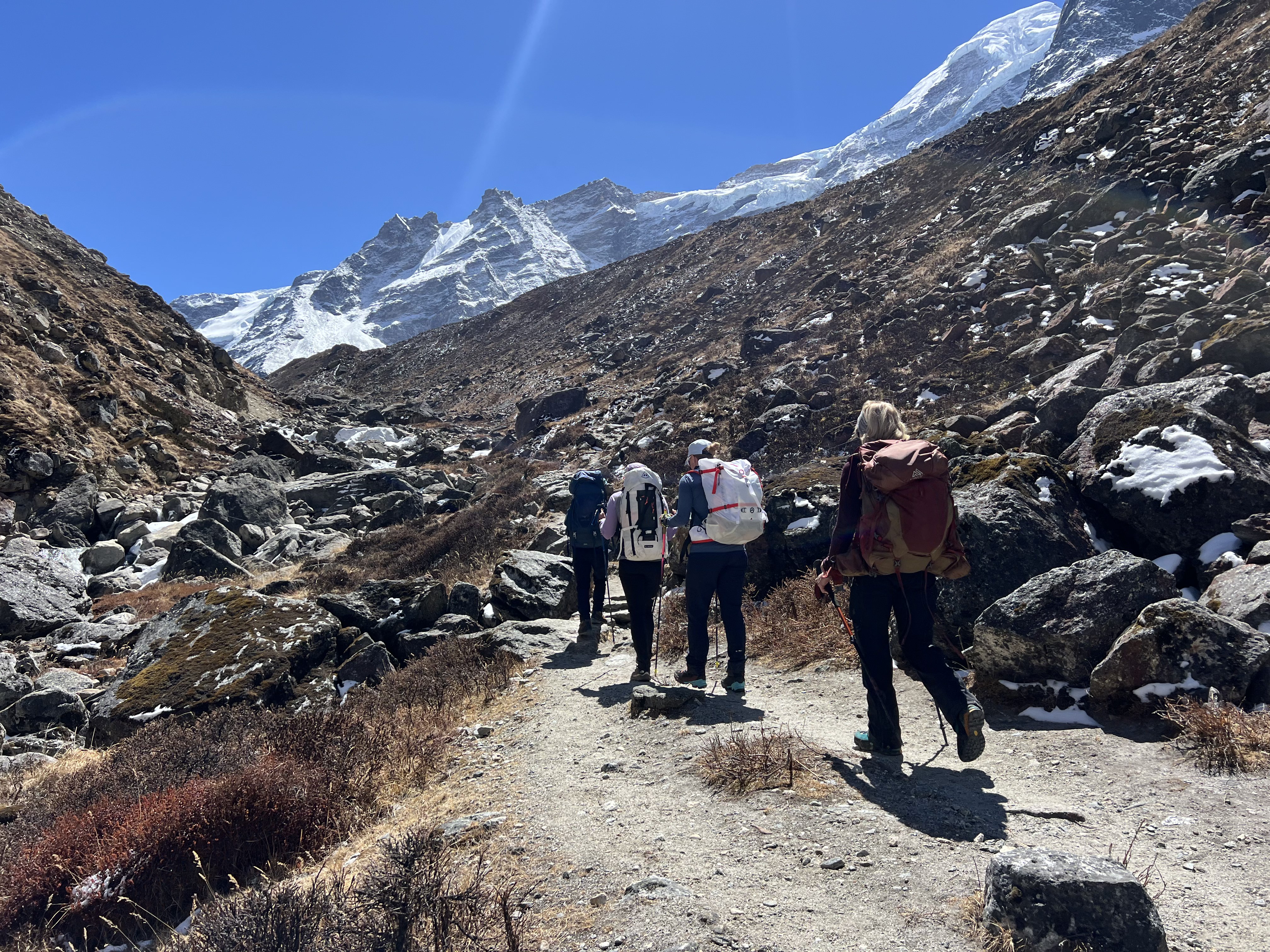
The Cho La Pass (5,420 m / 17,782 ft) is a real alpine challenge: the upper approach crosses active glacier ice where crampons are recommended, and the descent to Dzongla is steep and rocky. It transforms the EBC trek from a there-and-back into a true traverse of the Khumbu — one of the most rewarding high-altitude crossings in the Himalayas.
Everest Base Camp — The World's Most Famous Glacier Walk
The trail from Gorakshep to EBC (5,365 m / 17,598 ft) threads through the Khumbu Glacier lateral moraine, with the Khumbu Icefall above and Nuptse and Pumori flanking the valley. In spring, the fixed ropes of active Everest expeditions are visible overhead — the starting point of all summit attempts on the world's highest mountain.
Kala Patthar — Pre-Dawn Everest Sunrise
At 5,555 m / 18,209 ft, Kala Patthar is the highest point of the trek and the world's most famous Everest viewpoint. A 1.5–2 hour pre-dawn climb from Gorakshep is rewarded with Everest's south face blazing gold as the first light of sunrise breaks across the Himalayan arc — Nuptse, Pumori, Lhotse and Changtse all visible at once.
Sherpa Culture — Namche, Tengboche, Khumjung
The Khumbu is the heartland of the Sherpa people. This trek passes through Namche Bazaar (the Khumbu's cultural and commercial centre), the rebuilt monastery complex at Tengboche, and the village of Khumjung — whose school was the first built by Sir Edmund Hillary's Himalayan Trust in 1961 and whose gompa is home to a famous yeti scalp.
Gokyo Lakes + Cho La Pass + EBC Trek Route & Approach
The route begins with the Lukla flight (2,840 m), heads northwest through the Gokyo Valley to the five lakes and Gokyo Ri (5,357 m), crosses the Cho La Pass (5,420 m) onto the Khumbu Valley trail, reaches Everest Base Camp (5,365 m) and Kala Patthar (5,555 m), then descends via Tengboche, Namche and Lukla. Two mandatory acclimatisation days — at Namche Bazaar and at Gokyo — are built into every AltiPro itinerary. All accommodation is teahouse-based throughout.
Dudh Koshi Approach — Lukla (2,840 m) → Namche Bazaar (3,440 m)
A 35-minute mountain flight to Tenzing-Hillary Airport at Lukla — one of the most dramatic runway approaches in the world — followed by two days trekking north up the Dudh Koshi gorge, crossing the iconic Hillary suspension bridge and climbing through Sagarmatha National Park to Namche Bazaar, the Sherpa heartland and gateway to the Khumbu.
Gokyo Valley — Namche → Dole → Machhermo → Gokyo (4,790 m) → Gokyo Ri (5,357 m)
Leaving the main EBC trail at Namche, the route branches northwest through high rhododendron forest to the Gokyo Valley. Three days ascend through Dole (4,110 m) and Machhermo (4,470 m) — passing Cho Oyu views and Ngozumpa Glacier — to Gokyo village and the turquoise third lake. A full day is dedicated to the Gokyo Ri summit (5,357 m) and the optional 4th and 5th lake hike.
Cho La Crossing → EBC → Kala Patthar — Dragnag → Pass (5,420 m) → Lobuche → EBC → Kala Patthar (5,555 m)
A short day reaches Dragnag on the Ngozumpa moraine before the pre-dawn Cho La Pass crossing — steep, rocky and over glacier, crampons recommended. Descent to Dzongla then Lobuche. The EBC day crosses the Khumbu Glacier lateral moraine to Base Camp (5,365 m). The following pre-dawn ascent of Kala Patthar (5,555 m) delivers the famous Everest south-face sunrise.
Descent — Pheriche → Tengboche → Namche → Lukla
A long descent through the heart of Sherpa culture — passing the climbers' memorial at Lobuche, the monastery at Tengboche, rhododendron forests above Namche, and the Dudh Koshi gorge back to Lukla for the return flight to Kathmandu.
How Difficult is the Gokyo Lakes + Cho La Pass + EBC Trek?
This route is rated harder than the standard EBC trek. The defining additional challenge is the Cho La Pass (5,420 m / 17,782 ft) — a genuine alpine crossing with glacier travel, pre-dawn starts and technical footing. The 17-day schedule includes two nights above 5,000 m and extended days above 4,500 m, demanding excellent cardiovascular fitness and solid altitude management. Previous high-altitude trekking experience — ideally the standard EBC trek or Manaslu Circuit — is strongly recommended.
Best Season for the Gokyo + Cho La Pass + EBC Trek
Spring (March–May): April and May are the optimal months. The Cho La Pass is consolidated and traversable, Everest expedition activity brings energy to Base Camp, rhododendron forests below Namche are in full bloom, and morning visibility from Gokyo Ri and Kala Patthar is outstanding. Mid-April to early May is peak season — AltiPro spring departures sell out early.
Autumn (October–November): Post-monsoon skies produce crystal-clear mountain views across the Khumbu. October is typically dry and ideal on the Cho La; light snow can arrive in late November. Nights at Gorakshep and Gokyo are extremely cold — a -20°C rated sleeping bag is not optional. March is possible but the Cho La may carry early-season ice.
Gokyo + Cho La Pass + EBC Trek Cost
Full 17-day Khumbu traverse from Kathmandu — permits, Lukla flights, guide, porter, full board teahouse & emergency evacuation included.
AltiPro packages cover all core logistics: airport transfers, welcome and farewell dinners, Sagarmatha NP & Pasang Lhamu permits, domestic Kathmandu↔Lukla flights, licensed English-speaking guide, porter support (20 kg), crampons on request, pulse oximeter monitoring, supplemental oxygen (Dingboche onward), and full board teahouse accommodation. Pricing varies by group size and departure season. Request a personalised quote.
Gokyo Lakes + Cho La Pass + EBC Trek — FAQs
Find answers to the most common questions about the Gokyo Lakes + Cho La Pass + Everest Base Camp Trek.
How difficult is the Gokyo + Cho La Pass + EBC Trek?
This trek is significantly more demanding than the standard Everest Base Camp Trek. The primary added difficulty is the Cho La Pass (5,420 m / 17,782 ft) — a glacier crossing requiring pre-dawn travel and careful footing on ice. The 17-day schedule includes multiple nights above 4,500 m and demands excellent cardiovascular fitness. Prior high-altitude trekking experience (above 4,500 m) is strongly recommended.
How many days is the Gokyo + Cho La + EBC Trek?
The AltiPro itinerary is 17 days from Kathmandu to Kathmandu, including Lukla flight days, two acclimatisation days (Namche and Gokyo), Gokyo Ri summit day, Cho La Pass crossing day, EBC day and Kala Patthar sunrise. We recommend booking 1–2 buffer days in Kathmandu before departure, as Lukla flight delays are common in peak season.
What is the maximum altitude on this trek?
The highest point is Kala Patthar at 5,555 m / 18,209 ft, reached on the morning after the EBC visit. Other significant altitude points: Cho La Pass (5,420 m / 17,782 ft), Everest Base Camp (5,365 m / 17,598 ft), Gokyo Ri (5,357 m / 17,575 ft), and the 5th Gokyo Lake at approximately 4,990 m / 16,371 ft.
What permits are required for this trek?
Two permits are required: the Sagarmatha National Park Entry Permit and the Pasang Lhamu Rural Municipality Entry Permit. Both are processed by AltiPro in Kathmandu on arrival day. A TIMS Card may also be required depending on current government regulations — AltiPro confirms exact requirements with every booking.
What is the best time for the Gokyo + Cho La + EBC Trek?
Spring (April–May) is ideal: the Cho La Pass is consolidated, Everest expedition activity adds atmosphere at Base Camp, and morning visibility from Gokyo Ri and Kala Patthar is superb. Autumn (October–November) offers clear post-monsoon skies and excellent trail conditions, though nights are colder. March is possible but the pass may carry early-season ice.
Is the Cho La Pass difficult? Do I need crampons?
The Cho La Pass (5,420 m) is the technical crux of the route. The upper approach crosses the Cho La glacier where ice is often exposed. Crampons and trekking poles are highly recommended in any month, and essential in November and March when ice is thickest. AltiPro guides carry crampons for the team; trekkers are advised to check availability in advance or bring their own.
What is the difference between this and the standard EBC route?
The standard 14-day EBC Trek follows the main Khumbu Valley from Lukla to Base Camp and returns the same way. This route splits at Namche, explores the less-frequented Gokyo Valley, visits five glacial lakes, ascends Gokyo Ri (5,357 m) and crosses the Cho La Pass before joining the EBC trail. No terrain is repeated — it is a true traverse of the Khumbu, with two high-altitude viewpoints and a glacier crossing that the standard route does not include.
What accommodation is available on this trek?
All accommodation is teahouse-based from Lukla to Lukla. Facilities are best developed in Namche Bazaar and Tengboche. Above Namche, teahouses become increasingly basic with shared facilities and limited heating. Gorakshep is the most extreme overnight at high elevation — a -20°C rated sleeping bag is essential. AltiPro pre-books rooms across the route to ensure availability in peak season.
Is altitude sickness a risk on the Gokyo + Cho La + EBC Trek?
AMS risk is higher on this route than the standard EBC trek, given more consecutive days above 4,000 m. Two acclimatisation days — at Namche and Gokyo — are built into every AltiPro itinerary. Guides monitor oxygen saturation daily with pulse oximeters from Namche onward. Supplemental oxygen is carried from Dingboche. The rule is clear: if AMS symptoms do not improve with rest, descent is required immediately.
Highlights
- Five Gokyo Lakes — Turquoise Glacial Perfection
- Gokyo Ri Summit (5,357 m) — Four 8,000 m Peaks Visible
- Cho La Pass (5,420 m) — Glacier Crossing
- Everest Base Camp (5,365 m) — The World's Most Famous Glacier Walk
- Kala Patthar Sunrise (5,555 m) — Everest South Face at Dawn
- Sherpa Culture — Namche, Tengboche Monastery & Khumjung
Detailed Itinerary
Click on each day to view details
| Day | Program | Meals | Accom. | |||||||||||||||||||||||||||||||||||||||||||||||||||||||||||||||||||||||||||||||||||||||||||||||||||||||||||||||||||||||||||||||||||||||||||||||||||||||||||||||||
|---|---|---|---|---|---|---|---|---|---|---|---|---|---|---|---|---|---|---|---|---|---|---|---|---|---|---|---|---|---|---|---|---|---|---|---|---|---|---|---|---|---|---|---|---|---|---|---|---|---|---|---|---|---|---|---|---|---|---|---|---|---|---|---|---|---|---|---|---|---|---|---|---|---|---|---|---|---|---|---|---|---|---|---|---|---|---|---|---|---|---|---|---|---|---|---|---|---|---|---|---|---|---|---|---|---|---|---|---|---|---|---|---|---|---|---|---|---|---|---|---|---|---|---|---|---|---|---|---|---|---|---|---|---|---|---|---|---|---|---|---|---|---|---|---|---|---|---|---|---|---|---|---|---|---|---|---|---|---|---|---|---|---|---|---|
| 1 | Arrival in Kathmandu (1,400 m / 4,593 ft) | Dinner | Hotel | |||||||||||||||||||||||||||||||||||||||||||||||||||||||||||||||||||||||||||||||||||||||||||||||||||||||||||||||||||||||||||||||||||||||||||||||||||||||||||||||||
|
Arrive at Tribhuvan International Airport, Kathmandu. Private airport transfer to hotel. Trek briefing, permit processing and gear check with your AltiPro guide. Welcome dinner.
2
|
Flight Kathmandu → Lukla (2,840 m) — Trek to Phakding (2,610 m / 8,563 ft) |
B / L / D |
Lodge |
|
| A 35-minute mountain flight to Tenzing-Hillary Airport at Lukla — one of the most dramatic airport approaches in the world, with a runway cut into the hillside above a deep gorge. The trail then drops to Phakding (2,610 m) through the Dudh Koshi gorge. 3–4 hours walking.
3
|
Trek Phakding → Namche Bazaar (3,440 m / 11,286 ft) |
B / L / D |
Lodge |
|
| A full day ascent through the Sagarmatha National Park checkpoint, crossing the iconic Hillary suspension bridge over the Dudh Koshi. The steep climb to Namche Bazaar — the economic and cultural hub of the Khumbu — delivers the first wide views of Everest, Lhotse and Ama Dablam. 5–6 hours.
4
|
Acclimatisation Day in Namche Bazaar (3,440 m) |
B / L / D |
Lodge |
|
| A mandatory acclimatisation day in Namche. Recommended hikes include the trail to the Everest View Hotel (3,880 m) for panoramic views of Everest, Ama Dablam and Thamserku, or the short walk to Khumjung village and its famous school built by Sir Edmund Hillary. Sherpa museum visit and AMS briefing with your AltiPro guide.
5
|
Trek Namche → Dole (4,110 m / 13,484 ft) |
B / L / D |
Lodge |
|
| Leaving the main EBC trail at Namche, the route branches northwest through Syangboche and Sanasa, then climbs through high rhododendron forest via Phortse Thanga into the Gokyo Valley. The trail rises steadily to Dole (4,110 m), a yak-herding village with stone walls and seasonal teahouses. First Gokyo Valley atmosphere — much quieter than the main EBC corridor. 6–7 hours.
6
|
Trek Dole → Machhermo (4,470 m / 14,665 ft) |
B / L / D |
Lodge |
|
| The trail continues up the Gokyo Valley through Lhabarma and Luza with growing views of Cho Oyu (8,188 m) and the vast Ngozumpa Glacier. Machhermo (4,470 m) is the site of the most famous reported yeti sighting in 1974 and an important altitude checkpoint. 5–6 hours.
7
|
Trek Machhermo → Gokyo (4,790 m / 15,715 ft) |
B / L / D |
Lodge |
|
| The trail crosses iron bridges over glacial streams and climbs moraine ridges, passing the first Gokyo lake (Longponga) and the second (Taboche Tsho) before reaching the turquoise third lake, Dudh Pokhari, beside which Gokyo village sits. First views of Gokyo Ri and the full Ngozumpa Glacier expanse. 4–5 hours.
8
|
GOKYO RI SUMMIT DAY — Gokyo Ri (5,357 m / 17,575 ft) + optional 4th & 5th Lakes |
B / L / D |
Lodge |
|
| An early start for the ascent of Gokyo Ri (5,357 m / 17,575 ft) — a steep 2-hour climb above the village rewarded with one of the great panoramas of the Himalayas: four of the world's six highest peaks visible simultaneously (Everest 8,849 m, Cho Oyu 8,188 m, Lhotse 8,516 m, Makalu 8,485 m), plus the entire sweep of the Ngozumpa Glacier below. Optional afternoon extension to the 4th lake (Thonak Tsho) and 5th lake (Ngozumpa Tsho, 4,990 m). 5–6 hours total.
9
|
Trek Gokyo → Dragnag / Thangnag (4,750 m / 15,584 ft) |
B / L / D |
Lodge |
|
| A shorter day hugging the eastern moraine of the Ngozumpa Glacier with Cholatse (6,440 m) and Tawache (6,495 m) dominating the sky ahead — a preview of tomorrow's Cho La crossing. Dragnag is a small settlement of basic teahouses used primarily by Cho La Pass trekkers. 4–5 hours.
10
|
CHO LA PASS CROSSING — Dragnag → Cho La Pass (5,420 m / 17,782 ft) → Dzongla (4,830 m / 15,846 ft) |
B / L / D |
Lodge |
|
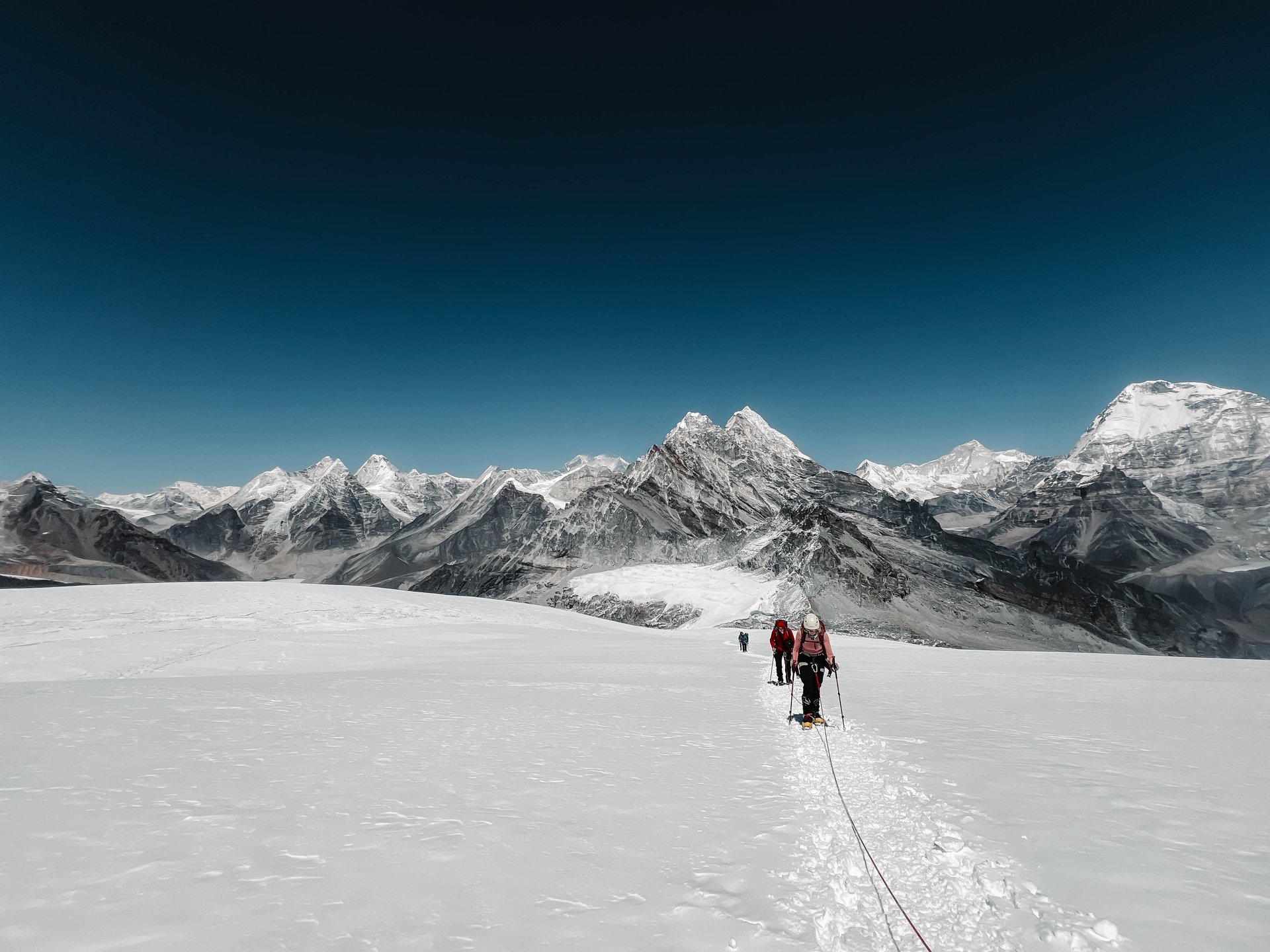
| A pre-dawn start for the most technically demanding day of the trek. The ascent from Dragnag is steep and rocky before reaching the Cho La glacier, where crampons and trekking poles are recommended — ice is often exposed. Prayer flags and cairns mark the summit of Cho La Pass (5,420 m / 17,782 ft) with sweeping views. The descent to Dzongla is steep and rocky with care needed on icy sections. 6–7 hours.
11
|
Trek Dzongla → Lobuche (4,910 m / 16,109 ft) |
B / L / D |
Lodge |
|
| A short but emotionally powerful day from Dzongla to Lobuche, passing the Chola Lake and the climbers' memorial — a poignant line of stone chortens and plaques honouring those who have died on Everest and the surrounding peaks. Cholatse and Taboche ridges frame the walk. 4–5 hours.
12
|
EVEREST BASE CAMP DAY — Lobuche → Gorakshep (5,140 m) → EBC (5,365 m / 17,598 ft) → Gorakshep |
B / L / D |
Lodge |
|
| The trail from Lobuche to Gorakshep follows the lateral moraine of the Khumbu Glacier beneath Pumori (7,161 m) and Nuptse (7,861 m). From Gorakshep, the final push to Everest Base Camp (5,365 m / 17,598 ft) threads over moraine, ice and glacial debris to the edge of the Khumbu Icefall — in spring, the fixed ropes of active Everest expeditions are visible overhead. Return to Gorakshep for an early dinner and a short sleep before tomorrow's pre-dawn start. 7–8 hours total.
13
|
KALA PATTHAR SUNRISE — Pre-dawn ascent (5,555 m / 18,209 ft) → Descent to Pheriche (4,240 m) |
B / L / D |
Lodge |
|
| A 1.5–2 hour climb in complete darkness from Gorakshep reaches Kala Patthar (5,555 m / 18,209 ft) — the highest point of the entire trek and the world's most famous Everest viewpoint — just as the first light of sunrise turns the south face of Everest golden. Nuptse, Pumori, Lhotse and Changtse are all visible in the dawn panorama. Long descent to Pheriche (4,240 m). 6–7 hours total.
14
|
Trek Pheriche → Namche Bazaar (3,440 m) via Tengboche |
B / L / D |
Lodge |
|
| A long descent through the heart of Sherpa culture: through Pangboche and up to the Tengboche monastery complex (3,867 m) for a visit, then steeply down through rhododendron forest to Namche Bazaar. The altitude loss after days above 5,000 m is welcome. Celebration drinks in Namche. 7–8 hours.
15
|
Trek Namche Bazaar → Lukla (2,840 m) |
B / L / D |
Lodge |
|
| The final trekking day follows the Dudh Koshi valley south through Jorsale, past the Hillary suspension bridge and back to Phakding, then the last ascent to Lukla — the end of the Khumbu trail. Celebration dinner in Lukla with your guide and porter team. 7–8 hours.
16
|
Flight Lukla → Kathmandu — Farewell Dinner & Trek Certificate |
B / D |
Hotel |
|
| A scenic 35-minute morning flight from Lukla to Kathmandu. Transfer to hotel, hot shower and time to relax. Farewell dinner in Kathmandu. The official Gokyo Lakes + Cho La Pass + EBC Trek 2027 completion certificate is presented to each trekker.
17
|
Final Departure from Kathmandu |
Breakfast |
— |
|
| Airport transfer for your onward international flight. End of AltiPro Adventures service. | ||||||||||||||||||||||||||||||||||||||||||||||||||||||||||||||||||||
Services
Includes
- ✅ Sagarmatha National Park Entry Permit — applicable season rate
- ✅ Pasang Lhamu Rural Municipality Entry Permit
- ✅ Nepal government taxes and company service charges
- ✅ Airport pick-up and drop — private vehicle
- ✅ 2 nights hotel in Kathmandu (BB) — single room
- ✅ Welcome dinner and farewell dinner in Kathmandu
- ✅ Trekking map, route briefing, and one AltiPro Adventures duffle bag
- ✅ Domestic round-trip flights: Kathmandu ↔ Lukla (or Ramechhap as per government regulation), including airport transfers
- ✅ Porter support — up to 20 kg per trekker throughout
- ✅ All Nepalese staff wages, meals, accommodation, insurance, and equipment
- ✅ Experienced licensed English-speaking trekking guide for the full duration
- ✅ Full board teahouse accommodation throughout — breakfast, lunch, dinner
- ✅ Tea and coffee included with all meals on trek
- ✅ 6-hourly weather forecast service during the high-altitude section
- ✅ Crampons available on request for Cho La Pass crossing
- ✅ Government-licensed, first-aid-trained, English-speaking trek guide
- ✅ Assistant guide provided for groups of 6 or more
- ✅ All guide and porter insurance, permits, and protective equipment
- ✅ Comprehensive first-aid medical kit and altitude management protocol
- ✅ Pulse oximeter for daily oxygen saturation monitoring from Namche onward
- ✅ Supplemental oxygen canister carried by guide above Dingboche
- ✅ Satellite communication device for emergency contact
- ✅ Emergency helicopter evacuation coordination — standby pre-arranged from Kathmandu
Excludes
- ❌ International airfare to and from Kathmandu
- ❌ Nepal entry visa — USD 30 (15 days) / USD 50 (30 days) / USD 125 (90 days)
- ❌ Personal trekking gear, clothing, boots, crampons, and sleeping bag
- ❌ Meals and accommodation in Kathmandu outside of included welcome and farewell
- ❌ Extra accommodation for early arrival or late departure in Kathmandu
- ❌ Beverages, soft drinks, alcohol, hot showers, laundry, battery recharge and wi-fi fees on trail
- ❌ Travel, medical and high-altitude helicopter rescue insurance — mandatory for all participants, covering to 6,000 m minimum
- ❌ Tips for trekking guide — recommended minimum USD 150 per guide
- ❌ Tips for porter — recommended minimum USD 80 per porter
- ❌ Lukla flight surcharges or helicopter transfers if weather delays ground flights
- ❌ Special filming, photography and drone permit fees
- ❌ Any services not listed in the Includes section above
Gear Lists & Useful Information
Been on this trek?
Your feedback helps other travelers plan their adventure of a lifetime. Share your experience with us!
 Khumbu Region
Combined Peak Trek – Mera + Island + Lobuche East
Combined Peak Trek – Mera + Island + Lobuche East
 Khumbu Region
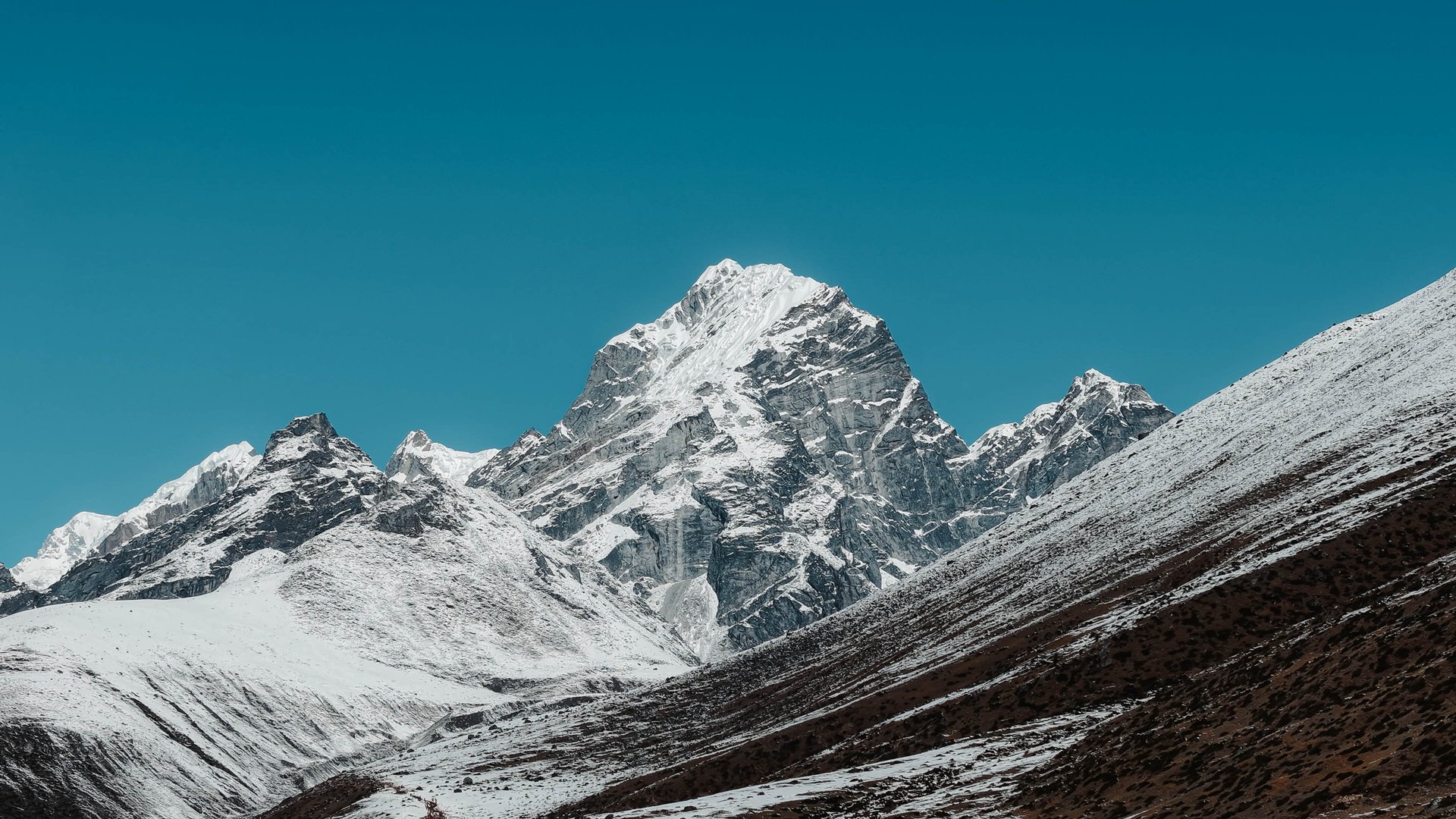
EBC + Island Peak Trek & Climb
Trek to Everest Base Camp then climb Island Peak (6,189 m) — the Khumbu's definitive two-summit adventure.
 Khumbu Region
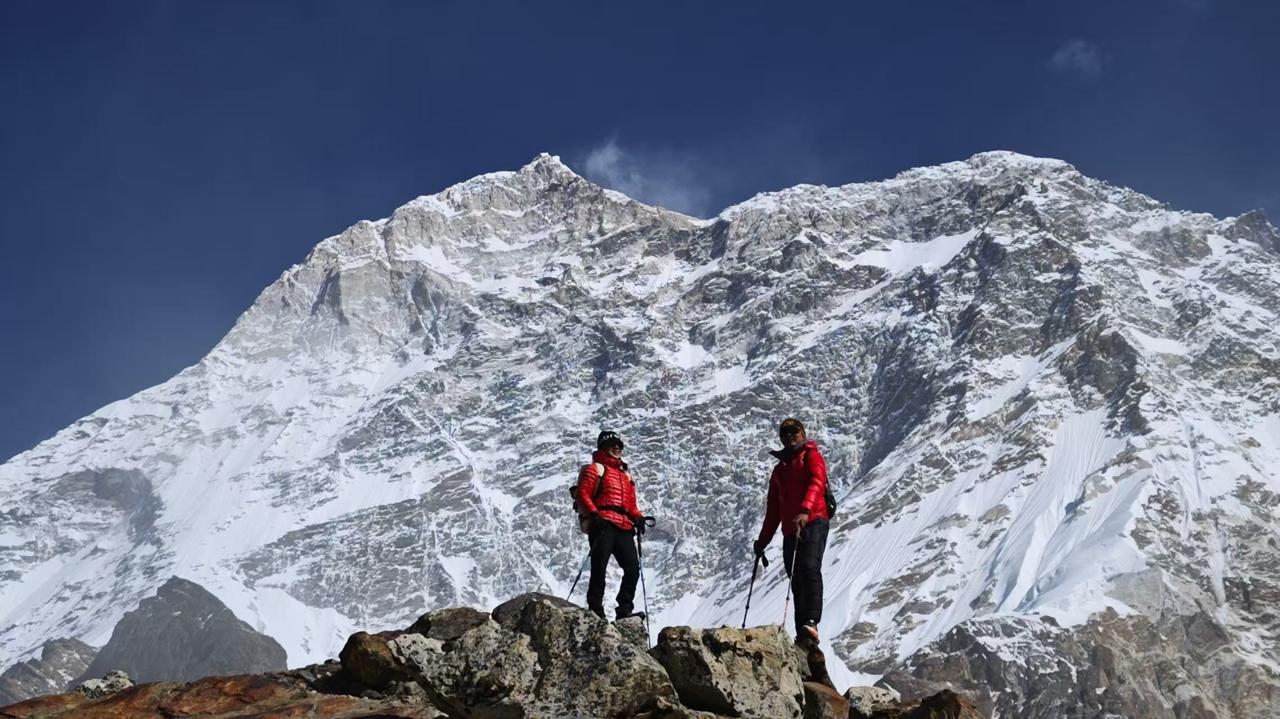
EBC + Lobuche East Trek
Trek to Everest Base Camp and summit Lobuche East for the ultimate Himalayan adventure through legendary trails, towering glaciers, and breathtaking alpine landscapes.
 Khumbu Region
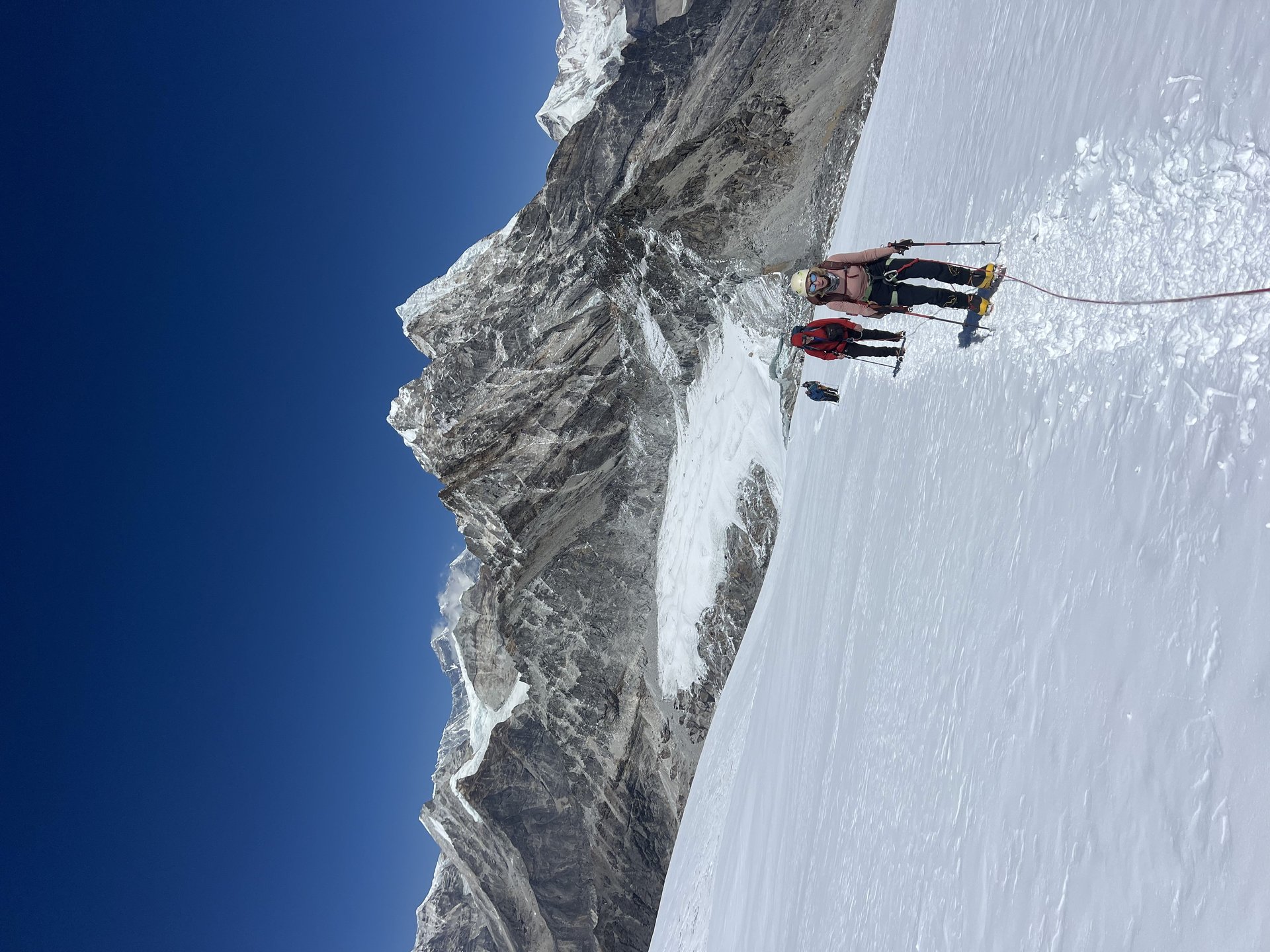
Makalu Base Camp + Amphu Laptsa Extended Trek
Journey across Nepal's most remote Himalayan wilderness from Makalu Base Camp to the technical Amphu Laptsa Pass, where glaciers, towering peaks, and an unforgettable traverse into the Khumbu await.
 Khumbu Region
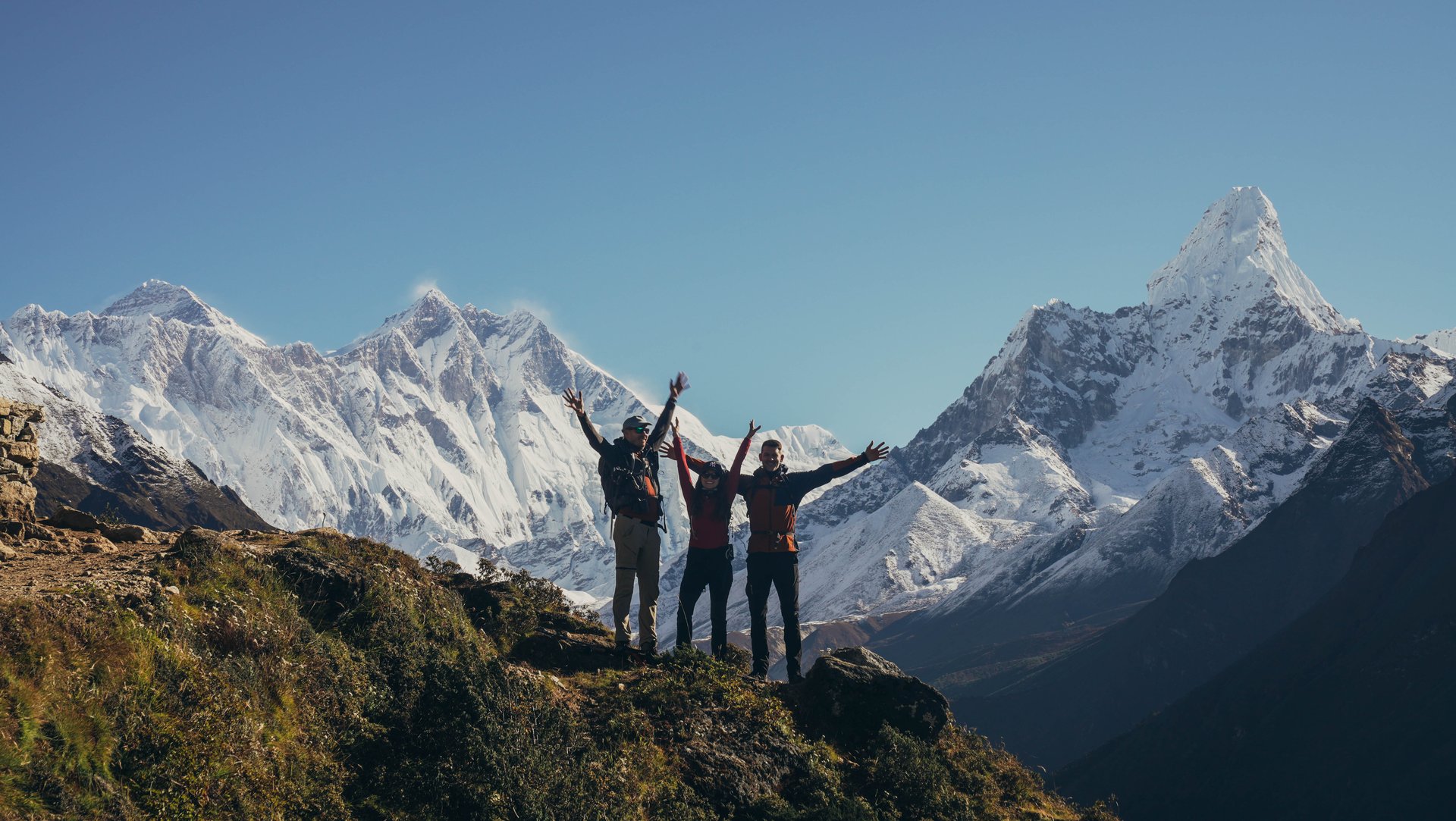
Mera Peak + Amphu Laptsa + Island Peak
Take on Nepal's ultimate alpine traverse by climbing Mera Peak and Island Peak while crossing the technical Amphu Laptsa Pass through glaciers, remote valleys, and the heart of the Himalayas.
 Khumbu Region
Everest Base Camp Trek
Everest Base Camp Trek — Khumbu Glacier & Kala Patthar (5,545 m)
Ready to Start Your Trekking Adventure?
Contact us to book your trek or get more information