
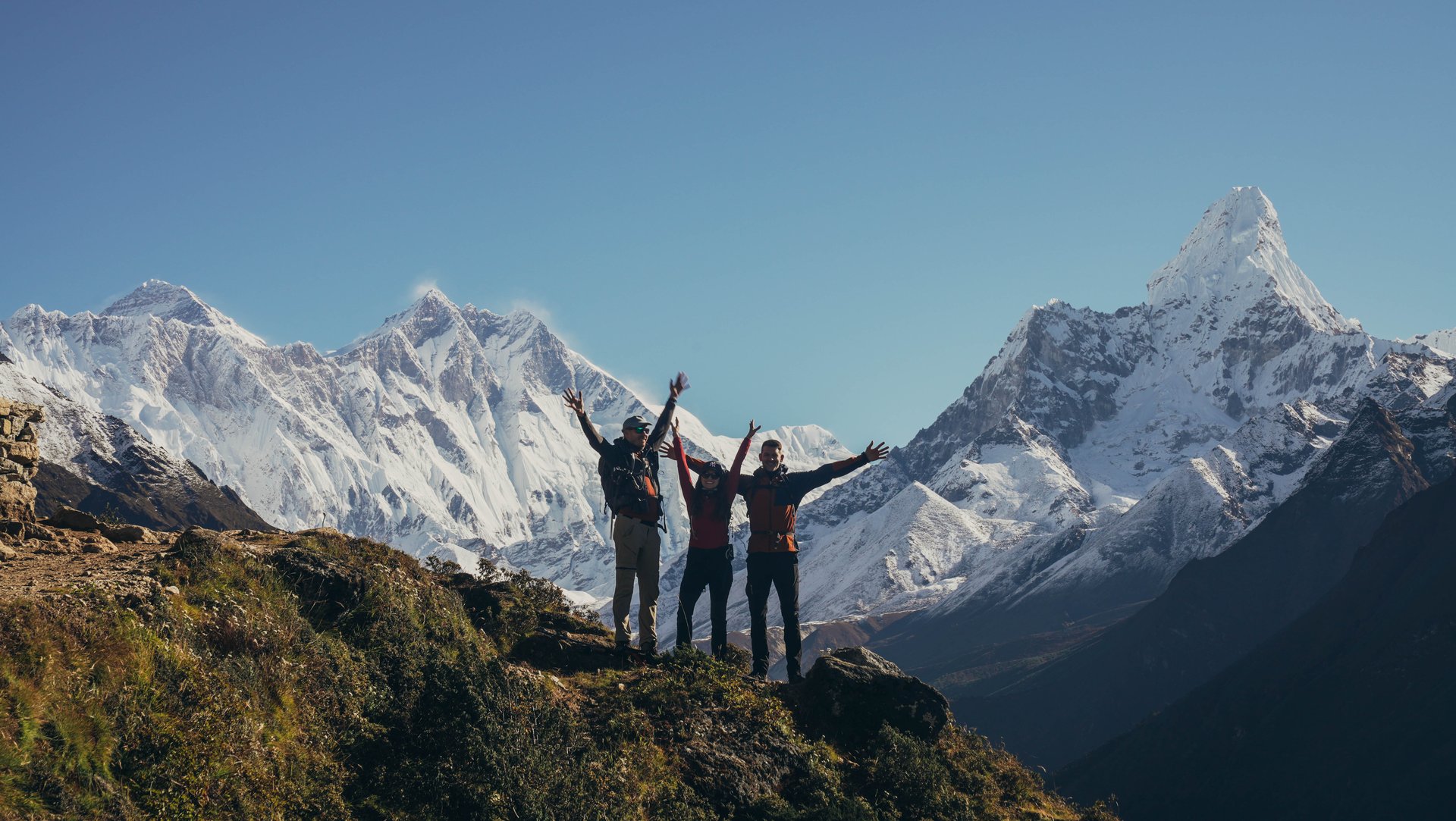
Trek Overview
What is the Everest Base Camp Trek?
The Everest Base Camp Trek is the most iconic Himalayan trekking route in the world. Starting from Lukla airport and following the ancient trade routes of the Sherpa people through the Khumbu valley, the 15-day journey climbs to Everest Base Camp at 5,364 metres and the summit of Kala Patthar at 5,545 metres — the highest point on the standard EBC route and the finest viewpoint for the full south face of Everest. Trekking through UNESCO-listed Sagarmatha National Park, the route passes Namche Bazaar, Tengboche Monastery, Dingboche, and Lobuche before reaching the icefall and the vast Khumbu Glacier at the foot of the world's highest mountain.
AltiPro's EBC Trek is a fully guided 15-day itinerary from Lukla to EBC and Kala Patthar, with return via Namche and Lukla. All teahouse accommodation, all meals, an experienced English-speaking Sherpa guide, a personal porter for each trekker, all national park and TIMS permits, and Kathmandu airport transfers are included. Maximum 12 trekkers per group.
The trek is rated Moderate — demanding for the sustained altitude gain and the physical challenge of trekking above 5,000m, but achievable for any trekker with good fitness and several months of preparation. No technical climbing skills are required. AltiPro recommends 3 to 4 months of aerobic preparation before departure.
About the Everest Base Camp Trek — The World's Most Famous Mountain Trek
The EBC Trek follows the Dudh Koshi river valley from Lukla through a series of increasingly dramatic mountain landscapes. The first section climbs through the Sherpa heartland — Phakding, Namche Bazaar, Khumjung — through rhododendron forests and high ridgelines where Everest and Ama Dablam appear for the first time. Above Tengboche Monastery, the landscape transforms into high-altitude tundra and glacier moraines as the route enters the upper Khumbu, passing Dingboche, Lobuche, and Gorak Shep before the final approach to Everest Base Camp.
Kala Patthar (5,545m) is the summit of the standard EBC trek. The pre-dawn ascent from Gorak Shep delivers a direct view of Everest's south face and southwest ridge at sunrise — one of the great mountain viewpoints on Earth, with the Khumbu Icefall directly below and the Lhotse-Nuptse wall rising to the east.
Why Choose AltiPro Adventures for the EBC Trek?
Expert Sherpa Guide Team
AltiPro's EBC guides are experienced, English-speaking Sherpas from the Khumbu region with personal knowledge of every section of the route, the teahouse network, and the altitude management protocols to keep trekkers safe and acclimatised throughout.
Optimal Acclimatisation Itinerary
The 15-day schedule includes properly spaced rest days at Namche (Days 3–4) and Dingboche (Days 7–8), following the recommended altitude gain profile to minimise altitude sickness risk on the approach to EBC.
Personal Porter for Each Trekker
Every trekker has a dedicated porter carrying their trek bag, allowing a light day pack on the trail. Porter welfare — fair wages, insurance, and appropriate equipment — is a core commitment for AltiPro on every trek.
Small Group Size
Maximum 12 trekkers, ensuring personal attention from the guide team and the flexibility to adjust pace for each individual's needs, fitness level, and acclimatisation response throughout the 15 days.
All-Inclusive Pricing
All Sagarmatha National Park fees, TIMS card, Lukla flights, teahouse accommodation, all meals on trek, and guide and porter costs are included. No hidden costs or on-the-ground extras to budget for.
Kala Patthar Sunrise
AltiPro's itinerary includes a pre-dawn departure from Gorak Shep for the Kala Patthar sunrise — timed specifically to catch the best morning light on Everest's south face from 5,545m, the definitive EBC trek experience.
Everest Base Camp Trek — 15-Day Route Overview
The EBC route climbs steadily from Lukla through the Dudh Koshi valley with two essential acclimatisation stops at Namche and Dingboche before reaching Gorak Shep and the final push to EBC and Kala Patthar.
Days 1–2: Kathmandu → Lukla (2,860m) → Phakding (2,610m)
Flight from Kathmandu to Lukla's Hillary-Tenzing Airport, the gateway to the Khumbu. The first trekking day descends gently along the Dudh Koshi river to Phakding, warming up legs and lungs for the days ahead.
Days 3–4: Namche Bazaar (3,440m) + Acclimatisation
The iconic 700m climb from the river to Namche Bazaar — with the first views of Everest appearing above the ridge on the approach. The acclimatisation day hike to the Everest View Hotel ridge (3,880m) delivers views of Everest, Ama Dablam, and Thamserku.
Days 5–6: Tengboche (3,867m) → Dingboche (4,360m)
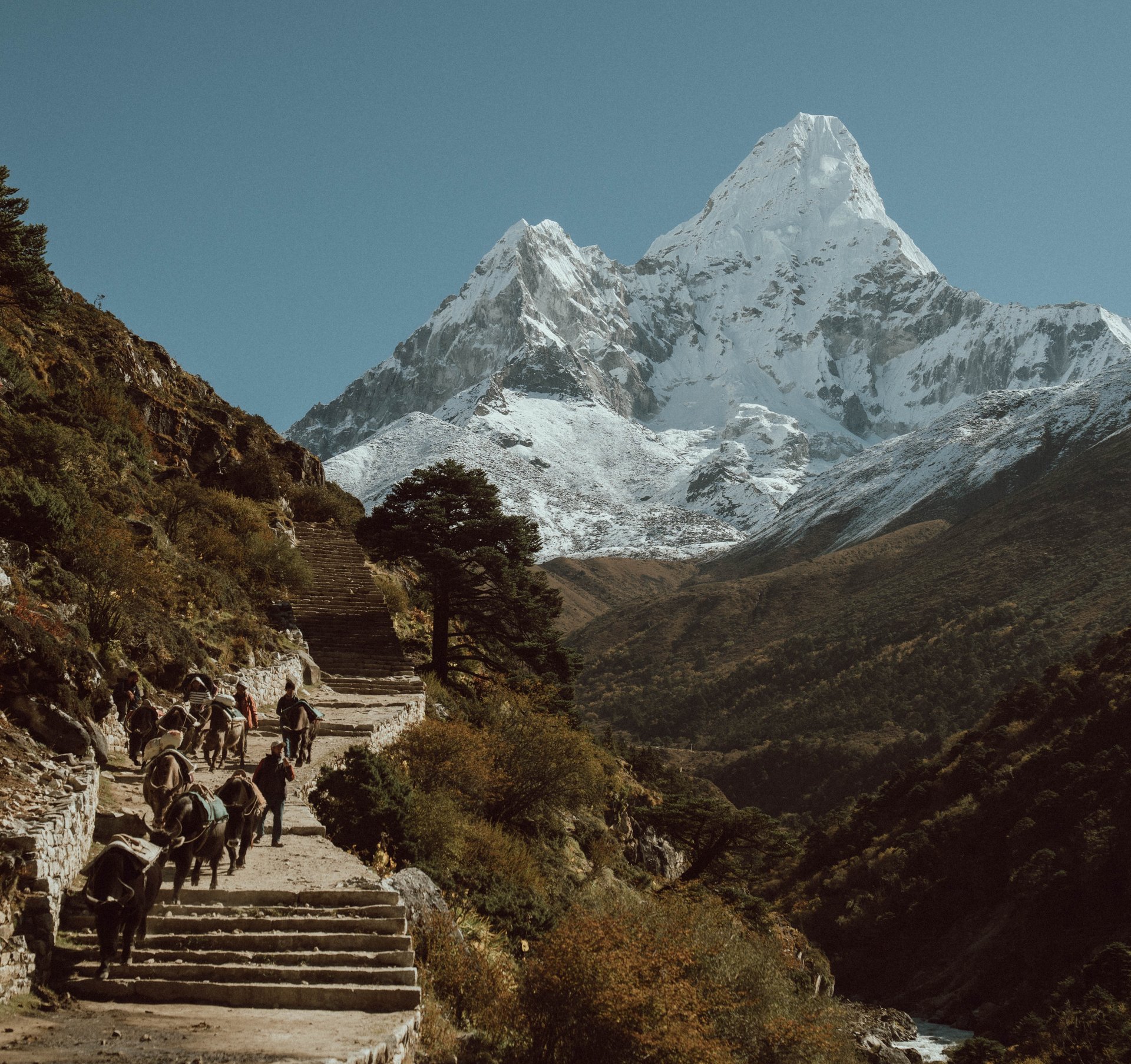
Tengboche Monastery with Ama Dablam rising behind it is the most photographed point on the route. Above Tengboche the landscape opens into high-altitude meadows and the first glacier views as the valley narrows toward the upper Khumbu.
Days 7–8: Dingboche Acclimatisation + Chhukung Ri (5,546m)
Two nights at 4,360m is essential before the push above 5,000m. The acclimatisation hike to Chhukung Ri or Nangkartshang Peak delivers extraordinary views of Lhotse, Island Peak, and the Amphu Lapcha glacier.
Days 9–10: Lobuche (4,910m) → Gorak Shep (5,140m) → EBC (5,364m)
The approach across the Khumbu Glacier moraines to Gorak Shep and then along the glacier edge to Everest Base Camp is one of the most dramatic stretches of the entire route, with the Khumbu Icefall rising directly above.
Day 11: Kala Patthar (5,545m) → Pheriche
Pre-dawn departure from Gorak Shep for the Kala Patthar sunrise — Everest's full south face illuminated at first light from 5,545m. This is the emotional high point of the trek. Descent to Pheriche follows.
How Difficult is the Everest Base Camp Trek?
The EBC Trek is rated Moderate. No technical climbing skills are required. The main challenge is the sustained altitude gain above 3,500m and the physical demands of trekking for two weeks at altitude. Trekkers should be in good cardiovascular fitness before departure. AltiPro's acclimatisation schedule follows proven protocols with properly spaced rest days at Namche and Dingboche.
Best Season for the Everest Base Camp Trek
Autumn (October–November): The primary EBC season, with clear skies, stable weather, and the best visibility for Kala Patthar sunrise views. October is the single best month.
Spring (March–May): Excellent spring conditions with rhododendron blooming in the lower valleys. April and May are ideal with long daylight hours and settled weather before the monsoon.
Everest Base Camp Trek Cost
Fully guided EBC Trek — Lukla flights, all teahouse accommodation, all meals, Sagarmatha National Park permit, personal guide and porter included.
Includes Lukla domestic return flights, all teahouse accommodation, all meals on trek, Sagarmatha National Park fee, TIMS card, licensed English-speaking Sherpa guide, and a personal porter for every trekker. Kathmandu hotel accommodation and airport transfers included. International flights and personal trekking gear are not included. Contact AltiPro for a full cost breakdown.
Everest Base Camp Trek — Frequently Asked Questions
Common questions about the Everest Base Camp Trek with AltiPro Adventures.
How fit do I need to be for the EBC trek?
Good aerobic fitness is essential. AltiPro recommends 3 to 4 months of preparation including regular hiking, running, or cycling. You should be comfortable with 6 to 8 hours of trekking per day on uneven terrain.
What is the highest point of the EBC trek?
Kala Patthar at 5,545m is the highest point on AltiPro's standard EBC itinerary. Everest Base Camp itself sits at 5,364m.
What is included in AltiPro's EBC package?
Lukla domestic return flights, all teahouse accommodation and all meals on trek, Sagarmatha National Park fee, TIMS card, licensed English-speaking Sherpa guide, and a personal porter for each trekker. Kathmandu hotel accommodation and airport transfers are included.
What is the best time to do the EBC trek?
October and November for the clearest skies and best visibility. March and April for the spring rhododendron season and fewer crowds than the October peak.
How long is the EBC trek?
15 days from Kathmandu, including 2 Lukla flight days and 13 trekking and rest days in the Khumbu — Phakding, Namche (2 nights), Tengboche, Dingboche (2 nights), Lobuche, Gorak Shep, EBC, and return.
Can beginners do the EBC trek?
Yes, with proper preparation. No technical skills are required. AltiPro's acclimatisation schedule and experienced guide team make the route achievable for first-time trekkers with good fitness and the right aerobic preparation.
Is altitude sickness a risk on the EBC trek?
Altitude sickness is a risk above 3,000m for any trekker. AltiPro's itinerary follows proven acclimatisation protocols with rest days at Namche and Dingboche. Guides monitor all trekkers daily and will recommend descent if symptoms develop.
What is Kala Patthar and why is it important?
Kala Patthar (5,545m) is a rocky hill above Gorak Shep that provides the most direct and dramatic view of Everest's south face. It is the best Everest viewpoint on the EBC route, reached before dawn for the iconic sunrise on the world's highest mountain.
Highlights
- Everest Base Camp (5,364 m / 17,598 ft)
- Kala Patthar Sunrise (5,545 m / 18,192 ft)
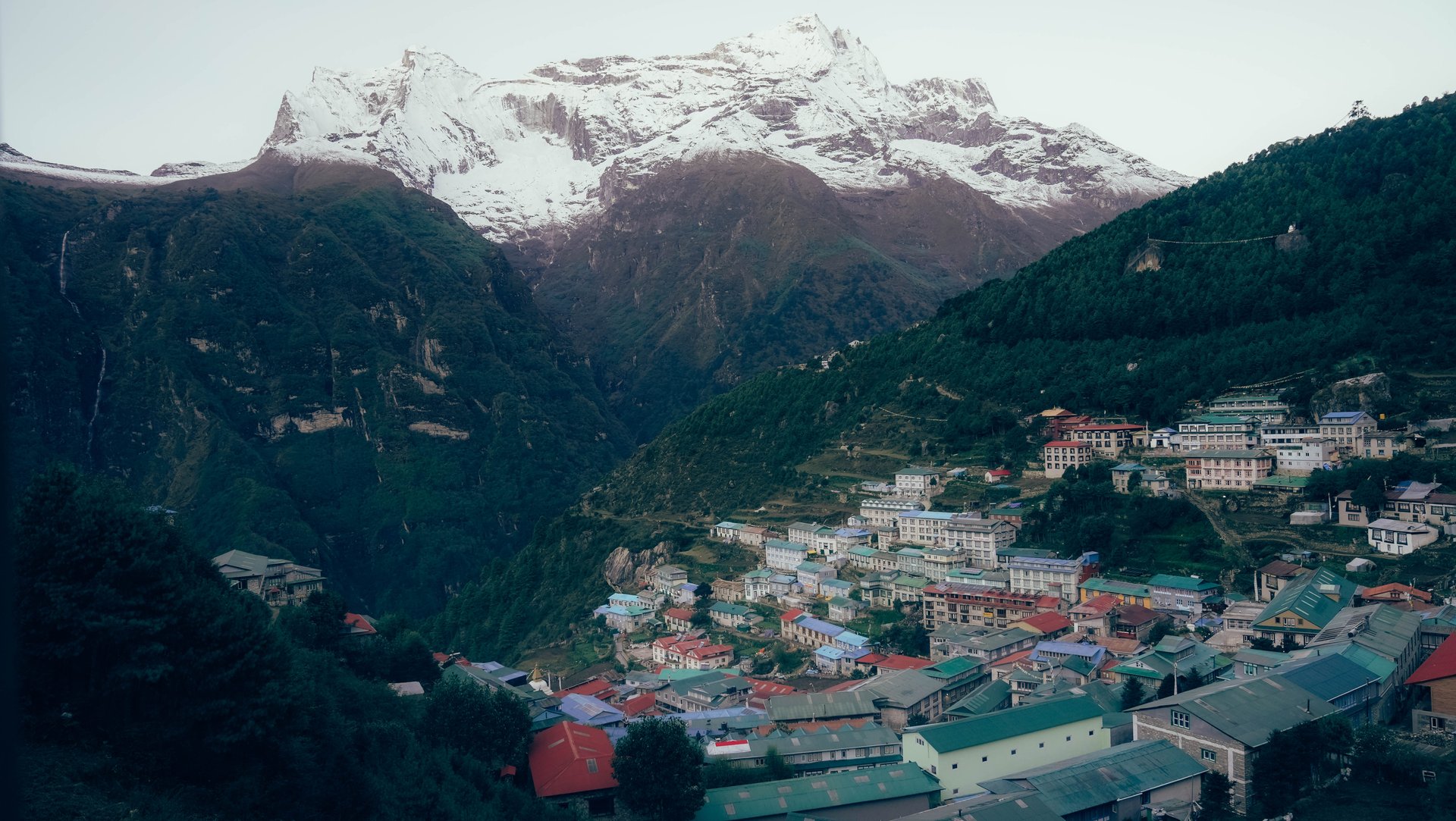
- Namche Bazaar — Capital of the Sherpas
- Tengboche Monastery (3,867 m)
- Tenzing-Hillary Airport, Lukla (2,860 m)
- Thukla Pass Climbers' Memorial (4,830 m)
- Sagarmatha National Park Wildlife
- Nangkartshang Peak Ridge (~4,800 m)
Detailed Itinerary
Click on each day to view details
| Day | Program | Meals | Accom. | |||||||||||||||||||||||||||||||||||||||||||||||||||||||||||||||||||||||||||||||||||||||||||||||||||||||||||||||||||||||||||||||||||||||||||||
|---|---|---|---|---|---|---|---|---|---|---|---|---|---|---|---|---|---|---|---|---|---|---|---|---|---|---|---|---|---|---|---|---|---|---|---|---|---|---|---|---|---|---|---|---|---|---|---|---|---|---|---|---|---|---|---|---|---|---|---|---|---|---|---|---|---|---|---|---|---|---|---|---|---|---|---|---|---|---|---|---|---|---|---|---|---|---|---|---|---|---|---|---|---|---|---|---|---|---|---|---|---|---|---|---|---|---|---|---|---|---|---|---|---|---|---|---|---|---|---|---|---|---|---|---|---|---|---|---|---|---|---|---|---|---|---|---|---|---|---|---|---|---|---|---|
| 1 | Arrival in Kathmandu (1,350 m / 4,429 ft) | Dinner | Hotel | |||||||||||||||||||||||||||||||||||||||||||||||||||||||||||||||||||||||||||||||||||||||||||||||||||||||||||||||||||||||||||||||||||||||||||||
|
Arrive at Tribhuvan International Airport and transfer by private vehicle to your 4-star hotel in Kathmandu. Meet your AltiPro Trek Leader for a welcome dinner and full EBC trek briefing — route overview, permit process, gear inspection and team introductions.
2
|
Fly Kathmandu to Lukla (2,860 m) — Trek to Phakding (2,651 m / 8,697 ft) |
Breakfast, Lunch, Dinner |
Tea House |
|
| Fly 35–40 minutes from Kathmandu to Tenzing-Hillary Airport in Lukla — one of the most dramatic mountain landings in the world. Trek approximately 3–4 hours (6.2 km) down the Dudh Koshi valley through pine forest and Sherpa villages to Phakding. Note: during peak season (Mar–May, Sep–Nov) flights may depart from Manthali/Ramechhap Airport, requiring a 4-hour predawn drive from Kathmandu, coordinated by AltiPro.
3
|
Trek Phakding to Namche Bazaar (3,440 m / 11,286 ft) |
Breakfast, Lunch, Dinner |
Tea House |
|
| A 5–6 hour, 11 km trek along the Dudh Koshi River with multiple suspension bridge crossings — including the iconic Hillary Suspension Bridge. Enter Sagarmatha National Park at the Monjo checkpoint. The final climb through dense pine forest is the steepest on the lower trail, emerging at the natural amphitheatre of Namche Bazaar. First views of Everest are possible on clear mornings on the approach.
4
|
Acclimatisation Day in Namche Bazaar (3,440 m / 11,286 ft) |
Breakfast, Lunch, Dinner |
Tea House |
|
| A structured acclimatisation day essential for safe altitude progression. Morning hike to the Everest View Hotel (3,880 m) for panoramic views of Everest (8,848.86 m), Lhotse (8,516 m) and Ama Dablam (6,812 m) — a "climb high, sleep low" excursion back to Namche. Afternoon visit to Khumjung village, the High Altitude Sherpa Museum and the ancient Khumjung Monastery. Namche also offers the best trail supplies, bakeries and equipment shops in the Khumbu.
5
|
Trek Namche to Tengboche / Debuche (3,867 m / 12,687 ft) |
Breakfast, Lunch, Dinner |
Tea House |
|
| A spectacular 5–6 hour ridge walk (9.2 km) with continuous views of Ama Dablam, Everest, Nuptse and Lhotse. The trail descends to the Imja Khola before a final steep climb through rhododendron forest to Tengboche Monastery (3,867 m) — the spiritual and cultural heart of the Khumbu, with its ancient prayer hall and iconic Ama Dablam backdrop.
6
|
Trek Tengboche to Dingboche (4,380 m / 14,370 ft) |
Breakfast, Lunch, Dinner |
Tea House |
|
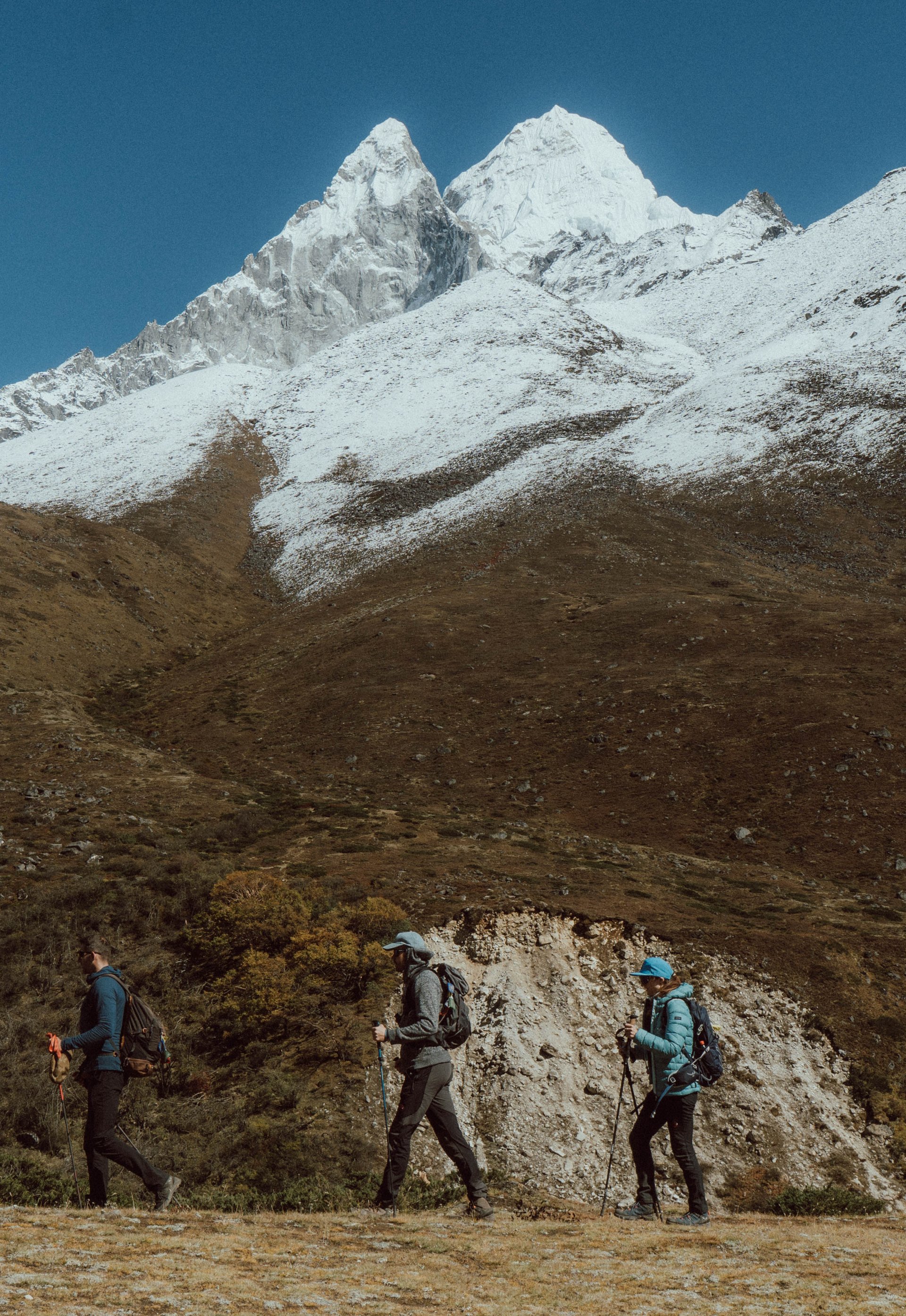
| A 4–5 hour, 12 km walk through Deboche and Pangboche with fine views of Ama Dablam as the trail climbs above the treeline into the high alpine tundra. The stone-walled potato fields and yak pastures of Dingboche mark the gateway to the upper Khumbu. The air is noticeably thinner at this elevation — pace accordingly.
7
|
Acclimatisation Day — Dingboche (4,380 m / 14,370 ft) |
Breakfast, Lunch, Dinner |
Tea House |
|
| Second and final acclimatisation day on the ascent. Morning hike to Nangkartshang Peak ridge (~4,800 m) for commanding views of Makalu (8,485 m), Lhotse, Ama Dablam and the Island Peak massif — a rigorous altitude stimulus without significant load. Return to Dingboche for afternoon rest, hydration and medical review by the AltiPro Trek Leader.
8
|
Trek Dingboche to Lobuche (4,940 m / 16,207 ft) |
Breakfast, Lunch, Dinner |
Tea House |
|
| A 4–5 hour, 8.5 km ascent across open glacial terrain. The trail climbs to Thukla Pass (4,830 m) where stone memorial cairns honour climbers lost on Everest — including Scott Fischer and Babu Chhiri Sherpa. The landscape above Thukla is stark, windswept moraine. Lobuche (4,940 m) is the last true village before Gorakshep.
9
|
Lobuche to Gorakshep — Trek to Everest Base Camp (5,364 m / 17,598 ft) — Return to Gorakshep |
Breakfast, Lunch, Dinner |
Tea House |
|
| The defining day of the trek. Follow the Khumbu Glacier moraine 3.5 hours to Gorakshep (5,164 m) for lunch, then continue 3.5 hours across the glacier to Everest Base Camp (5,364 m) — the prayer flags, rock cairns and constant roar of the Khumbu Icefall marking one of the most celebrated spots in mountain history. Return to Gorakshep overnight (~7–8 hours total, 13 km).
10
|
Kala Patthar Sunrise (5,545 m / 18,192 ft) — Descend to Pheriche (4,371 m) |
Breakfast, Lunch, Dinner |
Tea House |
|
| Pre-dawn departure from Gorakshep with headlamps for the steep, non-technical climb to Kala Patthar (5,545 m) — the highest point on the trek and the finest viewpoint for Everest's summit pyramid, Nuptse's West Ridge and the Khumbu Glacier available without a climbing permit. Watch the first light of sunrise strike the roof of the world. Descend to Gorakshep for breakfast, then continue the long descent to Pheriche (4,371 m). (~7–8 hours total)
11
|
Trek Pheriche to Namche Bazaar (3,440 m / 11,286 ft) |
Breakfast, Lunch, Dinner |
Tea House |
|
| A long descent (~6–7 hours, 16 km) via Tengboche through rhododendron forests, across suspension bridges and past the stone prayer walls of the lower Khumbu. The air thickens with every metre of descent. Energy returns noticeably below 4,000 m. Celebrate arrival in Namche at the trail's best tea houses and bakeries.
12
|
Trek Namche Bazaar to Lukla (2,860 m / 9,383 ft) |
Breakfast, Lunch, Dinner |
Tea House |
|
| The final trekking day — a 7-hour, 19 km descent retracing the Dudh Koshi valley through Phakding, the suspension bridges and prayer walls of the lower trail. Arrival dinner in Lukla with guides and porters. Certificates, photographs and farewells to the mountains that have been your backdrop for nearly two weeks.
13
|
Fly Lukla to Kathmandu — Rest & Farewell Dinner |
Breakfast, Dinner |
Hotel |
|
| A 35–40 minute scenic flight returns you from Lukla (2,860 m) to Kathmandu. Transfer to your 4-star hotel. Afternoon free for rest, Thamel exploration or a spa treatment — well deserved after 10 days of high-altitude trekking. Farewell dinner in the evening with the AltiPro team and formal presentation of your EBC Trek completion certificate.
14
|
Buffer / Contingency Day — Kathmandu |
Breakfast |
Hotel |
|
| A built-in buffer day protecting your international connections against Lukla weather delays, which can affect approximately 10% of flights during peak seasons. If no delays have occurred, use this day for Kathmandu sightseeing: Boudhanath Stupa, Swayambhunath (Monkey Temple), Patan Durbar Square or the Garden of Dreams are all within easy reach.
15
|
Final Departure from Kathmandu |
Breakfast |
Hotel |
|
| AltiPro private transfer to Tribhuvan International Airport for your international departure. Departure at any time — please advise your flight details for transfer scheduling. Safe travels and congratulations on completing the Everest Base Camp Trek. | ||||||||||||||||||||||||||||||||||||||||||||||||||||||||||||
Services
Includes
- ✅ Sagarmatha National Park Entry Permit
- ✅ Khumbu Pasang Lhamu Rural Municipality Entry Permit
- ✅ TIMS Card (Trekkers' Information Management System)
- ✅ All Nepal government taxes and AltiPro company service charges
- ✅ Airport transfers — arrival and departure by private vehicle
- ✅ 3 nights 4-star hotel in Kathmandu (BB) — 2 nights pre-trek, 1 night post-trek
- ✅ Welcome dinner in Kathmandu and farewell dinner on return
- ✅ Full trek briefing pack and documentation support in Kathmandu
- ✅ Domestic flights: Kathmandu to Lukla and Lukla to Kathmandu (round trip) for all members and trek staff
- ✅ All ground transport for trek staff: Kathmandu–Lukla–Kathmandu
- ✅ Peak-season Manthali/Ramechhap Airport ground transport coordinated by AltiPro where required
- ✅ Full board accommodation at tea houses and lodges throughout all trekking days
- ✅ Three freshly cooked meals per day (BLD) on all trekking days
- ✅ Hot drinks — tea and coffee — included with every meal
- ✅ Government-licensed English-speaking Trek Leader / Guide for the full trek
- ✅ Porters — 1 porter per 2 clients, carrying up to 15 kg of personal baggage per member
- ✅ All trek staff wages, insurance, meals, accommodation and equipment
- ✅ Comprehensive first-aid medical kit carried by Trek Leader
- ✅ Emergency satellite phone (guide-carried; member use available with per-call charge)
- ✅ EBC Trek completion certificate
- ✅ Khumbu Region trekking map
- ✅ One buffer / contingency day built into the 15-day itinerary for Lukla flight disruptions
- ✅ Emergency evacuation coordination and contingency planning pre-arranged before departure
Excludes
- ❌ International flights to and from your home country
- ❌ Nepal entry visa fee (~USD 50 for 30 days, obtainable on arrival at Tribhuvan International Airport)
- ❌ Personal trekking gear, clothing, boots and equipment
- ❌ Personal satellite messenger device (Garmin inReach or similar)
- ❌ Drone and special filming permit fees
- ❌ Meals in Kathmandu beyond included welcome and farewell dinners
- ❌ Personal expenses at tea houses: hot showers, battery charging, Wi-Fi, laundry, and soft or alcoholic drinks
- ❌ Extra porter days or upgraded accommodation above the standard included level
- ❌ Travel and medical insurance including emergency helicopter evacuation — mandatory for all participants
- ❌ Policy must cover trekking above 5,500 m and helicopter rescue in Nepal
- ❌ Minimum coverage of USD 15,000 recommended
- ❌ Gratuities for Trek Leader, porters and local staff — recommended minimum 10% of trip cost
- ❌ Costs arising from Lukla flight delays, natural events or political disruptions
- ❌ Additional accommodation or transport costs arising from force majeure events
Gear Lists & Useful Information
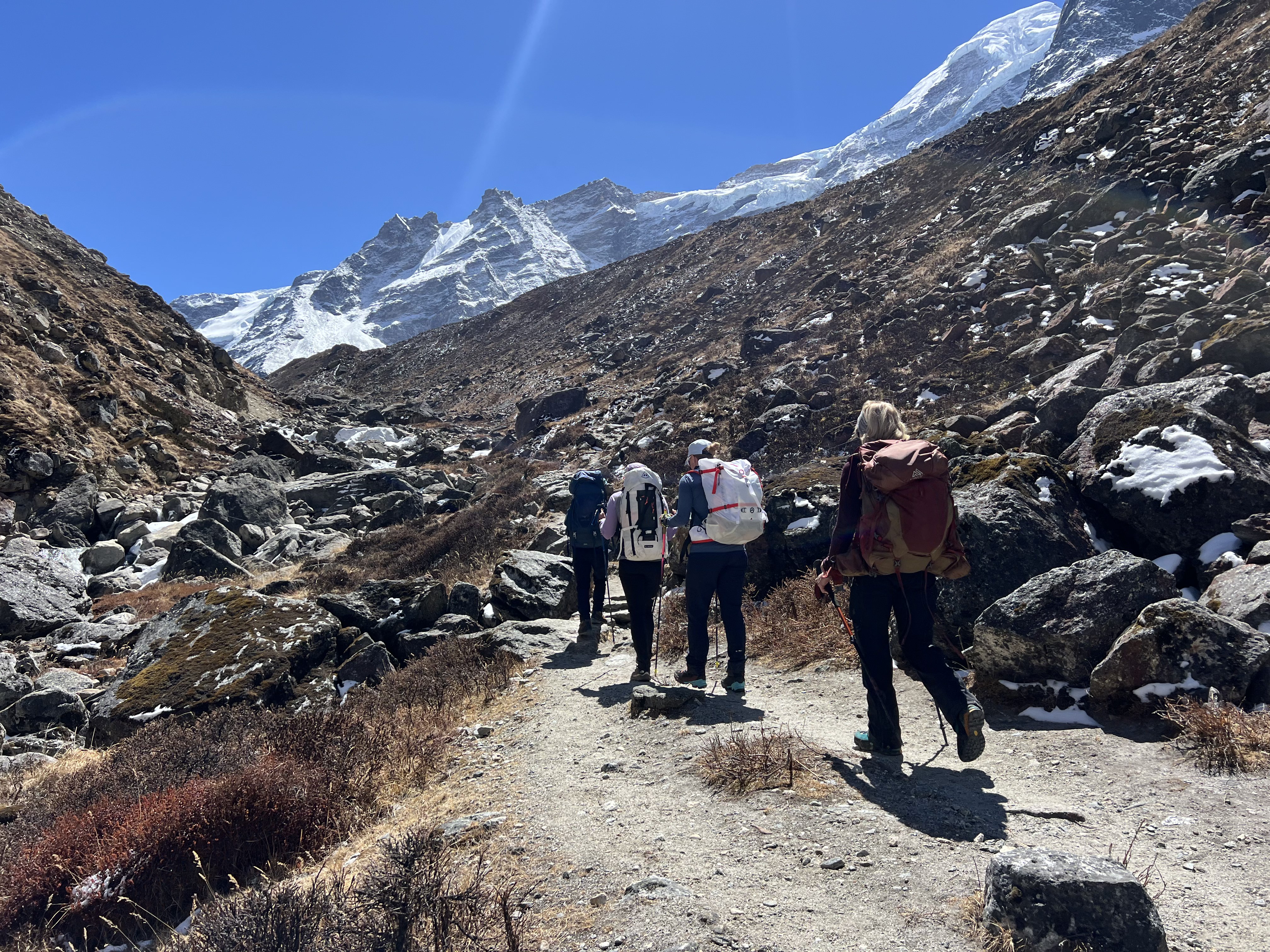
Route Map
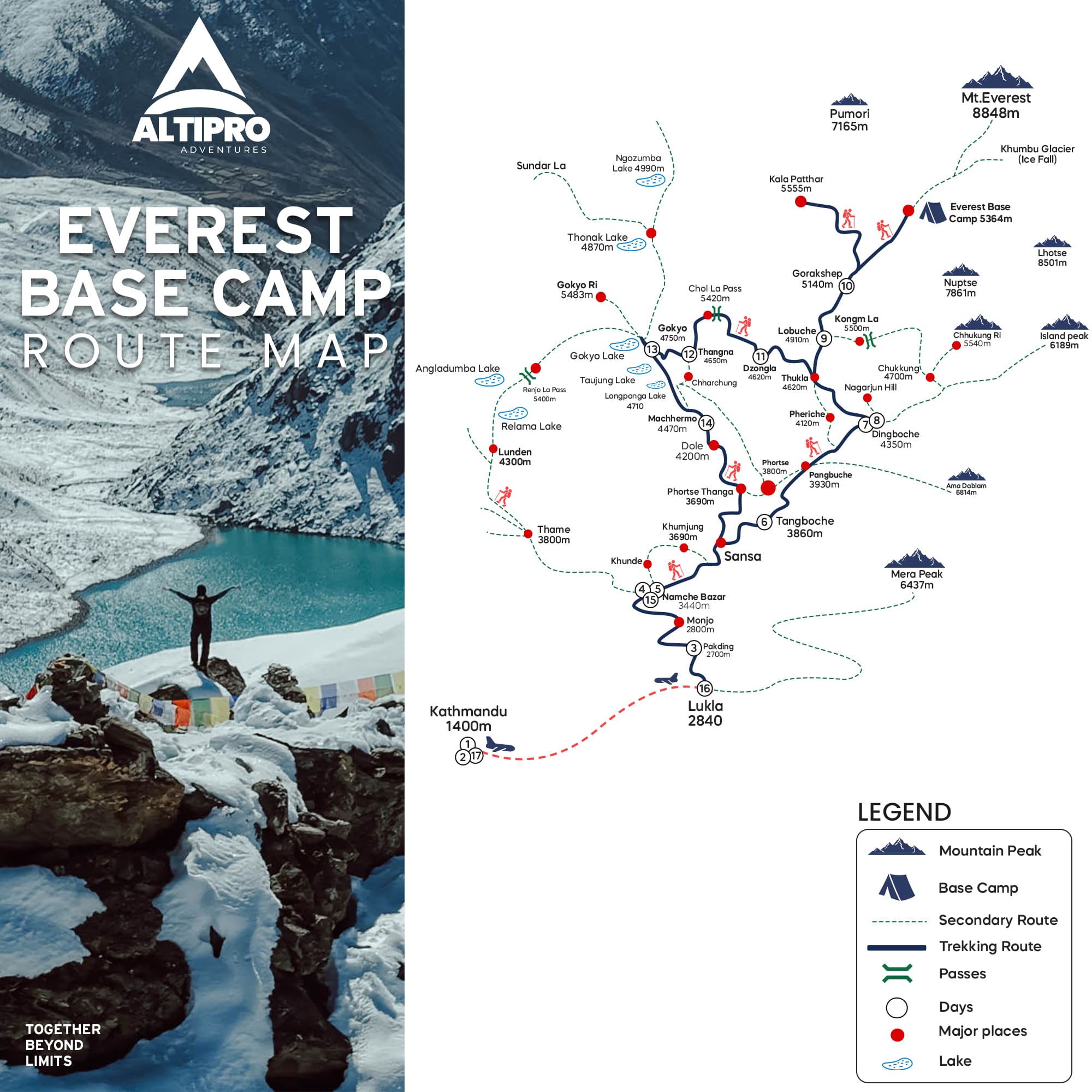
Trek Gallery
Explore stunning images from this trek
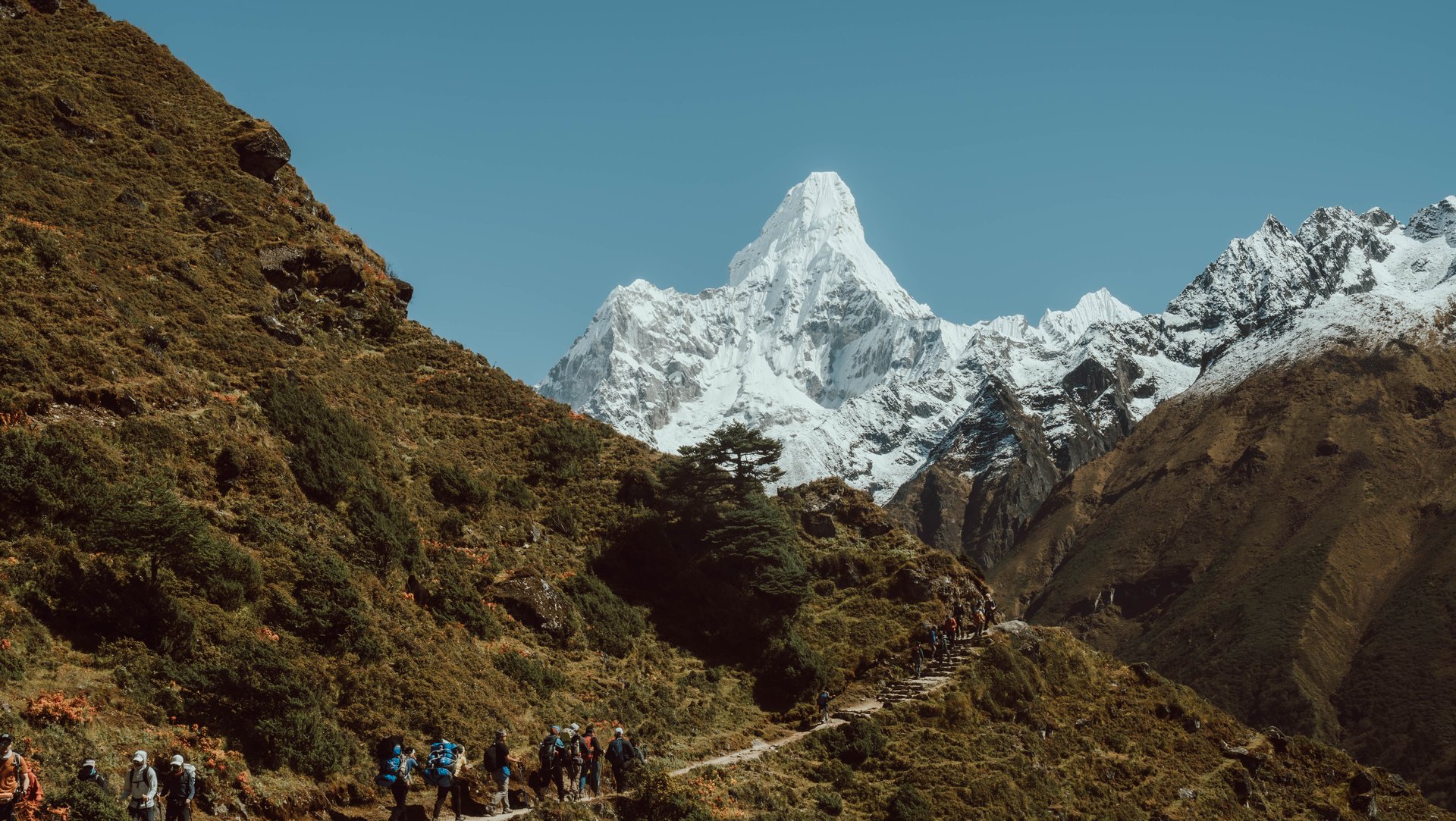
Trek Videos
Watch highlights and experiences from the trek


Frequently Asked Questions
Find answers to common questions about this trek
Lukla's Tenzing-Hillary Airport is located at 2,860 metres in a narrow valley in the mountains, without instrument landing systems. Flights are dependent on the weather and the final decision to go or not is made at the airport, usually 30 minutes before the flight. During peak seasons, there are several flights per day, and during transitional weather, delays on about 10% of flights are not uncommon. AltiPro's 15-day trip has one built-in buffer day. If you want to have tighter international connections, we suggest international flights to be booked with a minimum of 2 days' buffer after the last EBC trek day.
No previous trekking experience is required, but it does make the physical and psychological challenge less. Walking at altitude, carrying a light day pack and adjusting to basic tea house conditions is required for the trek. For those who are new to multi-day trekking, we suggest to do a shorter acclimatizing trek (Langtang Valley Trek) in the months leading up to EBC.
Travel and medical insurance (including emergency helicopter evacuation) is NOT part of the package price and is required for all participants. The policy should include trekking activity above 5500m and helicopter rescue in Nepal. A minimum coverage of USD 15,000 is recommended. AltiPro will be able to suggest providers upon request.
The trail is rated Strenuous. It includes 5-7 hours of walking per day for 10 trekking days with a maximum altitude of 5545 m at Kala Patthar. Technical climbing ability is not required, but good physical fitness, cardiovascular endurance and experience in multi-day hiking is recommended. It is important to have an awareness of altitude and be able to identify early signs of altitude sickness.
The Everest Base Camp trek is a non-technical trek, meaning that no mountaineering skills, ropes or crampons are required. Everest summit expeditions are a very different proposition: Technical climbing skills, high altitude permits (USD 11,000+ per person), 60+ days, supplemental oxygen, and extensive Sherpa support. AltiPro also provides full Everest summit expeditions for qualified climbers. Call us to talk about your objectives.
The hike begins at Lukla (2,860 m) and ascends about 2,685 metres to Base Camp at 5,364 m, a gradual and well-paced ascent over 8 trekking days and 2 structured acclimatization rest days. The highest point of the hike is Kala Patthar at 5545 m.
Yes. The North Base Camp of Mt. Everest is situated at 5,150 metres (16,900 feet) on the Rongbuk Glacier in Tibet (China). It can be reached by road from Lhasa and needs a Tibet Travel Permit and Chinese visa. AltiPro's standard EBC trek is from Nepal. The North Base Camp is a separate camp site with all its own access, logistics and permit requirements. For North Base Camp arrangements please contact us.
There is a good network of tea houses and lodges along the trail. Namche Bazaar offers a variety of accommodation choices, including more comfortable lodges with attached bathrooms. Outside of Namche, rooms are available in standard tea house rooms that share facilities with other guests, in twin sharing accommodation. AltiPro books the best possible seat at each stop. Kathmandu nights are in a 4-star hotel.
The best time to visit is Spring (mid March to late May) and Autumn (late September to mid November). At Base Camp, spring offers stable weather, rhododendrons blooming at the bottom of the trail and the vitality of the Everest expedition season. The best mountain photography conditions are in the fall when the skies are clearest. Custom departures are offered throughout both seasons with AltiPro.
Everest Base Camp (South) is located at 5,364 metres (17,598 feet) above sea level on the Khumbu Glacier in the Sagarmatha National Park in Nepal. The highest point on the AltiPro EBC trek is Kala Patthar at 5,545 metres (18,192 feet) where you will enjoy the best unobstructed view of the Everest summit without a climbing permit.
To legally complete this trek, three local and national permits are mandatory:
- Sagarmatha National Park Entry Permit: Required for environmental and wildlife conservation inside the park.
Cost: ~NPR 3,000 (~$23 USD) per person.
- Khumbu Pasang Lhamu Rural Municipality Permit: The local government entry fee collected for regional infrastructure development.
Cost: ~NPR 2,000 (~$15 USD) per person.
- TIMS Card (Trekkers' Information Management System): The national security card required for safety tracking and rescue coordination.
Cost: ~$10 USD per person for organized agency groups.
Been on this trek?
Your feedback helps other travelers plan their adventure of a lifetime. Share your experience with us!
 Khumbu Region
Combined Peak Trek – Mera + Island + Lobuche East
Combined Peak Trek – Mera + Island + Lobuche East
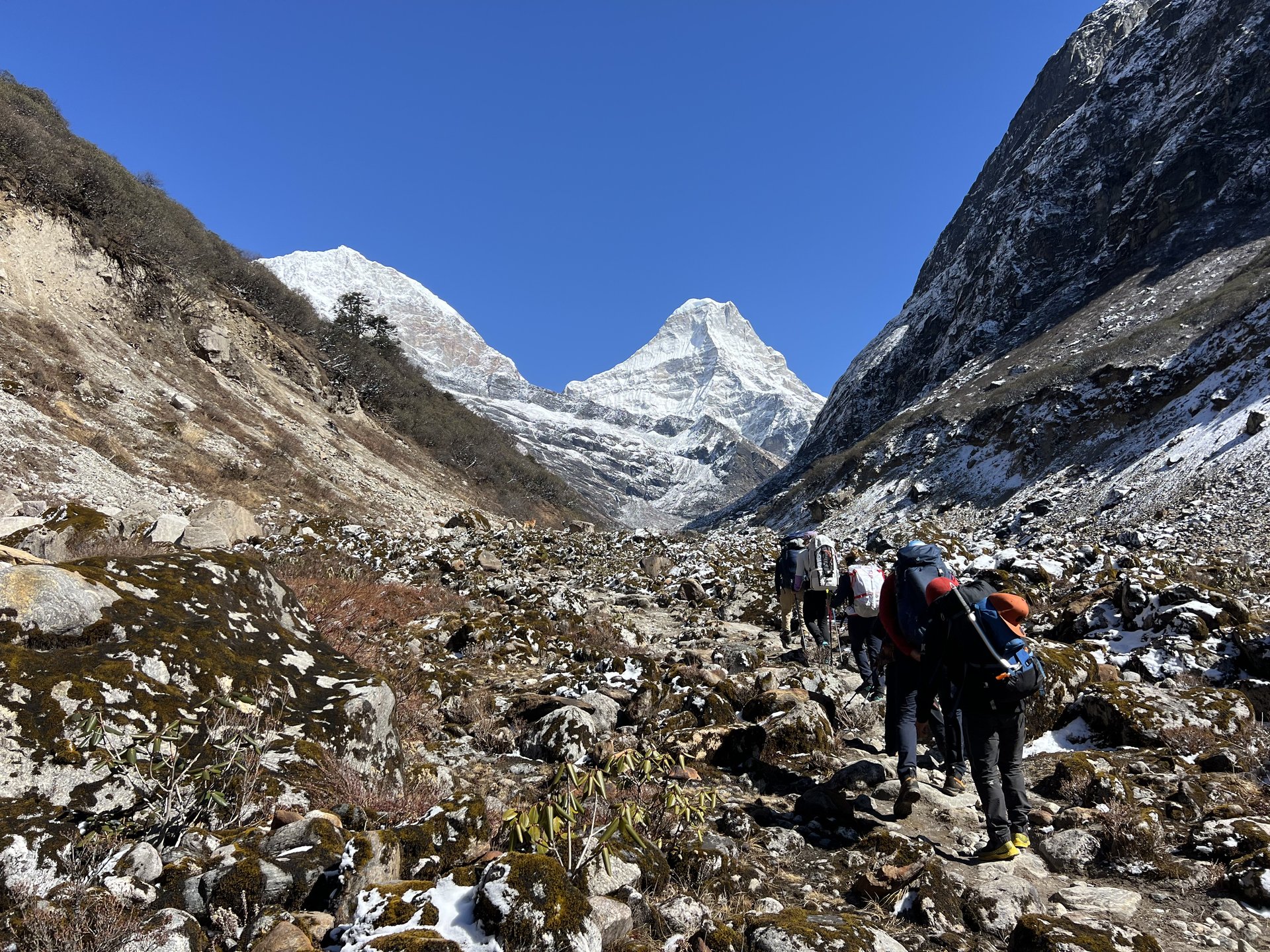 Khumbu Region
EBC + Island Peak Trek & Climb
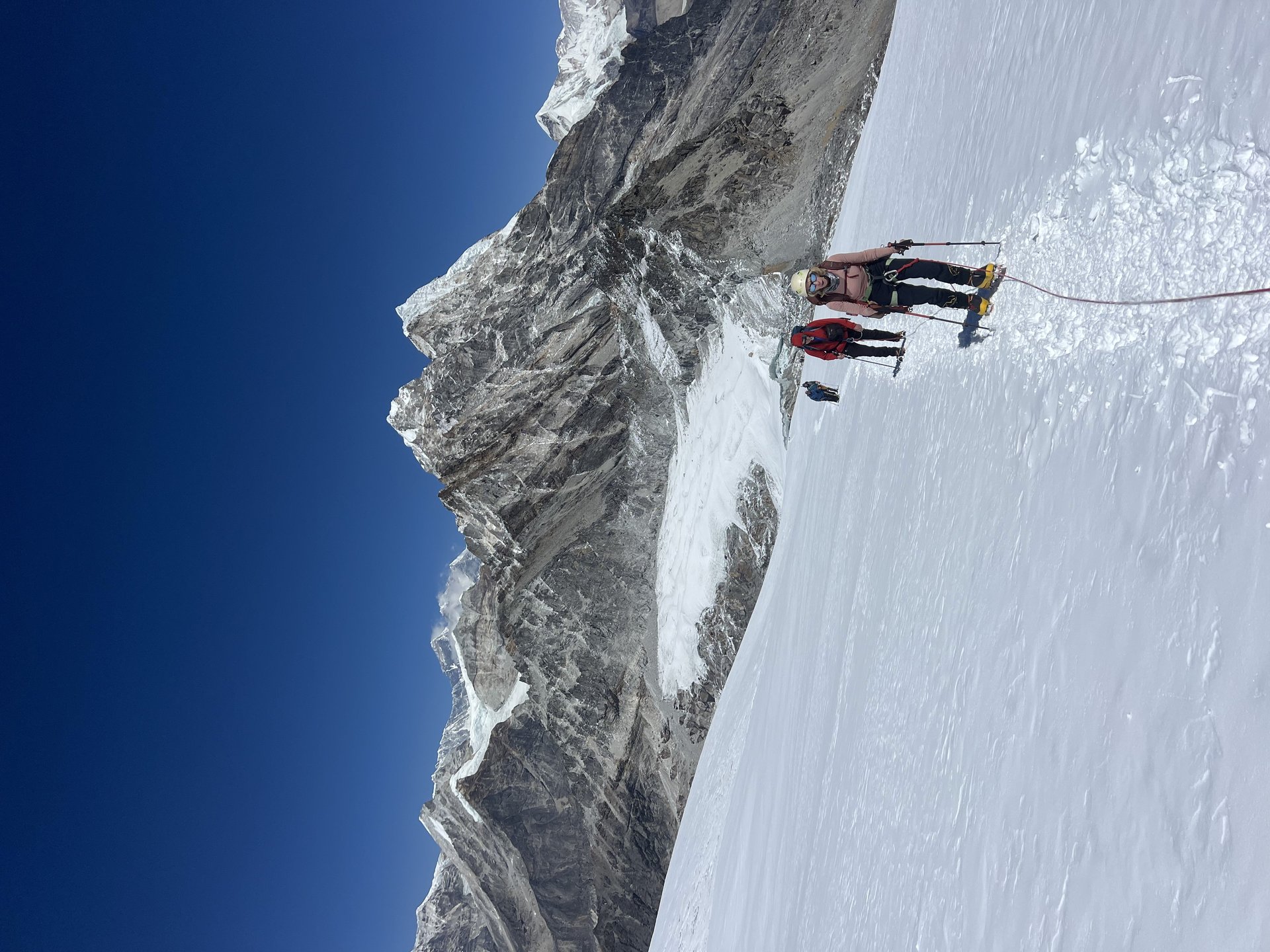
Trek to Everest Base Camp then climb Island Peak (6,189 m) — the Khumbu's definitive two-summit adventure.
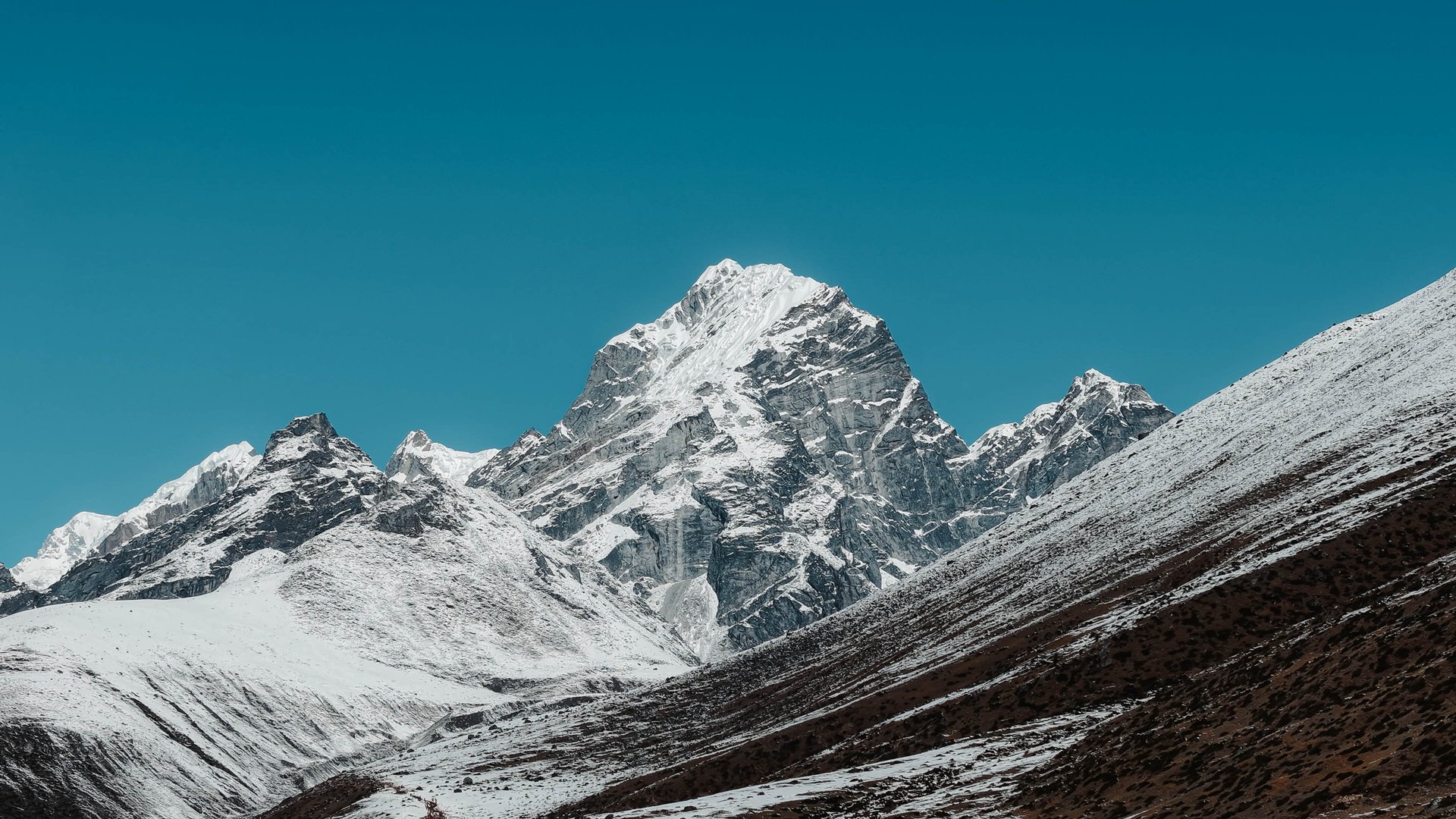 Khumbu Region
EBC + Lobuche East Trek
Trek to Everest Base Camp and summit Lobuche East for the ultimate Himalayan adventure through legendary trails, towering glaciers, and breathtaking alpine landscapes.
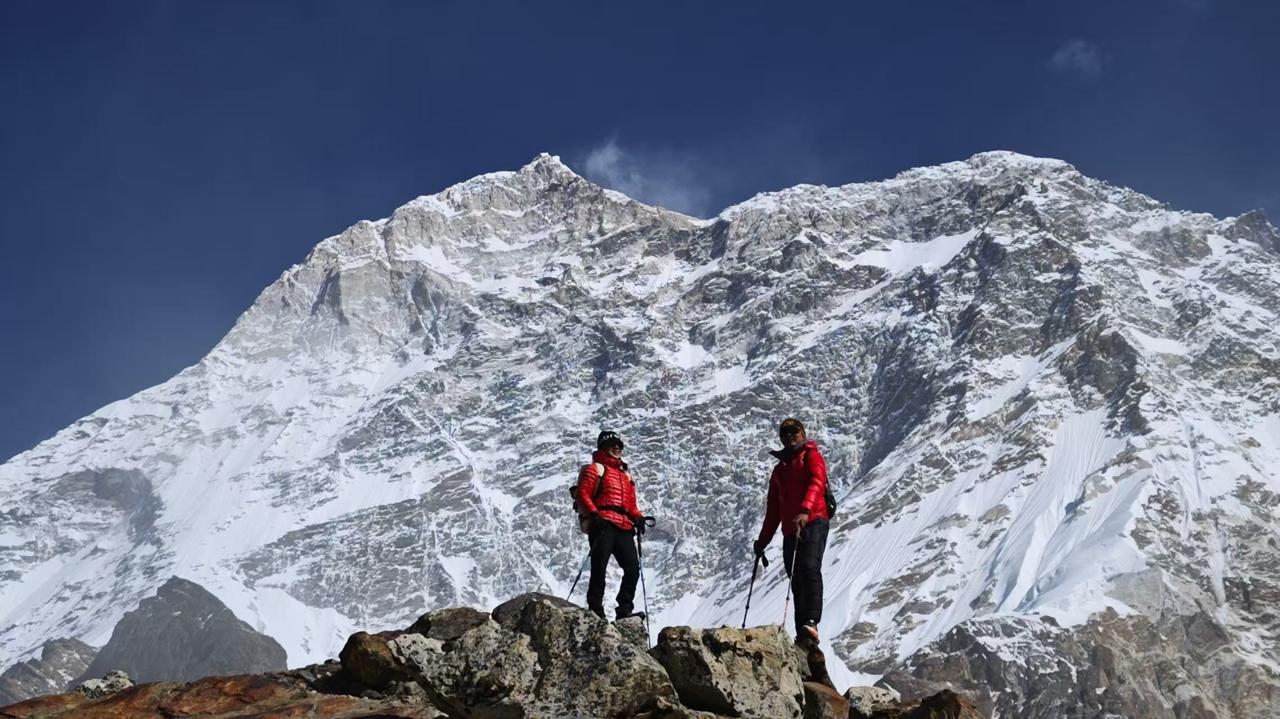 Khumbu Region
Makalu Base Camp + Amphu Laptsa Extended Trek
Journey across Nepal's most remote Himalayan wilderness from Makalu Base Camp to the technical Amphu Laptsa Pass, where glaciers, towering peaks, and an unforgettable traverse into the Khumbu await.
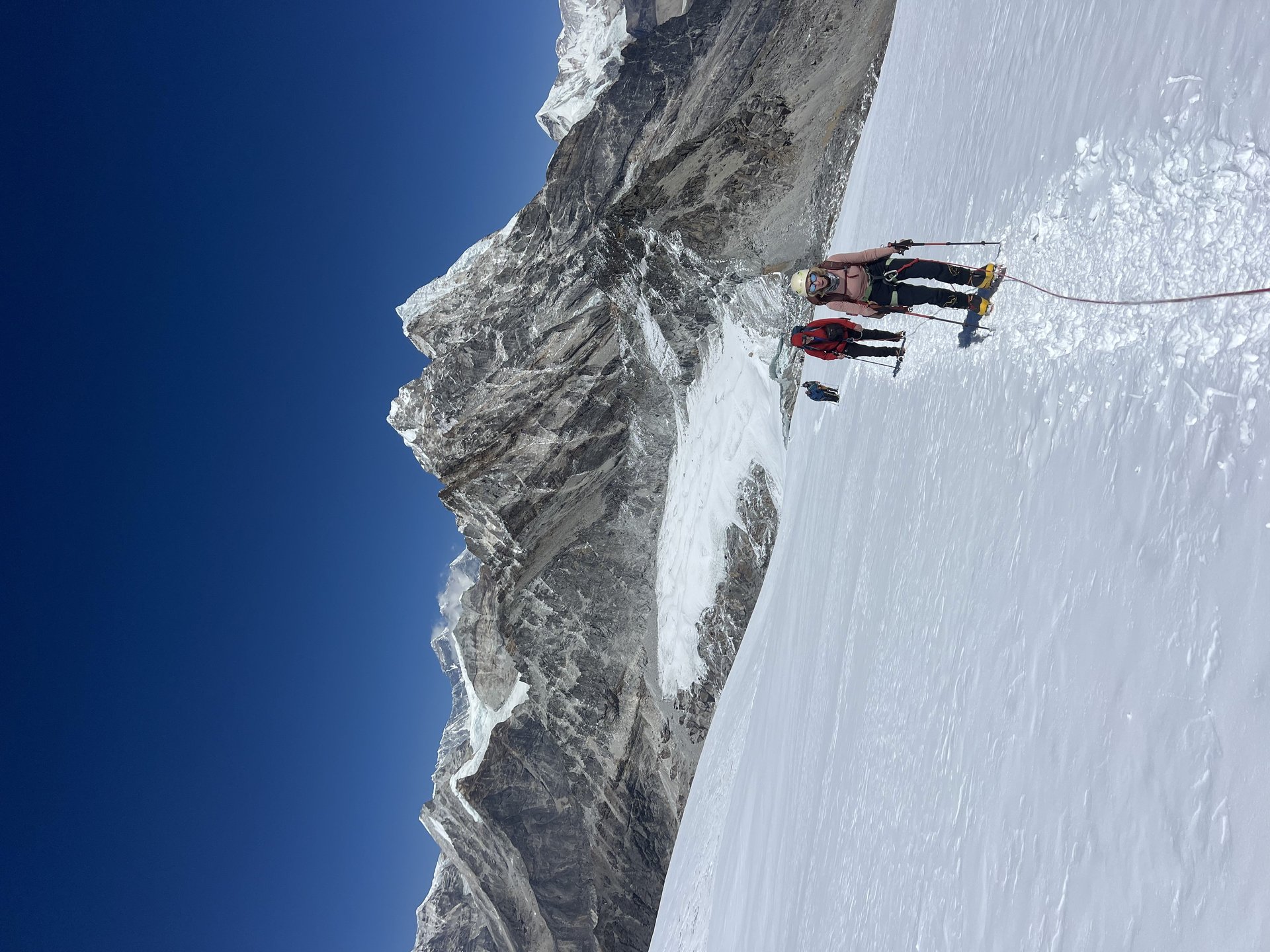 Khumbu Region
Mera Peak + Amphu Laptsa + Island Peak
Take on Nepal's ultimate alpine traverse by climbing Mera Peak and Island Peak while crossing the technical Amphu Laptsa Pass through glaciers, remote valleys, and the heart of the Himalayas.
 Khumbu Region
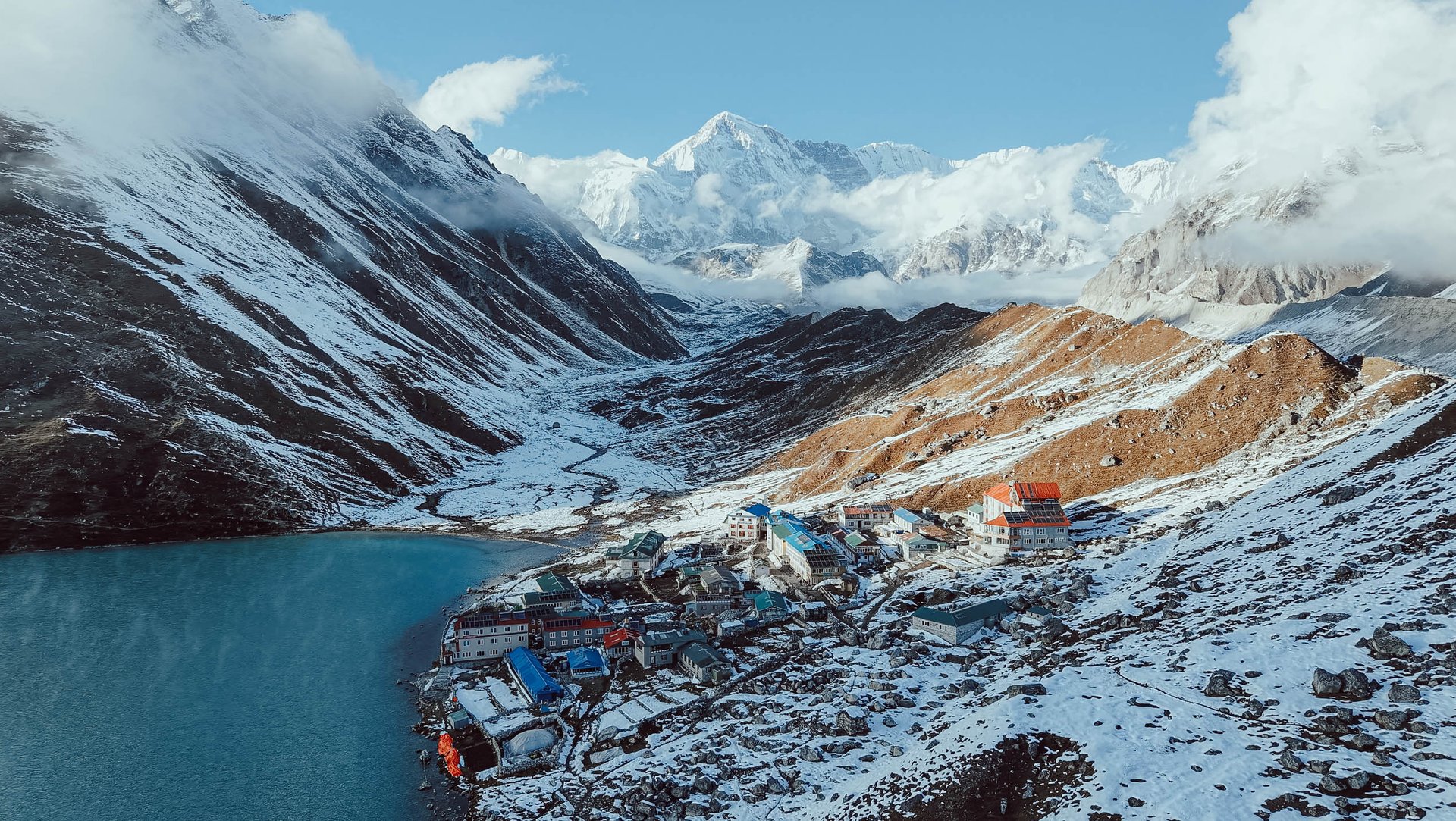
Gokyo Lakes + Cho La Pass + Everest Base Camp Trek
Three High Points of Khumbu in One Trek — Gokyo Lakes, Cho La Pass & Everest Base Camp
Ready to Start Your Trekking Adventure?
Contact us to book your trek or get more information