
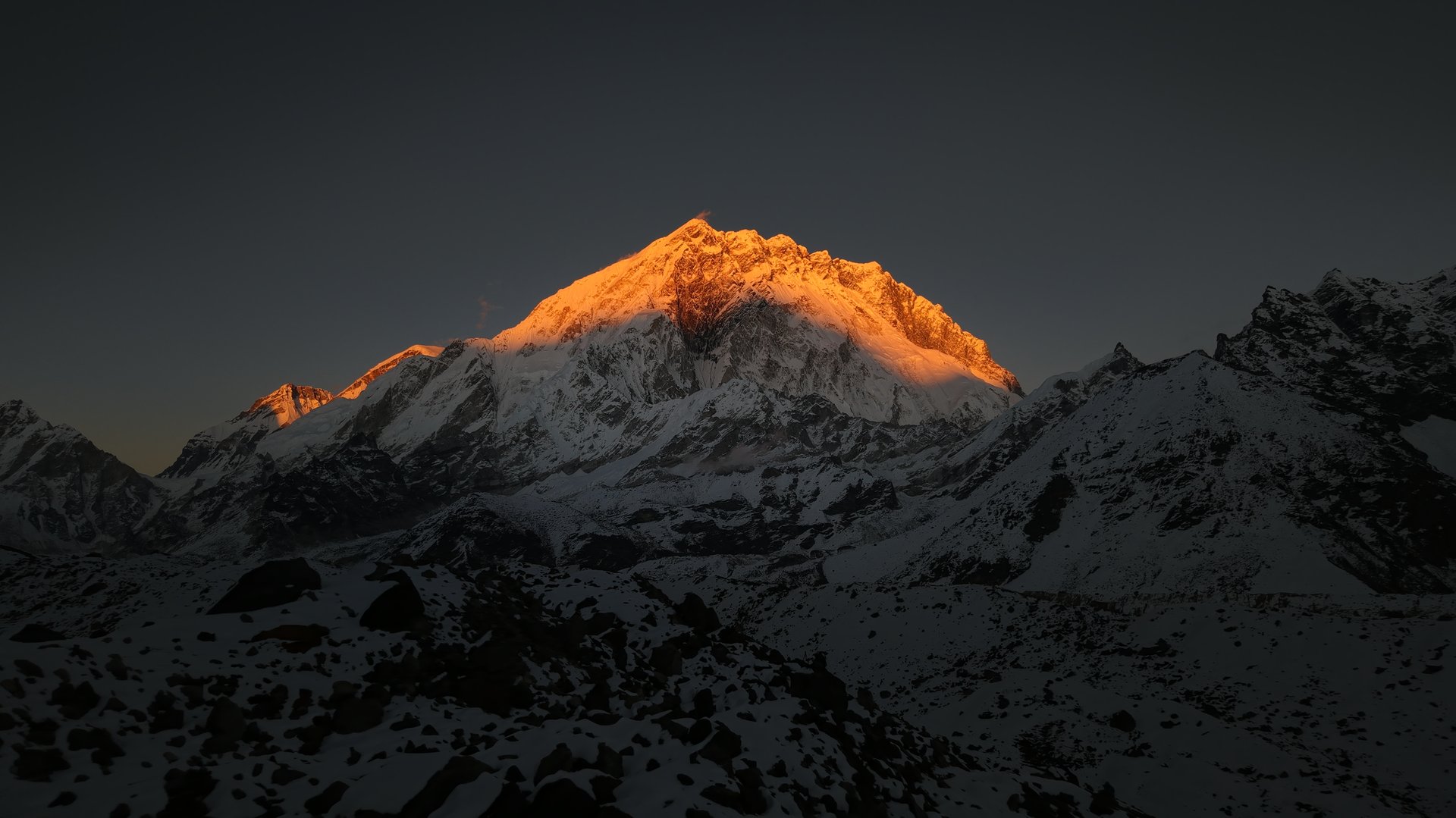
Nuptse Expedition
Nuptse – the Silent Guardian of Everest, where jagged spires meet untamed wilderness.
Expedition Overview
What is the Nuptse Expedition?
Nuptse (7,861 m / 25,791 ft) is the 13th highest peak in Nepal and one of the most demanding 7,000m peaks on Earth. Rising just southwest of Mount Everest, it forms the southern wall of the Western Cwm alongside its towering neighbours Everest and Lhotse. Its Tibetan name, Nup-tse, simply means "West Peak." Dennis Davis and Sherpa Tashi made the first ascent on 16 May 1961 via the North Ridge, now known as the Scott Route, as part of a British expedition led by Joe Walmsley, climbing entirely without supplemental oxygen. With only around two dozen successful summits on record, Nuptse remains one of the least crowded and most respected objectives in the Everest region.
The North Ridge route begins at Everest Base Camp (5,364 m) and follows the same line as the Everest Expedition through the Khumbu Icefall and Western Cwm to Camp II, before diverging onto Nuptse's own north face to Camp III and the narrow, corniced summit ridge. The Khumbu Icefall remains the most objectively dangerous section shared with the Everest route – 600 metres of shifting glacier managed by the Icefall Doctors, where all crossings are timed between 2 AM and 5 AM.
AltiPro Adventures runs the Nuptse Expedition 2027, a full-board Spring expedition departing Kathmandu in April 2027. Groups are capped at a small number of climbers, each supported by a dedicated 1:1 Climbing Sherpa, with a personalised support structure throughout.
Why Climb Nuptse?
Nuptse is widely regarded as one of the toughest 7,000m objectives in the Himalaya, offering a genuine high-altitude mountaineering challenge without the crowds of its taller neighbours. For climbers who have completed the EBC Island Peak trek and climb or an Ama Dablam Expedition and are ready to progress, Nuptse is the natural next step before an 8,000m attempt.
Sharper Weather Planning
A dedicated high-altitude weather service delivers summit-specific forecasts every 6 hours. AltiPro waits for a confirmed 48-hour stable weather window before beginning the push, not risking the technical upper mountain in uncertain conditions.
Shared Infrastructure with Everest and Lhotse
Because the route shares Base Camp and the line through the Khumbu Icefall and Western Cwm with the Everest Expedition and Lhotse Expedition, climbers benefit from the same established camps, fixed ropes and logistical support before branching onto Nuptse's own north face.
Smaller, More Focused Climbing Teams
Nuptse attracts only a handful of expeditions each season. AltiPro's model centres on a safety-first approach, a cohesive climbing team, and a personalised Sherpa support structure, with a hard cap on climbers per group.
Safety-Forward Climbing Structure
An on-site Expedition Doctor is stationed at Everest Base Camp for the full climbing season. Oxygen saturation is monitored daily and a Hyperbaric Chamber Bag is kept on standby. Every safety protocol is implemented and maintained throughout the expedition.
A Wall Guarding the Roof of the World
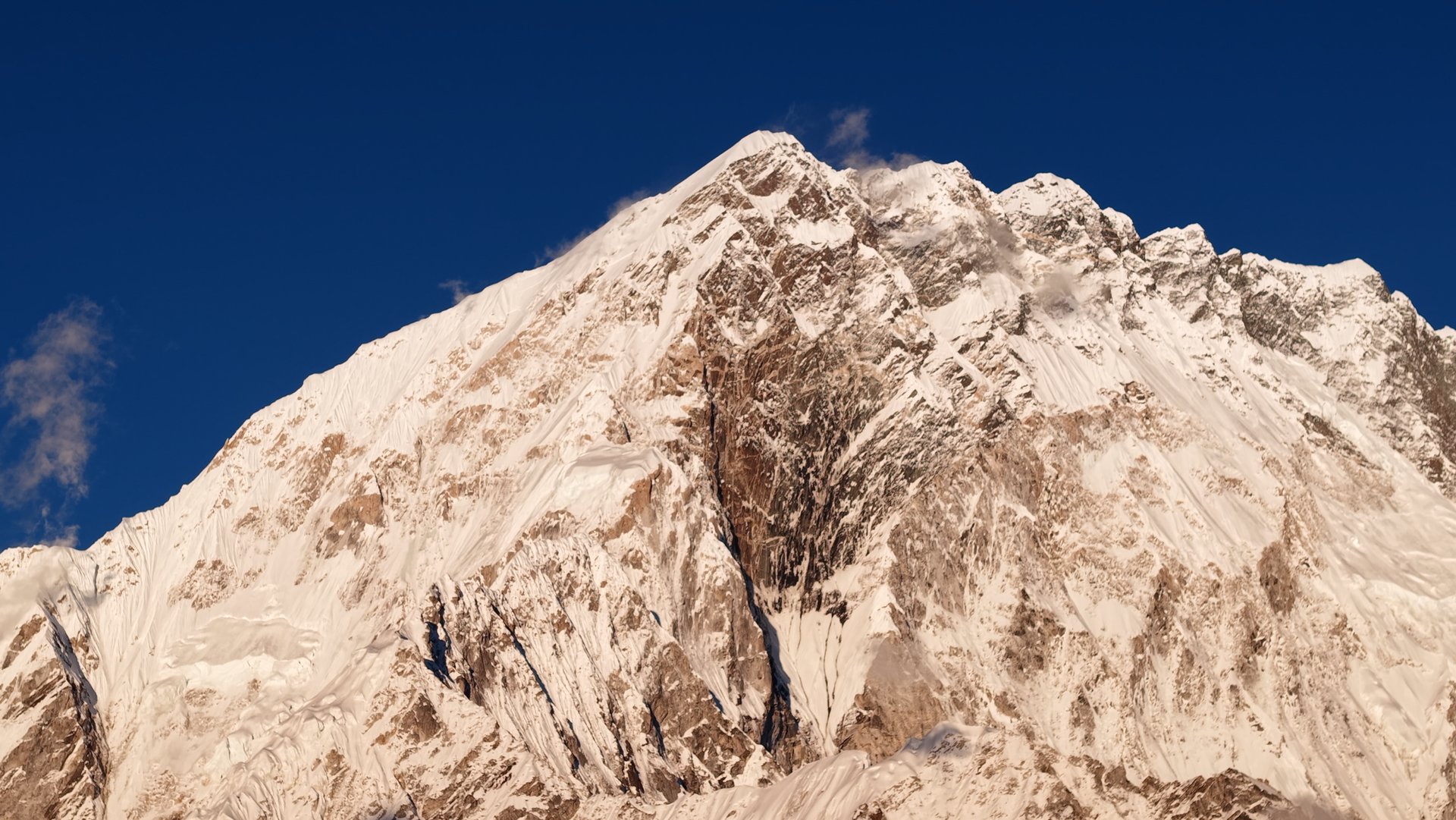
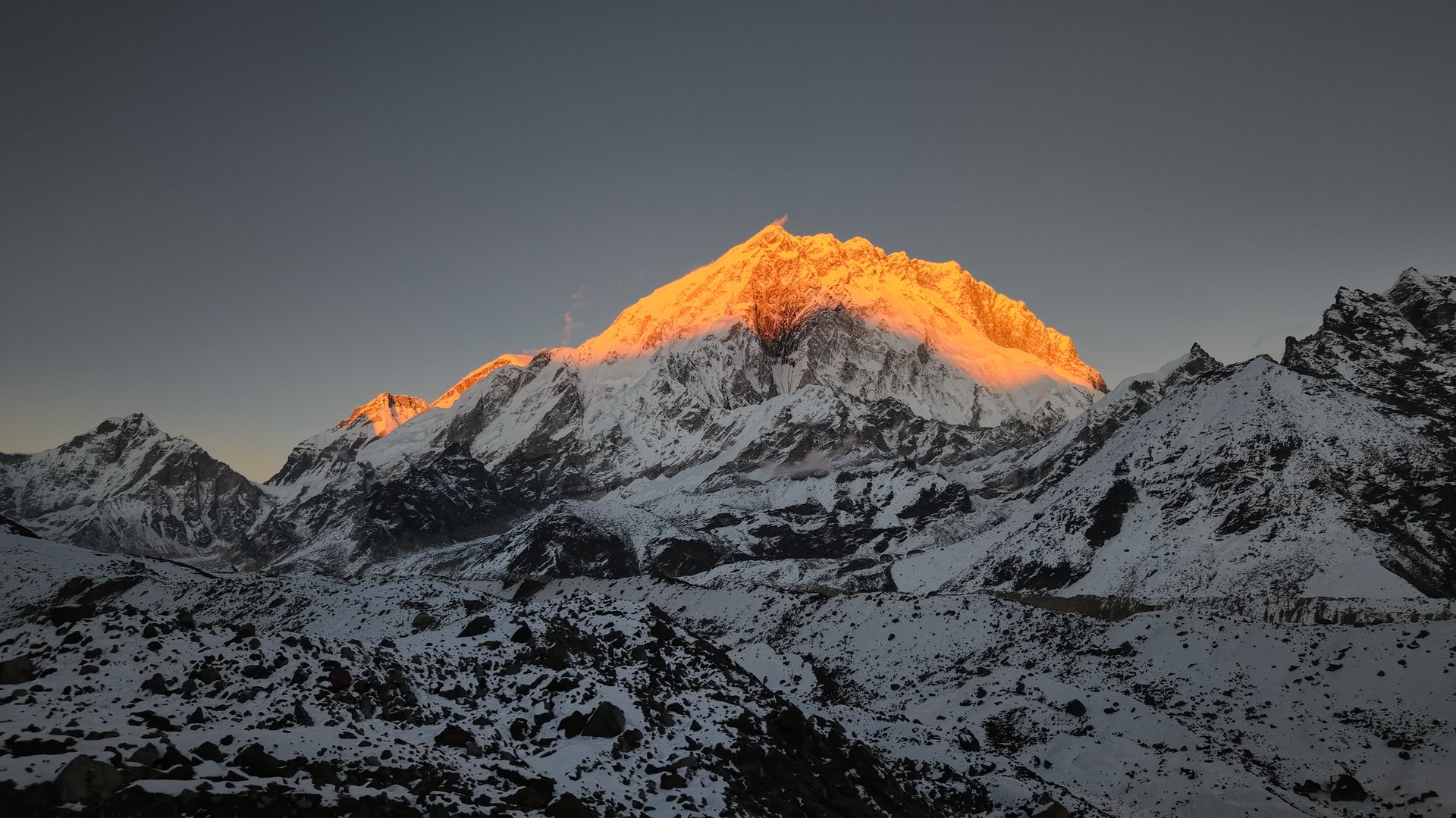
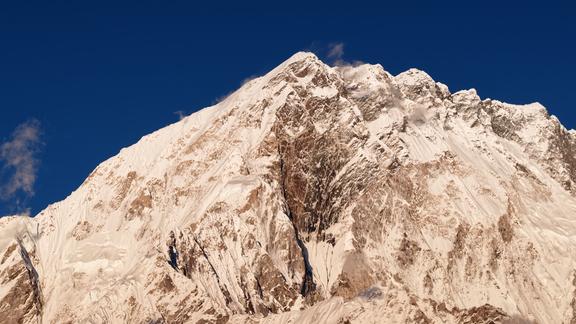
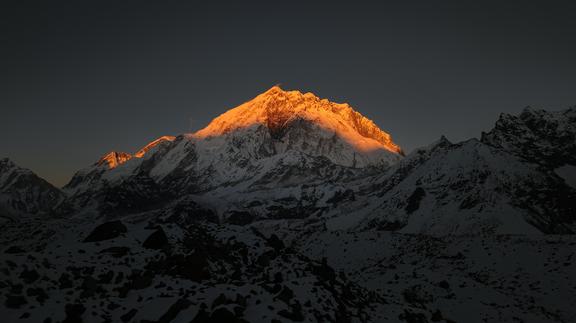
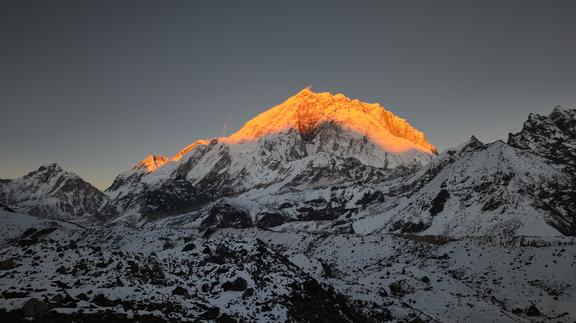
Seen from Kala Patthar or Thangboche Monastery, Nuptse appears as a massive wall guarding the approach to Everest. Its summit ridge holds seven distinct sub-summits, all above 7,500 m. Reaching Nuptse I is one of the purest technical mountaineering achievements in the Khumbu.
North Ridge Route – Scott Route (7,861 m)
The North Ridge is the standard and most established line on Nuptse, sharing its lower sections with the South Col Route on Everest before branching onto Nuptse's own terrain. Starting at Everest Base Camp on the Khumbu Glacier at 5,364 m, it climbs through the Khumbu Icefall and Western Cwm to Camp II, then turns onto the north face and ridge to the summit at 7,861 m. First climbed by Dennis Davis and Sherpa Tashi in 1961, and named the Scott Route after Doug Scott's ascent in 1979, it remains the definitive line on the mountain.
Khumbu Icefall – Base Camp to Camp I (5,364 m → 6,050 m)
The most objectively hazardous section, shared with the Everest Expedition route. A chaotic mass of ice spires, crevasses, and unstable seracs managed by the Icefall Doctors using aluminium ladders and fixed ropes. All crossings are timed between 2 AM and 5 AM when ice is most stable.
Camp I to Camp II – Western Cwm (6,050 m → 6,400 m)
A wide glacial valley flanked by Everest, Lhotse, and Nuptse. Camp II serves as the central operations hub for the upper mountain, shared with Everest and Lhotse teams, with a fully equipped kitchen and dining tent.
Camp II to Camp III – Nuptse North Face (6,400 m → approx. 7,200 m)
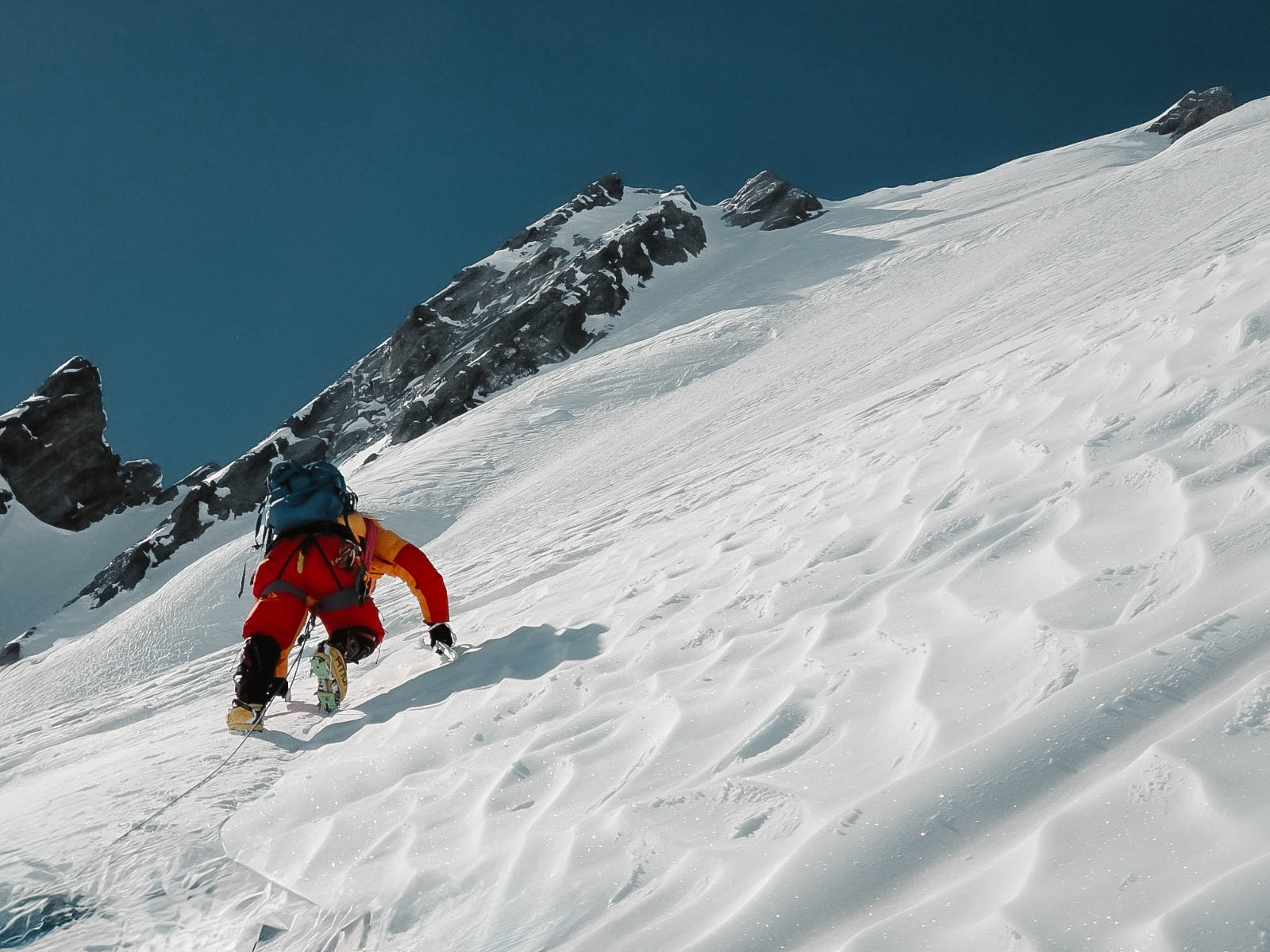
The route leaves the shared Everest line here and climbs directly onto Nuptse's steep north face and ridge, involving sustained mixed rock, snow, and ice climbing on fixed ropes. This is the technical heart of the climb.
Summit Push – Camp III to Nuptse (7,200 m → 7,861 m)
A demanding push along an exposed, corniced summit ridge connecting the sub-summits toward Nuptse I. Fierce winds and unstable cornices make the final stretch the most serious part of the ascent. The descent retraces the same technical ground back to Camp II.
Acclimatization Rotations
Structured rotations build progressive altitude exposure on the shared lower route before the technical climbing on Nuptse begins. The approach trek from Lukla to Base Camp, following the same trail as the Everest Base Camp trek, with acclimatization days at Namche Bazaar and Dingboche, provides the foundation before rotations begin.
1st Rotation – up to 6,400 m
Base Camp → Camp I → Camp II → Base Camp
Cross the Khumbu Icefall overnight to Camp I, advance through the Western Cwm to Camp II, then descend to Base Camp for recovery.
2nd Rotation – up to 7,000 m+
Camp I → Camp II → Camp III → Base Camp
From Camp II, move onto the lower sections of Nuptse's north face to establish and touch Camp III, gaining exposure to the technical terrain before returning to Base Camp for full recovery ahead of the summit push.
How Difficult is the Nuptse Expedition?
Nuptse is graded Very Difficult and is considered one of the hardest 7,000m peaks in the world – harder in many respects than its taller neighbours despite its lower altitude. The Khumbu Icefall carries the same objective danger as on Everest, while the sustained mixed climbing on the north face, the narrow corniced summit ridge, and ferocious summit winds demand strong technical skill and exceptional physical conditioning. AltiPro requires documented high-altitude experience, ideally including a Mera Peak Expedition or similar 6,000m to 7,000m climb, before accepting any application.
Best Season for the Nuptse Expedition
Spring (April–May) is the primary and recommended window for Nuptse, mirroring the pattern seen on Everest and Lhotse. The jet stream shifts north of the summit in May, opening the most reliable weather windows of the year. AltiPro targets the summit push for the second half of May when stable 48-hour weather windows are most consistent.
Spring (April–May): The prime window and the only season AltiPro operates Nuptse. April covers the Khumbu approach, Base Camp establishment, and early acclimatization rotations. May brings the most stable conditions for the technical climbing on the north face and ridge.
Autumn (October): A possible secondary window with shorter, less consistent opportunities after the monsoon withdraws. Overall conditions are less reliable than Spring, and fewer teams attempt Nuptse in this season.
Nuptse Expedition Cost
Premium full-board package – all permits, 1:1 Sherpas, oxygen support, and Expedition Doctor included.
The AltiPro Nuptse Expedition 2027 covers 4-star Kathmandu accommodation, all transport including Ramechhap–Lukla flights, the full permit package (Climbing Royalty, Icefall access, SPCC fees), a 1:1 Climbing Sherpa ratio, oxygen support as required, an on-site Expedition Doctor, and complete high-camp infrastructure. International flights, personal gear, and summit bonuses are not included. Contact us to discuss availability and pricing for 2027.
Nuptse Expedition – FAQs
Common questions about the Nuptse Expedition with AltiPro Adventures.
How long is the Nuptse Expedition?
The AltiPro Nuptse Expedition 2027 runs through Spring, departing Kathmandu in April 2027 and returning in late May after the summit push.
What experience is required?
AltiPro requires documented high-altitude mountaineering experience before accepting any application. Prior experience on 6,000–7,000 m peaks, such as Mera Peak or Ama Dablam, is strongly recommended. Contact us to discuss your background.
What permits are included?
The package covers the Climbing Royalty (Nepal government summit permit), the Icefall Doctors fee (SPCC), the Sagarmatha National Park entry permit, and all liaison officer arrangements.
Does the route share infrastructure with Everest?
Yes. The Nuptse route follows the same line as the Everest Expedition through the Khumbu Icefall and Western Cwm to Camp II, before branching onto Nuptse's own north face and ridge.
What is the Climbing Sherpa ratio?
AltiPro guarantees a 1:1 Climbing Sherpa ratio – one dedicated Sherpa per climber – for the entire expedition from Base Camp through the summit push and descent.
When is the best time to climb Nuptse?
Spring (April–May) is the only recommended window. The jet stream shifts north of the summit in May, creating the most stable conditions of the year. AltiPro targets summit pushes during the second half of May.
What is not included in the package?
International flights, personal climbing gear, travel insurance, personal expenses, and Sherpa summit bonuses are not included. A full equipment list is provided upon booking confirmation.
Detailed Itinerary
Click on each day to view details
| Day | Program | Meals | Accom. | |||||||||||||||||||||||||||||||||||||||||||||||||||||||||||||||||||||||||||||||||||||||||||||||||||||||||||||||||||||||||||||||||||||||||||||||||||||||||||||||||||||||||||||||||||||||||||||||||||||||||||||||||||||||||||||||||||||||||||||||||||||||||||||||||||||||||||||||||||||||||||||||||||||||||||||||||||||||||||||||||
|---|---|---|---|---|---|---|---|---|---|---|---|---|---|---|---|---|---|---|---|---|---|---|---|---|---|---|---|---|---|---|---|---|---|---|---|---|---|---|---|---|---|---|---|---|---|---|---|---|---|---|---|---|---|---|---|---|---|---|---|---|---|---|---|---|---|---|---|---|---|---|---|---|---|---|---|---|---|---|---|---|---|---|---|---|---|---|---|---|---|---|---|---|---|---|---|---|---|---|---|---|---|---|---|---|---|---|---|---|---|---|---|---|---|---|---|---|---|---|---|---|---|---|---|---|---|---|---|---|---|---|---|---|---|---|---|---|---|---|---|---|---|---|---|---|---|---|---|---|---|---|---|---|---|---|---|---|---|---|---|---|---|---|---|---|---|---|---|---|---|---|---|---|---|---|---|---|---|---|---|---|---|---|---|---|---|---|---|---|---|---|---|---|---|---|---|---|---|---|---|---|---|---|---|---|---|---|---|---|---|---|---|---|---|---|---|---|---|---|---|---|---|---|---|---|---|---|---|---|---|---|---|---|---|---|---|---|---|---|---|---|---|---|---|---|---|---|---|---|---|---|---|---|---|---|---|---|---|---|---|---|---|---|---|---|---|---|---|---|---|---|---|---|---|---|---|---|---|---|---|---|---|---|---|---|---|---|---|---|---|---|---|---|---|---|---|---|---|---|---|---|---|---|---|---|---|---|---|---|---|---|---|---|---|---|---|---|---|---|---|---|---|---|---|---|
| 1 | Arrival in Kathmandu (1,350m) | Dinner | Hotel | |||||||||||||||||||||||||||||||||||||||||||||||||||||||||||||||||||||||||||||||||||||||||||||||||||||||||||||||||||||||||||||||||||||||||||||||||||||||||||||||||||||||||||||||||||||||||||||||||||||||||||||||||||||||||||||||||||||||||||||||||||||||||||||||||||||||||||||||||||||||||||||||||||||||||||||||||||||||||||||||||
|
Transfer to 4-star hotel. Welcome dinner and expedition briefing.
2 – 3
|
Kathmandu — Permits & Gear Check |
Breakfast |
Hotel |
|
|
Permit processing, gear check, Nuptse team briefing, and last-minute shopping in Thamel.
4
|
Fly to Lukla (2,840m) & Trek to Phakding (2,610m) |
Breakfast / Lunch / Dinner |
Lodge |
|
|
Flight from Kathmandu to Lukla and trek into the Khumbu Valley to Phakding.
5
|
Trek to Namche Bazaar (3,440m) |
Breakfast / Lunch / Dinner |
Lodge |
|
|
Trek from Phakding to Namche Bazaar, crossing the Hillary Suspension Bridge and the Sagarmatha National Park checkpoint.
6
|
Acclimatization Day at Namche Bazaar (3,440m) |
Breakfast / Lunch / Dinner |
Lodge |
|
|
Rest and acclimatization day with a hike to Everest View Hotel and Khumjung village.
7
|
Trek to Tengboche (3,860m) |
Breakfast / Lunch / Dinner |
Lodge |
|
|
Trek from Namche to Tengboche, where the full Nuptse west face dominates the view from the monastery.
8
|
Trek to Dingboche (4,360m) |
Breakfast / Lunch / Dinner |
Lodge |
|
|
Trek from Tengboche to Dingboche, entering the upper Imja Khola valley.
9
|
Acclimatization Day at Dingboche (4,360m) |
Breakfast / Lunch / Dinner |
Lodge |
|
|
Rest and acclimatization day with a hike toward Nangkartshang ridge (4,750m) for altitude gain.
10
|
Trek to Lobuche (4,940m) |
Breakfast / Lunch / Dinner |
Lodge |
|
|
Trek from Dingboche to Lobuche via Thukla Pass and the Khumbu memorial ridge, with the Nuptse wall ahead.
11
|
Trek to Gorakshep & Nuptse/Everest Base Camp (5,364m) |
Breakfast / Lunch / Dinner |
Tent |
|
|
Trek from Lobuche through Gorakshep (5,164m) to Nuptse/Everest Base Camp, where camp is established.
12
|
Puja Ceremony & Icefall Safety Training |
Breakfast / Lunch / Dinner |
Tent |
|
|
Puja ceremony at Base Camp, route briefing, Icefall safety training, and final gear and oxygen check.
13
|
Rest & Acclimatization at Base Camp (5,364m) |
Breakfast / Lunch / Dinner |
Tent |
|
|
Rest and acclimatization day as the body adjusts to Base Camp altitude, with daily medical review beginning.
14 – 16
|
1st Rotation — Base Camp to Camp I (6,000m) |
Breakfast / Lunch / Dinner |
Tent |
|
|
First rotation: cross the Khumbu Icefall to Camp I on the Nuptse North Ridge for an overnight stay, then return to Base Camp.
17 – 18
|
Rest Days at Base Camp |
Breakfast / Lunch / Dinner |
Tent |
|
|
Rest at Base Camp with O2 saturation review while Sherpa teams ferry loads to high camps and conditions are assessed.
19 – 21
|
2nd Rotation — Camp I to Camp II (6,400m) |
Breakfast / Lunch / Dinner |
Tent |
|
|
Second rotation: climb from Camp I to Camp II overnight on the North Ridge, then return to Base Camp.
22 – 24
|
Rest Days at Base Camp — Summit Window Monitoring |
Breakfast / Lunch / Dinner |
Tent |
|
|
Full rest at Base Camp with daily 6-hourly weather forecast reviews for the Nuptse summit window.
25 – 27
|
3rd Rotation — Camp II to Camp III (6,900m) |
Breakfast / Lunch / Dinner |
Tent |
|
|
Third rotation: climb from Camp II to Camp III on the upper North Ridge for an overnight stay, then return to Base Camp.
28 – 30
|
Rest Days at Base Camp — Final Preparations |
Breakfast / Lunch / Dinner |
Tent |
|
|
Full rest and recovery at Base Camp with a final gear check and oxygen cache verification at all high camps.
31
|
Summit Bid — Base Camp to Camp I (6,000m) |
Breakfast / Lunch / Dinner |
Tent |
|
|
Begin the summit push by moving from Base Camp to Camp I through the Khumbu Icefall.
32
|
Summit Bid — Camp I to Camp II (6,400m) |
Breakfast / Lunch / Dinner |
Tent |
|
|
Move from Camp I to Camp II to rest, prepare, and sleep early ahead of the summit push.
33
|
Summit Bid — Camp II to Camp III (6,900m) |
Breakfast / Lunch / Dinner |
Tent |
|
|
Move from Camp II to Camp III as supplemental oxygen begins, followed by a pre-summit briefing.
34
|
Summit Day — Nuptse I (7,861m) |
Breakfast / Lunch / Dinner |
Tent |
|
|
Pre-midnight departure via the North Ridge to the summit of Nuptse I (7,861m). Descend to Camp II or Base Camp.
35
|
Descend to Base Camp |
Breakfast / Lunch / Dinner |
Tent |
|
|
Full descent to Base Camp followed by a post-summit celebration with the full Sherpa team at AltiPro Café.
36
|
Rest & Recovery at Base Camp |
Breakfast / Lunch / Dinner |
Tent |
|
|
Rest and recovery day at Base Camp following the summit.
37
|
Base Camp Cleanup & Departure Preparation |
Breakfast / Lunch / Dinner |
Tent |
|
|
Base Camp cleanup and preparation for departure.
38
|
Trek to Lobuche (4,940m) |
Breakfast / Lunch / Dinner |
Lodge |
|
|
Trek from Base Camp through Gorakshep to Lobuche.
39
|
Trek to Dingboche (4,360m) |
Breakfast / Lunch / Dinner |
Lodge |
|
|
Trek from Lobuche to Dingboche, descending below 5,000m as body recovery begins.
40
|
Trek to Namche Bazaar (3,440m) |
Breakfast / Lunch / Dinner |
Lodge |
|
|
Long descent from Dingboche to Namche Bazaar, reaching the first tree line in weeks.
41
|
Trek to Lukla (2,840m) |
Breakfast / Lunch / Dinner |
Lodge |
|
|
Final trekking day of the expedition, descending from Namche Bazaar to Lukla.
42
|
Fly Back to Kathmandu (1,350m) |
Breakfast |
Hotel |
|
|
Flight from Lukla back to Kathmandu, transfer to hotel, and rest.
43
|
Farewell Dinner & Summit Certificate Presentation |
Breakfast / Dinner |
Hotel |
|
|
Farewell dinner, summit certificate presentation, and expedition debrief in Kathmandu.
44 – 50
|
Buffer Days — Weather & Logistics Reserve |
Breakfast / Dinner |
Hotel |
|
|
Buffer days held for weather delays, a second summit window, or Lukla flight disruptions.
51
|
Final Departure from Kathmandu |
Breakfast |
|
|
|
Transfer to Kathmandu Tribhuvan International Airport for onward international flights.
| ||||||||||||||||||||||||||||||||||||||||||||||||||||||||||||||||||||||||||||||||||||||||||||||||||||||||||||||||||||||||||||||||||||
Services
Includes
Airport pick-up and drop for all international and domestic flights.
4 nights 4-star hotel in Kathmandu (BB) — 2 nights pre-expedition, 2 nights post-expedition.
Welcome dinner and farewell dinner in Kathmandu.
Domestic flights: Kathmandu ↔ Lukla (round trip) for all team members and expedition staff.
All expedition staff transport: Kathmandu – Nuptse Base Camp – Kathmandu.
Yaks and porters: Lukla to Nuptse/Everest Base Camp and back — all expedition equipment.
Full board accommodation at all teahouses and lodges during the trek to and from Base Camp
Personal climbing equipment transfer: Kathmandu – Nuptse Base Camp – Kathmandu (60 kg per member).
Nuptse expedition royalty fee and all official Nepal government documentation.
Sagarmatha National Park entry permit.
Khumbu Icefall route fee (SPCC/EOAN) — fully included.
Garbage management and environmental deposit fee.
One official Nepal Government Liaison Officer for the full expedition duration.
Nepal government taxes and company service charges.
Experienced Base Camp Manager on-site for the full season.
Full expedition planning, coordination, and on-ground management.
Pre-expedition briefing pack in Kathmandu.
One walkie-talkie per Climbing Sherpa and Expedition Leader during all climbing phases.
Daily professional weather forecast service — 6-hourly Nuptse summit-specific updates throughout.
Satellite phone at Base Camp for emergency use (minimal per-call charge applies).
Three freshly cooked meals per day (BLD) at Nuptse Base Camp with hot drinks.
Fresh vegetables, meat, fruits, and juice restocked throughout the season.
Heated dining tent with tables and chairs at Base Camp.
AltiPro Café at Base Camp — coffee and bakery items served daily.
Private sleeping tent with mattress and pillow for every climber and staff member.
Generator for charging electronic devices at Base Camp.
Internet service at Base Camp (minimal charge).
Sleeping tents at all high camps — Camps I, II, III (2 members per tent).
High-altitude food at all camps: muesli, porridge, noodles, rice, soups, dry fruits, chocolate, and snacks.
MSR stoves, cooking sets, EPI gas, shovels, and extra ropes at all high camps.
Common climbing equipment: fixed ropes, ice screws, ice bars, aluminium ladder bridges, snow pickets, and anchors.
Icefall Doctor fees and Khumbu Icefall route-fixing team costs — fully included.
One dedicated Climbing Sherpa per climber — 1:1 ratio, guaranteed throughout.
All Climbing Sherpa, cook, kitchen helper, and Liaison Officer wages and allowances.
5 oxygen cylinders (4-litre) per climber with summit mask and regulator set.
2 oxygen cylinders (4-litre) per Climbing Sherpa.
Emergency backup oxygen pre-positioned at Camp II and Camp III before the summit push.
Insurance for all Climbing Sherpas, cooks, Liaison Officer, and local porters.
Backup Sherpas on standby for substitution if required (extra charge if deployed).
Helicopter and rescue team on standby — pre-arranged for the full expedition duration.
Expedition Doctor stationed at Base Camp for the full climbing season.
Gamow Bag (portable hyperbaric chamber) on standby at Base Camp.
AltiPro expedition T-shirt and Nuptse summit certificate.
Puja ceremony at Base Camp before climbing begins.
Excludes
Gear Lists & Useful Information
Expedition Gallery
Explore stunning images from this expedition
Been on this expedition?
Your feedback helps other travelers plan their adventure of a lifetime. Share your experience with us!
Annapurna IV Expedition
Annapurna IV – The Quiet Fourth, a technical wall of ice and ridgeline standing watch in the shadow of giants.
Baruntse Expedition
Baruntse – Sentinel Between Giants, where ice ridges and hidden glaciers guard the silence between Everest and Makalu.
 7000m
7000m
Pumori Expedition
Pumori – Everest's Daughter, where a graceful pyramid keeps quiet watch over the roof of the world.
Tilicho Peak Expedition
Tilicho Peak – Crown of the Great Barrier, standing watch over the world's highest lake in silent, windswept solitude.
Putha Hiunchuli Expedition
 7000m
7000m
Himlung Himal Expedition
Ready to Start Your Adventure?
Contact us to book your expedition or get more information