
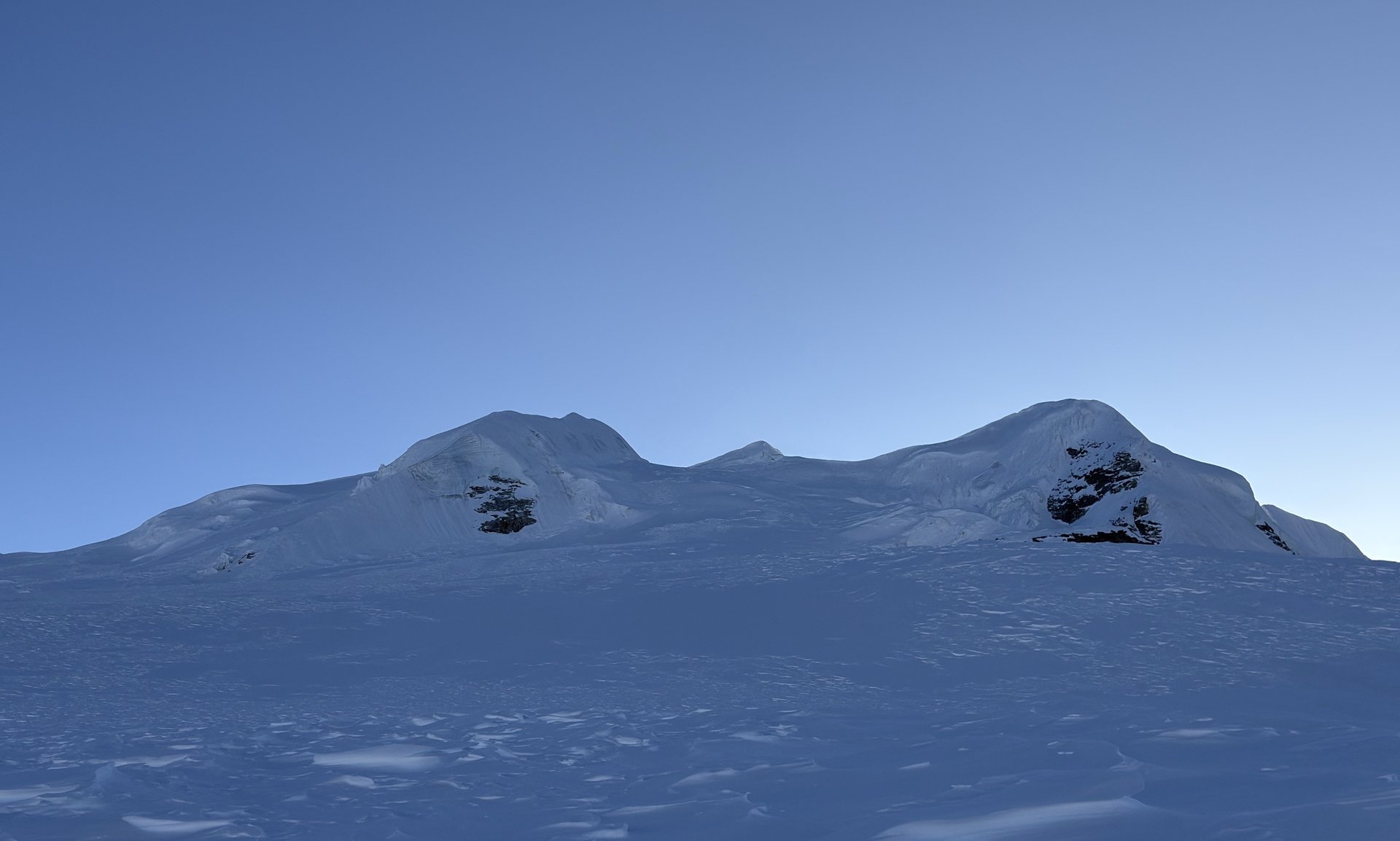
Mera Peak Expedition
Mera Peak (6,476m) — Nepal’s highest trekking peak, rising above the remote Hinku Valley with sweeping views of Everest, Lhotse, Makalu, and Baruntse from its summit.
Expedition Overview
What is the Mera Peak Expedition?
Mera Peak stands at 6,476 metres and is the highest of Nepal's officially designated trekking peaks. Located in the Hinku Valley south of the Khumbu region, Mera Peak offers an exceptional first high-altitude summit experience without requiring advanced technical skills. The standard North Face route is primarily a snow and glacier climb with moderate slopes, accessible to trekkers with good fitness and basic snow skills. The reward is a summit panorama that takes in five of the world's fourteen 8,000m peaks — Everest, Lhotse, Makalu, Cho-oyu, and Kangchenjunga — visible simultaneously on a clear day.
AltiPro's Mera Peak Expedition approaches via Lukla and the Hinku Valley, a quieter and more remote alternative to the busy Everest Base Camp corridor. The route passes through rhododendron forests, high pasturelands, and the isolated Hinku settlements before reaching Mera La at 5,415m. High Camp is established at approximately 5,800m for the final summit push to Mera Central at 6,476m. The expedition spans 19 days from Kathmandu to return.
Mera Peak is rated Moderate — the most accessible of Nepal's high peaks for climbers with good fitness and no prior technical climbing experience required. AltiPro recommends prior trekking experience to altitude above 4,500m and welcomes first-time high-altitude climbers.
About Mera Peak — Nepal's Highest Trekking Peak
Mera Peak sits at the head of the Hinku Valley, one of the most remote and undisturbed valleys in the Khumbu region. The approach from Lukla follows the Dudh Koshi river south before cutting east into the Hinku — a valley lined with dramatic ridges, traditional Sherpa settlements, and forests of rhododendron and juniper. The Hinku Valley sees a fraction of the trekker traffic of the main Khumbu corridor, making the approach a genuine wilderness experience.
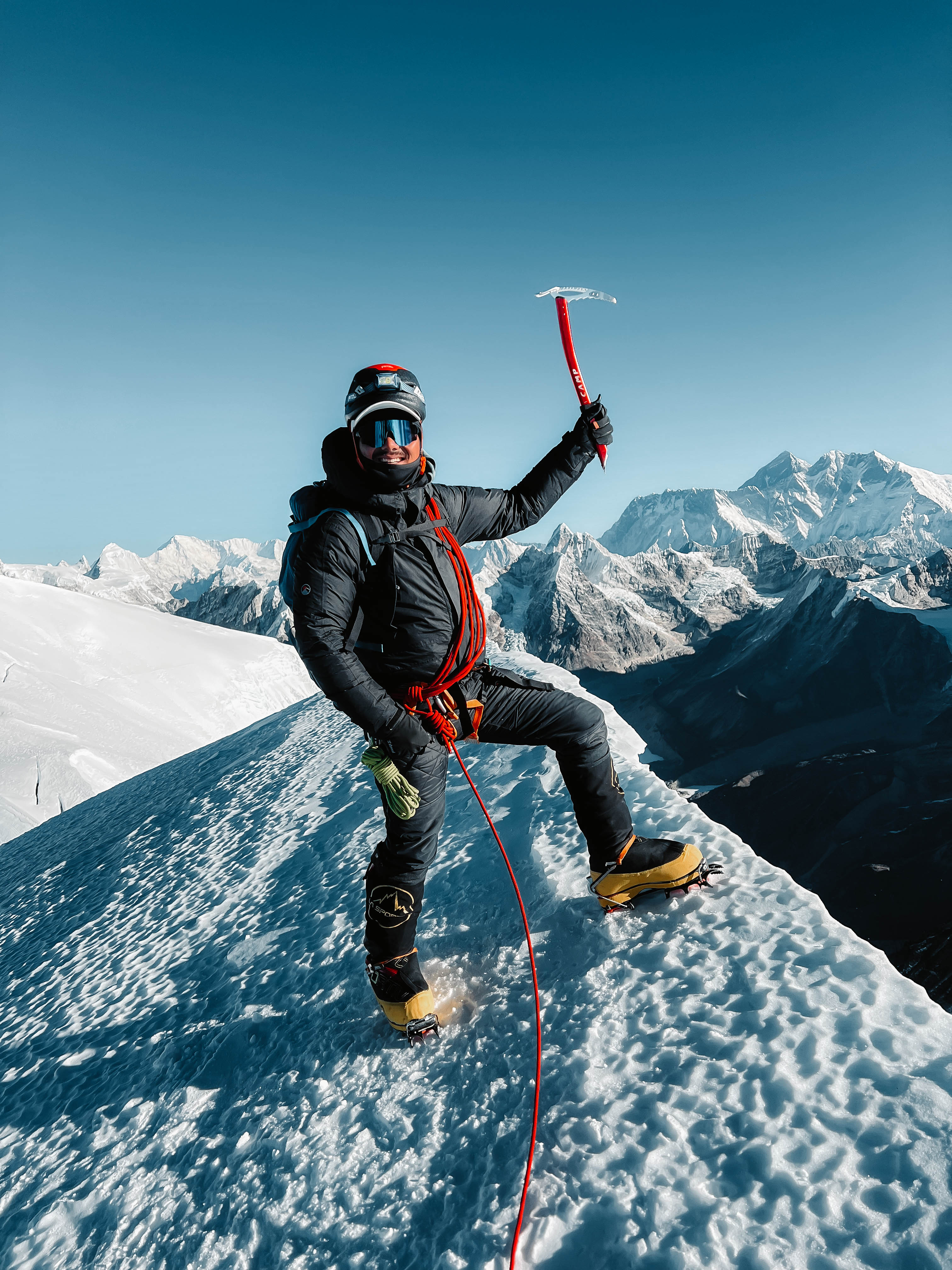
Mera Peak's summit sits above a vast snow and glacier plateau and delivers the widest panorama of any trekking peak in Nepal. The view of five 8,000m peaks from a single summit — Everest, Lhotse, Makalu, Cho-oyu, and Kangchenjunga — is one of the most remarkable summit panoramas available to climbers in the Nepal Himalaya.
Why Choose AltiPro Adventures for Mera Peak?
Ideal First High-Altitude Summit
Mera Peak is the perfect first 6,000m+ summit for trekkers seeking a genuine high-altitude climbing experience. AltiPro's experienced Sherpa guides introduce climbers to glacier travel, crampon technique, and rope management in a safe and supportive environment throughout the expedition.
The Hinku Valley Approach
The approach via the Hinku Valley is one of the most scenic and undisturbed routes in the Khumbu region. AltiPro's logistics team manages the complete approach including all porter coordination and tea house accommodation along the valley route.
Five 8,000m Peaks Panorama
The Mera Peak summit at 6,476m provides simultaneous views of Everest, Lhotse, Makalu, Cho-oyu, and Kangchenjunga. This panorama of five 8,000m peaks from a single summit is unique in the Nepal Himalaya and is the defining experience of the expedition.
Full Sherpa Support and Equipment
A 1:1 Sherpa ratio for the technical sections above Mera La, with all technical summit equipment provided by AltiPro — crampons, harness, ice axe, and rope. Climbers do not need to own or bring technical climbing equipment.
Medical Support
A full medical kit at High Camp and satellite communication for emergency coordination. The Khumbu helicopter evacuation infrastructure provides rapid emergency access to Lukla or Kathmandu if required during the expedition.
Spring and Autumn Options
AltiPro operates Mera Peak in both spring (April–May) and autumn (October–November), the two most stable weather seasons for the Hinku Valley and upper mountain. May and October are widely considered the optimal summit months.
The North Face Route (6,476 m)
The North Face is the standard route on Mera Peak. The approach from Lukla via the Hinku Valley provides excellent natural acclimatisation through the gradual altitude gain of the valley approach — making this one of the most well-structured high-altitude expeditions in Nepal.
-
Kathmandu to Hinku Valley via Lukla (1,400m to 3,800m)
Flight from Kathmandu to Lukla, then trek south along the Dudh Koshi before entering the Hinku Valley via Zatrwa La pass (4,610m) or the lower Chutanga route. The approach passes through some of the least-visited landscapes in the entire Khumbu region.
-
Hinku Valley to Mera La (3,800m to 5,415m)
The route ascends through the Hinku Valley past Tagnag and Khare to Mera La at 5,415m. The gradual altitude gain provides excellent natural acclimatisation before the technical section of the climb begins.
-
Mera La to High Camp (5,415m to 5,800m)
Above Mera La the route crosses the Mera Glacier to High Camp at approximately 5,800m. Crampons and rope are used from this point, with the glacier travel being straightforward in good conditions.
-
High Camp to Summit (5,800m to 6,476m)
The final summit section follows the North Face snow slopes to Mera Central at 6,476m. The terrain is moderate angle snow with no technical barriers — altitude and weather are the key variables at this elevation. The summit plateau delivers the iconic view of five 8,000m peaks.
How Difficult is the Mera Peak Expedition?
Mera Peak is rated Moderate. The North Face route is primarily snow and glacier with moderate angles — there are no technical climbing sections requiring prior rock or mixed climbing experience. The main challenge is the altitude above 6,000m and the sustained physical effort of the Hinku Valley approach and summit day.
Best Season for the Mera Peak Expedition
Spring (April–May): Stable pre-monsoon conditions with clear summit views. May is considered the optimal month for the best visibility and settled weather on the upper mountain.
Autumn (October–November): Crisp post-monsoon conditions with excellent visibility. October is the ideal autumn month. AltiPro operates both seasons — contact for current dates.
Mera Peak Expedition Cost
Full-service Mera Peak expedition — Lukla flights, Hinku Valley approach, all technical summit equipment, and full Sherpa support included.
Includes NMA trekking peak permit, Lukla domestic flights, Hinku Valley approach trek, full Sherpa support to summit, all technical equipment for summit day (crampons, harness, rope, ice axe), Base Camp and High Camp cook service, and a complete medical kit. International flights and personal trekking equipment are not included. Contact AltiPro for a complete cost breakdown.
Mera Peak Expedition — Frequently Asked Questions
Common questions about climbing Mera Peak with AltiPro Adventures.
Is Mera Peak suitable for beginners?
Yes. Mera Peak is the most accessible of Nepal's high peaks and is ideal for trekkers attempting their first 6,000m summit. No prior technical climbing experience is required. Good trekking fitness and prior experience to altitude above 4,500m is sufficient.
What technical skills are needed?
Basic crampon and ice axe technique is introduced by AltiPro's Sherpa guides before summit day. No prior rock or mixed climbing experience is required. All technical equipment — crampons, harness, rope, and ice axe — is provided by AltiPro.
What is the approach to Mera Peak?
Via flight to Lukla, then trekking through the Hinku Valley via Zatrwa La pass or the lower Chutanga route. The approach takes 7 to 8 days and provides natural acclimatisation through the gradual altitude gain of the valley.
When does AltiPro operate Mera Peak?
Both spring (April–May) and autumn (October–November). May and October are the optimal summit months. Contact AltiPro for current season dates and availability.
How long is the expedition?
19 days from Kathmandu to return, including the Lukla flight, all trekking days in the Hinku Valley, and the summit attempt on Mera Central (6,476m).
What are the summit views like?
The Mera Peak summit at 6,476m provides simultaneous views of five 8,000m peaks — Everest, Lhotse, Makalu, Cho-oyu, and Kangchenjunga. On a clear day this is one of the finest panoramas available from any summit in Nepal.
Can Mera Peak be combined with Island Peak?
Yes. AltiPro can arrange combined expeditions linking Mera Peak with Amphu Lapcha Pass and Island Peak for climbers seeking a more extended Khumbu adventure across two classic high-altitude objectives.
What permits are required?
Nepal Mountaineering Association (NMA) trekking peak permit plus TIMS and Makalu-Barun National Park fees for the Hinku Valley approach. AltiPro manages all permit applications from Kathmandu.
Detailed Itinerary
Click on each day to view details
| Day | Program | Meals | Accom. | |||||||||||||||||||||||||||||||||||||||||||||||||||||||||||||||||||||||||||||||||||||||||||||||||||||||||||||||||||||||||||||||||||||||||||||||||||||||||||||||||||||||||||
|---|---|---|---|---|---|---|---|---|---|---|---|---|---|---|---|---|---|---|---|---|---|---|---|---|---|---|---|---|---|---|---|---|---|---|---|---|---|---|---|---|---|---|---|---|---|---|---|---|---|---|---|---|---|---|---|---|---|---|---|---|---|---|---|---|---|---|---|---|---|---|---|---|---|---|---|---|---|---|---|---|---|---|---|---|---|---|---|---|---|---|---|---|---|---|---|---|---|---|---|---|---|---|---|---|---|---|---|---|---|---|---|---|---|---|---|---|---|---|---|---|---|---|---|---|---|---|---|---|---|---|---|---|---|---|---|---|---|---|---|---|---|---|---|---|---|---|---|---|---|---|---|---|---|---|---|---|---|---|---|---|---|---|---|---|---|---|---|---|---|---|---|---|---|---|
| 1 | Arrival in Kathmandu | Dinner | Hotel | |||||||||||||||||||||||||||||||||||||||||||||||||||||||||||||||||||||||||||||||||||||||||||||||||||||||||||||||||||||||||||||||||||||||||||||||||||||||||||||||||||||||||||
|
Arrive at Kathmandu Tribhuvan International Airport. Transfer to hotel, welcome dinner, and Mera Peak Expedition 2027 briefing.
2
|
Kathmandu — Permit Processing & Expedition Briefing |
Breakfast / Dinner |
Hotel |
|
|
Process NMA climbing permit and SNPEP, gear check, and expedition briefing.
3
|
Fly Kathmandu → Lukla (2,840m) — Trek to Paiya (2,730m) |
Breakfast / Lunch / Dinner |
Lodge |
|
|
35-minute mountain flight to Lukla. Meet the climbing team and trek to Paiya.
4
|
Trek Paiya → Panggom (2,850m) |
Breakfast / Lunch / Dinner |
Lodge |
|
|
Trek through pine and rhododendron forest, leaving the Everest trail behind as the Hinku Valley begins.
5
|
Trek Panggom → Nings (3,650m) |
Breakfast / Lunch / Dinner |
Lodge |
|
|
Ascend through dense forest toward the high terrain above the Hinku Khola.
6
|
Trek Nings → Zatrwa La (4,610m) → Kothe (3,600m) |
Breakfast / Lunch / Dinner |
Lodge |
|
|
Cross the high Zatrwa La pass and descend steeply into the Hinku Valley.
7
|
Trek Kothe → Thaknak (4,358m) |
Breakfast / Lunch / Dinner |
Lodge |
|
|
Follow the Hinku Khola upstream past yak grazing meadows. Chamlang and Mera Peak come into view.
8
|
Trek Thaknak → Khare (5,045m) — Base Camp |
Breakfast / Lunch / Dinner |
Lodge/Tent |
|
|
Arrive at AltiPro's fully established camp at Khare, the Base Camp of Mera Peak. Gear issue.
9
|
Acclimatization Day at Khare (5,045m) |
Breakfast / Lunch / Dinner |
Lodge/Tent |
|
|
Hike toward Mera La for acclimatization. Climbing Sherpa route briefing and gear and crampon training.
10
|
Trek Khare → Mera La (5,415m) → High Camp (5,780m) |
Breakfast / Lunch / Dinner |
Tent |
|
|
Ascend to Mera La with crampons on the 40-degree ice face section below the La, then continue to High Camp.
11
|
Acclimatization Carry — High Camp to ~6,000m and Return |
Breakfast / Lunch / Dinner |
Tent |
|
|
Essential altitude stimulus carry from High Camp to approximately 6,000m and back before the summit bid.
12
|
Summit Day — Mera North (6,476m) |
Breakfast / Lunch / Dinner |
Tent |
|
|
Pre-dawn departure from High Camp. Ascend the North Ridge via Mera La and steady snow slopes to the Mera North summit at 6,476m, then descend fully to Khare.
13
|
Rest & Recovery at Khare |
Breakfast / Lunch / Dinner |
Lodge/Tent |
|
|
Rest and recovery at Khare. Post-summit celebration.
14
|
Trek Khare → Thaknak → Kothe (3,600m) |
Breakfast / Lunch / Dinner |
Lodge |
|
|
Begin the return descent through the Hinku Valley.
15
|
Trek Kothe → Zatrwa La (4,610m) → Lukla (2,840m) |
Breakfast / Lunch / Dinner |
Lodge |
|
|
Cross the Zatrwa La via the alternate descent route and return to Lukla.
16
|
Fly Lukla → Kathmandu |
Breakfast / Dinner |
Hotel |
|
|
Fly from Lukla to Kathmandu. Transfer to hotel, farewell dinner, and Mera Peak climbing certificate presented.
17 – 18
|
Buffer Days — Weather or Logistics Reserve |
Breakfast |
Hotel |
|
|
Reserved buffer for weather delays, a second summit window, or Lukla flight disruptions.
19
|
Final Departure from Kathmandu |
Breakfast |
|
|
|
Transfer to Kathmandu Tribhuvan International Airport for international departure.
| ||||||||||||||||||||||||||||||||||||||||||||||||||||||||||||||||||||||||
Services
Includes
- ✅ Mera Peak Climbing Permit — Nepal Mountaineering Association (NMA)
- ✅ Sagarmatha National Park Entry Permit (SNPEP)
- ✅ Makalu Barun National Park entry permit (if applicable on approach route)
- ✅ TIMS Card — Trekkers' Information Management System
- ✅ 1 Government Liaison Officer — full salary, equipment, and accommodation
- ✅ Garbage deposit fee (refundable on exit per NMA regulations)
- ✅ Nepal government taxes and company service charges
- ✅ Airport pick-up and drop — private vehicle
- ✅ 4 nights 5-star hotel in Kathmandu (BB) — single room
- ✅ Welcome dinner and farewell dinner in Kathmandu
- ✅ Trekking and expedition map. One AltiPro Adventures duffle bag.
- ✅ Domestic flights: Kathmandu to Lukla and return for all members and staff
- ✅ Full board teahouse accommodation throughout the approach and return trek
- ✅ Porter support — up to 20 kg per member, Lukla to Khare and return
- ✅ All Nepalese staff and porter daily wages, salary, equipment, food, and clothing
- ✅ Assistance for cargo customs clearance (clearance cost charged separately)
- ✅ Experienced climbing guide for the full expedition — Base Camp to summit and back
- ✅ 3 meals per day at Khare (BLD) — managed from teahouse or camp kitchen
- ✅ Tent accommodation at Khare when teahouse capacity is full
- ✅ 6-hourly summit-specific weather forecast throughout the expedition
- ✅ Satellite phone for emergency use (per-call charge for personal use)
- ✅ Walkie-talkies: Base Camp to mountain communication throughout
- ✅ Comprehensive first aid medical kit for members and staff
- ✅ High-altitude tent at High Camp (5,780m) — 2 members per tent
- ✅ High-altitude food and hot drinks at High Camp and on summit day
- ✅ EPI gas, cooking equipment, fixed ropes, and crampon-on zone protection
- ✅ Route fixing on the 40-degree ice face below the Mera La
- ✅ 1 certified and experienced climbing Sherpa per member during the full climbing phase
- ✅ Climbing Sherpa salary, equipment, food, clothing, and insurance
- ✅ Carry bonus and route-fixing charges included
- ✅ Helicopter rescue standby pre-arranged from Kathmandu before expedition departure
- ✅ Puja ceremony at Base Camp (Khare) before climbing begins
- ✅ Mera Peak climbing certificate on successful summit
Excludes
- ❌ International flight airfare (from and to Kathmandu)
- ❌ Nepalese Visa fee — USD 125 for 90 days
- ❌ Personal trekking and climbing gear, clothing, boots, and equipment
- ❌ Soaps, shampoos, toilet paper, and personal hygiene items
- ❌ Lunch and dinner in Kathmandu except included welcome and farewell dinners
- ❌ Extra accommodation in Kathmandu for early arrival or late departure
- ❌ Telephone, internet, battery recharge, hot shower, laundry, and alcoholic beverages
- ❌ Travel, medical, and high-altitude helicopter rescue insurance — mandatory (minimum USD 15,000 cover, higher strongly recommended)
- ❌ Summit bonus for Climbing Sherpa — minimum USD 250 per member
- ❌ Tips for trekking guide and porters — minimum USD 100 per porter
- ❌ Gratuities for kitchen and support staff
- ❌ Special filming, camera, and drone permit fees
- ❌ Costs due to flight cancellations, road disruptions, or unforeseen situations
- ❌ Any other services not listed in the Includes section above
Gear Lists & Useful Information
Expedition Gallery
Explore stunning images from this expedition
Expedition Videos
Watch highlights and experiences from the expedition
Been on this expedition?
Your feedback helps other travelers plan their adventure of a lifetime. Share your experience with us!
Cholatse Expedition
Cholatse Peak (6,440m) — a striking technical summit in Nepal’s Khumbu region, rising above the Dudh Koshi Valley and surrounded by the dramatic peaks of Everest, Ama Dablam, Taboche, and Lobuche.
Chulu East Expedition
Chulu East (6,584m) — a remote Annapurna summit above the Manang Valley, ringed by Annapurna II, III, IV, and Gangapurna.
Chulu West Expedition
Chulu West (6,419m) — an ice wall and glacier ridge above the Annapurna Circuit, paired with a classic Thorong La crossing.
Dhampus peak expedition
Dhampus Peak (6,012m) — also known as Thapa Peak, a two-pass Himalayan crossing linking Mustang to the Annapurna Circuit.
Hiunchuli Peak Expedition
Hiunchuli (6,441m) — guardian of the Annapurna Sanctuary, one of Nepal's most serious trekking peaks.
Island Peak Expedition
Island Peak (6,189m) — Imja Tse, the Khumbu's classic training summit, ringed by Lhotse, Nuptse, and Ama Dablam.
Kyajo Ri Expedition
Kyajo Ri (6,186m) — one of the Khumbu's quietest summits, a technical step up hidden in an isolated valley off the main trails.
Larkya Peak Expedition
Larkya Peak (6,249m) — Manaslu's quiet neighbour above the Larkya La, a natural warm-up for the big mountain itself.
 6000m
6000m
Lobuche East Expedition
Lobuche East (6,119m) — the Khumbu's most technical trekking peak, rising above the Everest Base Camp trail.
Lobuche West Expedition
Lobuche West (6,145m) — the higher, far less climbed of Lobuche's two summits, a serious expedition-grade South Ridge.
Ready to Start Your Adventure?
Contact us to book your expedition or get more information