
Leave No Trace in the Himalayas: Responsible Trekking Practices
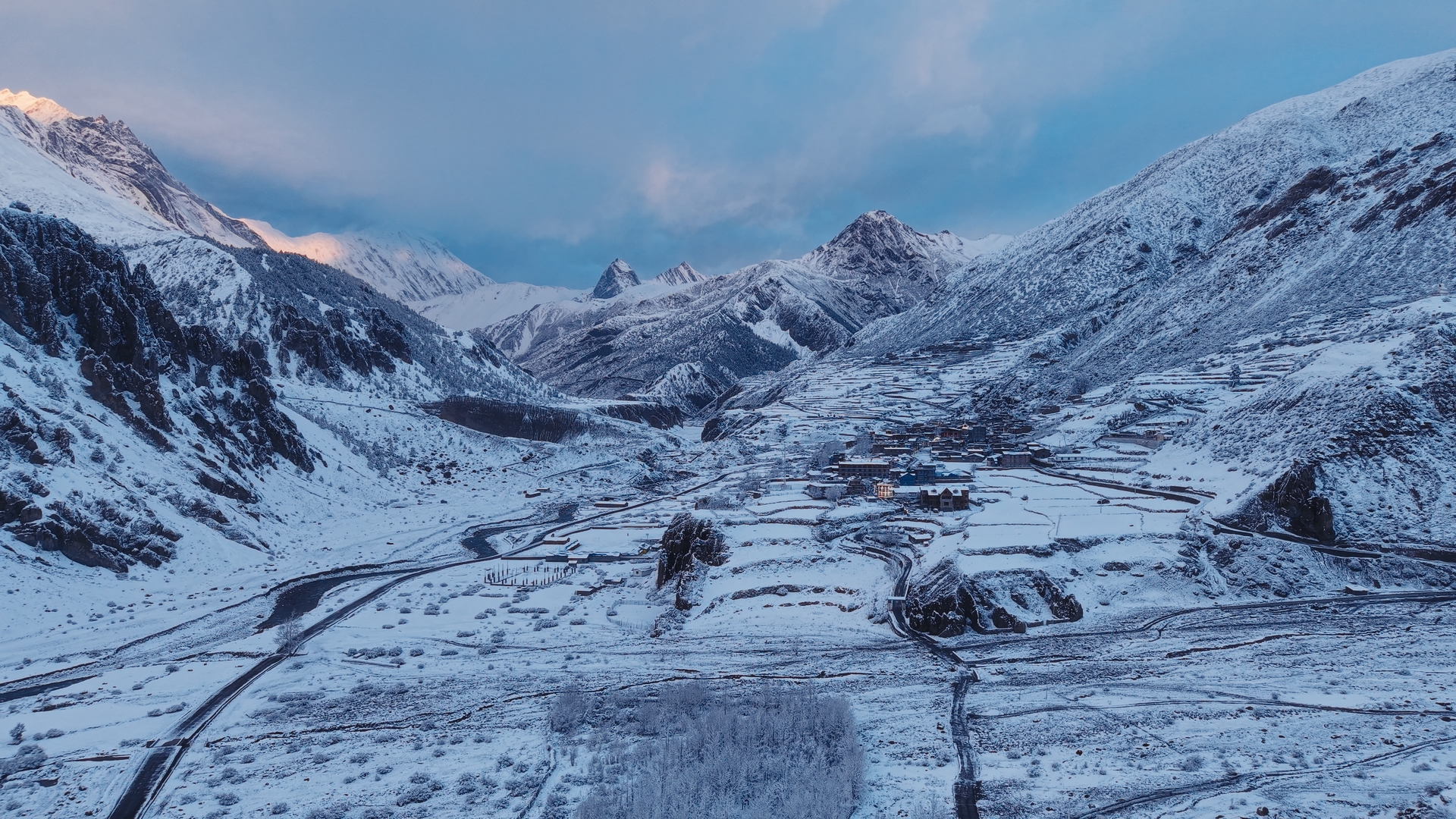
Leave No Trace in the Himalayas: Responsible Trekking Practices
Every trekker who has stood at a high pass in Nepal has had some version of the same thought: this place is too beautiful to be the reason it gets damaged. That instinct is correct, and it is also increasingly backed by policy. Nepal's mountain trails now see well over a million visitors a year across its major regions, and a set of routes that were once quiet, self-regulating footpaths are now fragile ecosystems under real, measurable pressure.
This guide breaks down what Leave No Trace actually means in a Himalayan context, how Nepal's own rules and infrastructure back it up, and the specific, practical habits that separate a trek that leaves a place better than it found it from one that just leaves it.
Our guides raise this with every group before the first day on trail, not as a lecture but as a shared responsibility. The mountains give trekkers something extraordinary for two or three weeks. Responsible trekking is simply the trekker's side of that exchange.
What Leave No Trace Actually Means at Altitude
Leave No Trace began as a set of seven principles developed for backcountry travel generally, but the Himalayas apply real pressure to almost every one of them. Thin soils, short growing seasons, and extreme cold mean that damage which would heal in a season at lower elevation can take a decade or more to recover above 3,500 metres. A single set of footprints across an alpine meadow near Mardi Himal or the high pastures on the way to Tilicho Lake looks harmless. Multiplied across thousands of trekkers a season, it becomes a visible scar.
Table 1: The Seven Leave No Trace Principles, Applied to Himalayan Trekking
| Principle | What It Looks Like on a Nepal Trek |
|---|---|
| Plan ahead and prepare | Correct permits, a licensed guide, and a realistic itinerary that avoids overcrowding fragile sections |
| Travel and camp on durable surfaces | Staying on the established trail rather than cutting switchbacks or crossing meadows |
| Dispose of waste properly | Carrying out all non-biodegradable waste, including wrappers, wet wipes, and batteries |
| Leave what you find | Not removing stones from mani walls, cairns, prayer flags, or alpine plants |
| Minimize campfire impact | Relying on teahouses and lodges rather than open fires, given severe local deforestation pressure |
| Respect wildlife | Observing snow leopards, musk deer, and Himalayan monal from a distance, never feeding them |
| Be considerate of other visitors and communities | Yielding to uphill hikers and pack trains, and respecting village life and monastery etiquette |
Nepal's Own Rules Are Catching Up to the Problem
Responsible trekking in Nepal isn't only a personal ethic anymore; parts of it are now written into law. Since January 2020, the Khumbu Pasang Lhamu Rural Municipality, which governs the Everest region, has banned single-use plastics under 30 microns thick, including plastic soft-drink bottles, straws, and most food packaging, though plastic water bottles remain a temporary exception while refill infrastructure catches up. Trekking agencies, airlines, and the Nepal Mountaineering Association were all brought in to help enforce it.
On the expedition side, Everest teams have paid a refundable garbage deposit since 2014, with the rule that each climber must bring back a minimum amount of waste for the deposit to be returned. Historically, only around half of climbing teams have met that threshold in full, which is part of why waste on the upper mountain remains an ongoing challenge despite the policy existing for over a decade.
More recently, Nepal's Mandatory Guide Policy, now fully enforced for foreign trekkers across the country's national parks and conservation areas, has an explicit environmental dimension built in. Licensed guides are legally responsible for their group's footprint on trail, from keeping clients on established paths to managing how waste is handled at camp. It's a shift worth knowing about regardless of your view on solo trekking, because it means a guide today is doing double duty as both a safety resource and the person accountable for a group's environmental conduct.
Waste: The Single Biggest Himalayan Trekking Problem
If there's one Leave No Trace principle that matters more than the rest in Nepal, it's waste disposal, simply because of scale. Villages along routes like Everest Base Camp and the Annapurna Base Camp trek often lack the infrastructure to process the volume of waste tens of thousands of annual visitors generate, and what isn't carried out by trekkers themselves frequently ends up burned, buried, or left on trail.
The rule of thumb our guides give every group is simple: pack it in, pack it out. In practice, that means:
- Carry out everything non-biodegradable. Wrappers, tissue, wet wipes, batteries, and packaging should go back in your own bag, even in villages that appear to have bins, since local waste systems are frequently overwhelmed.
- Bring a refillable bottle and a filter or purification tablets. Most teahouses along major routes now offer boiled or filtered water refills for a small fee, which is both cheaper and far less wasteful than buying bottled water at every stop.
- Pack out hygiene products entirely. Sanitary products and wet wipes do not decompose at altitude and should never be left in outhouses or buried on trail.
- Use designated toilets wherever they exist. On popular routes, teahouses and checkpoints increasingly provide toilet facilities specifically to keep human waste away from water sources.
On remoter routes with fewer facilities, such as Kanchenjunga Base Camp or the Rolwaling Valley, the same principle applies with less margin for error, since there's simply less existing infrastructure to fall back on if trekkers don't manage their own waste.
Staying on Trail: Why It Matters More Than It Looks
Cutting a switchback to save five minutes feels harmless in the moment. At altitude, it rarely is. Alpine soils in the Himalayas are thin, slow to regenerate, and often sit directly above root systems that stabilize the slope itself. A single shortcut, repeated by enough trekkers over enough seasons, becomes a secondary trail, then an erosion channel, then a genuine safety hazard for the people who walk it after the rains.
The fix is straightforward: stay on the established path, walk single file through muddy or fragile sections rather than spreading out to avoid mud, and give way to uphill trekkers and pack animals rather than stepping off trail to pass. On routes through high, open terrain, like the meadows on the Langtang Valley trek or the ridgelines of the Manaslu Circuit, this matters even more, since there's often no obvious trail edge to signal where durable ground ends and fragile vegetation begins.
Porters and Pack Animals: The Human Side of Responsible Trekking
Leave No Trace conversations tend to focus on the environment, but responsible trekking in Nepal also means looking after the people who make the trek possible. Porters carry a disproportionate share of a trek's physical burden, often at altitudes and in conditions their clothing and equipment weren't designed for. A genuinely responsible trek means:
- Confirming your operator provides porters with appropriate clothing, footwear, shelter, and food, not just paying a wage and leaving the rest to chance.
- Respecting standard load limits, generally around 20 to 25 kilograms per porter on most routes, rather than treating porters as an unlimited baggage allowance.
- Ensuring insurance and emergency evacuation coverage extends to support staff, not just paying clients.
- Treating pack animals, yaks, dzo, and mules alike, with the same right of way and consideration as any other trail user, since they're often carrying loads just as demanding as a porter's.
These aren't abstract courtesies. Independent monitoring groups have documented real cases of porter injury and death linked directly to inadequate gear and unmanaged loads, which is why choosing an operator that takes porter welfare seriously is as much a part of responsible trekking as any waste-management habit.
Wildlife and Fragile Ecosystems
Nepal's trekking regions are home to snow leopards, red pandas, Himalayan tahr, musk deer, and dozens of bird species found nowhere else, many of them already under pressure from habitat loss and climate change. The same principle that applies to Himalayan marmots on well-known routes elsewhere in the range applies here: observe from a distance, never feed wildlife, and keep noise to a minimum, particularly in the early morning and evening when animals are most active.
Conservation area systems like the Annapurna Conservation Area Project (ACAP) and the Manaslu Conservation Area Project exist precisely to balance trekking tourism against habitat protection, funded in part by the entry permits trekkers already pay. Choosing routes and operators that respect conservation area rules, rather than treating them as a formality, is one of the more direct ways a trekker's choices translate into actual protection on the ground.
Cultural Etiquette Is Part of Leave No Trace Too
Responsible trekking in the Himalayas isn't only environmental. Nepal's trekking routes pass directly through Sherpa, Gurung, Tamang, and other communities' villages, monasteries, and sacred sites, and a trekker's conduct in those spaces matters as much as their conduct on the trail itself. A few habits go a long way:
- Pass mani stones, chortens, and prayer wheels on your left, moving clockwise, in keeping with Buddhist tradition.
- Ask before photographing local people, particularly in smaller villages away from the main tourist routes.
- Dress modestly, especially near monasteries and religious sites.
- Keep noise levels down while passing through villages, particularly early or late in the day.
On culturally rich routes like Upper Mustang or the more remote Gaurishankar trek, where trekking tourism is a comparatively recent and still-developing part of the local economy, this kind of everyday cultural respect matters just as much as anything a trekker packs out in their rubbish bag.
Choosing an Operator That Actually Practices This
Leave No Trace is only as strong as the operator putting it into practice on the ground. When comparing trekking companies, it's worth asking directly: how is group waste managed on multi-day sections without village infrastructure? What's the policy on porter loads and equipment? Does the itinerary avoid overloading fragile high-altitude campsites during peak season? A trekking company that can answer these questions specifically, rather than gesturing at a general sustainability statement, is usually the one actually doing the work.
This applies across every region, not just the busiest ones. Quieter routes like the Nar Phu Valley trek or the Dhaulagiri Circuit see far fewer visitors than Everest or Annapurna, which makes it tempting to treat them as lower stakes environmentally. In practice, the opposite is often true: with less existing infrastructure and slower ecological recovery in more remote terrain, responsible habits matter just as much, if not more, on the trails fewer people walk.
Final Thoughts
Leave No Trace in the Himalayas isn't a single rule; it's a collection of small, consistent habits, staying on trail, carrying out your own waste, respecting wildlife and local communities, and choosing an operator who treats porter welfare and conservation as non-negotiable rather than optional. None of it requires sacrificing the experience. If anything, trekkers who travel this way tend to notice more, not less, because they're paying closer attention to the place they're moving through.
Nepal's mountains have supported trekking tourism for decades, and they can support it for decades more, but only if the people walking through them treat that as a responsibility rather than an assumption. If you're planning a trek and want to know exactly how sustainability and porter welfare are handled on a specific route, our team is happy to walk through it in detail on our trekking page.