
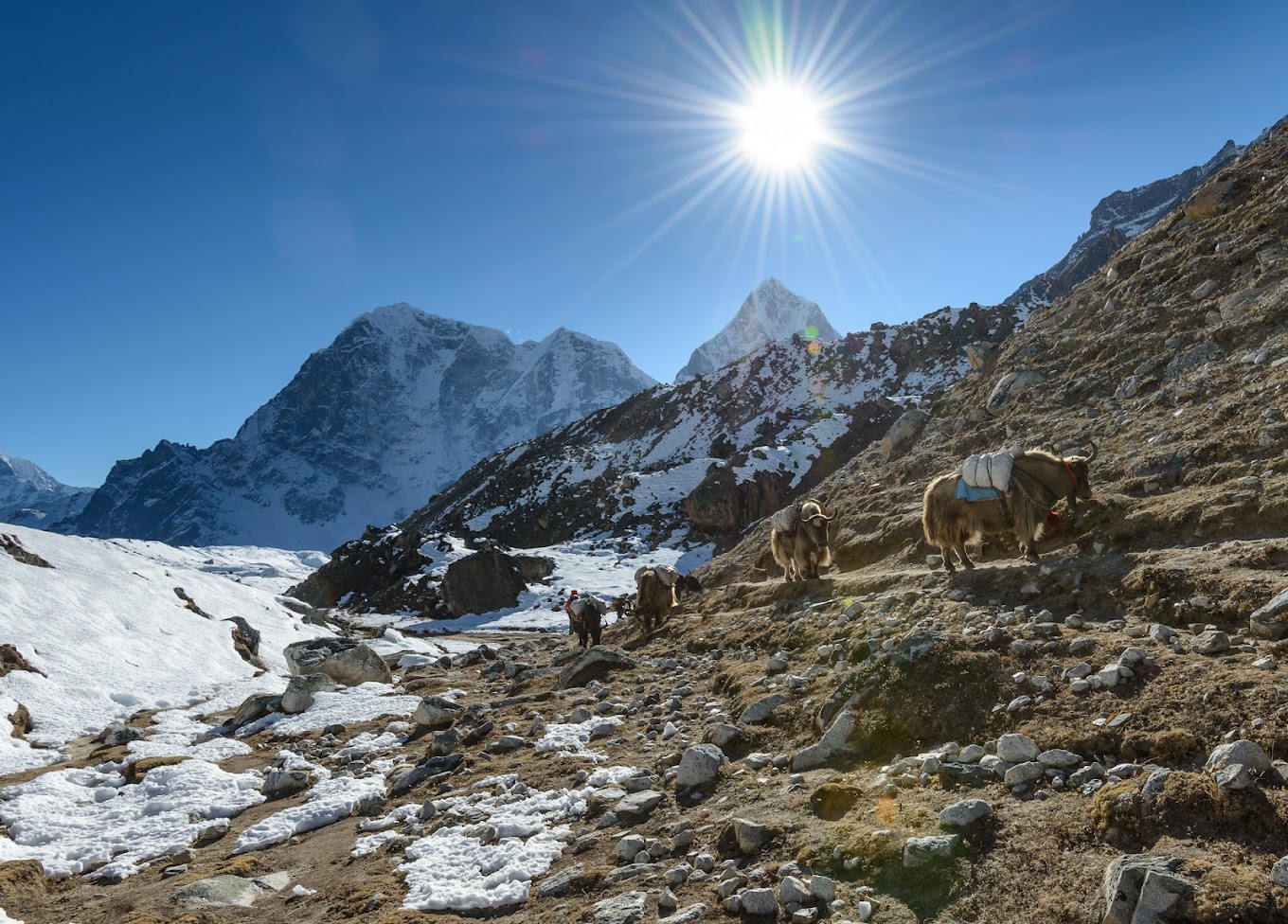
Gaurishankar Trek
Explore Nepal's hidden Himalayan frontier through remote valleys, high mountain passes, and timeless villages on the Gaurishankar Trek.
Trek Overview
What is the Gaurishankar Trek?
The Gaurishankar Trek is the classic route into Nepal's remote Rolwaling Valley, one of the last untrekked corners of the central Himalaya. Starting from Charikot in Dolakha district and following the Tamakoshi and Rolwaling river valleys, the 13-day journey climbs through Simigaon and over the Daldung La to the Sherpa village of Beding, then on to Na and the shores of Tsho Rolpa — Nepal's largest glacial lake, at 4,580 metres, set directly beneath the sacred summit of Gaurishankar (7,134m). Trekking through the Gaurishankar Conservation Area, the route passes terraced hillsides, rhododendron forest, and glacier moraine below Melungtse, Chobutse, and Bamongo before returning via the same valley to Charikot.
AltiPro's Gaurishankar Trek is a fully guided 13-day itinerary from Charikot to Tsho Rolpa Lake and back, with return via Simigaon and Charikot. All teahouse and camp accommodation, all meals, an experienced English-speaking Sherpa guide, a personal porter for each trekker, all Gaurishankar Conservation Area and TIMS permits, and Kathmandu–Charikot road transfers are included. Maximum 12 trekkers per group.
The trek is rated Moderate to Challenging — demanding for the steep, sustained ascent to the Daldung La and the physical challenge of remote, undeveloped trail, but achievable for any trekker with good fitness, prior trekking experience, and several months of preparation. No technical climbing skills are required. AltiPro recommends 3 to 4 months of aerobic preparation before departure.
About the Gaurishankar Trek — Nepal's Hidden Valley
The Gaurishankar Trek follows the Tamakoshi River valley from Charikot through a series of increasingly remote mountain landscapes. The first section climbs through terraced farmland and mixed forest — Shigati, Jagat, Simigaon — where Gaurishankar and Melungtse first appear above the ridgeline. Above Simigaon, the trail crosses the steep Daldung La and drops into the Rolwaling Valley proper, entering high-altitude Sherpa country as the route passes Beding and Na before the final approach to Tsho Rolpa.
Tsho Rolpa (4,580m) is the high point of the standard Gaurishankar trek. The lake sits at the snout of the Trakarding Glacier, fed by meltwater from the Rolwaling Himal, with Pharchamo, Ramdung, and the flanks of Gaurishankar rising directly above — one of the great remote mountain viewpoints in Nepal, far from any road or crowd.
Why Choose AltiPro Adventures for the Gaurishankar Trek?
Expert Sherpa Guide Team
AltiPro's Gaurishankar guides are experienced, English-speaking Sherpas with personal knowledge of the Rolwaling trail, the limited teahouse and camping network, and the altitude management protocols to keep trekkers safe and acclimatised throughout.
Optimal Acclimatisation Itinerary
The 13-day schedule includes properly spaced rest days at Beding (Days 6–7) and Na (Days 8–9), following the recommended altitude gain profile to minimise altitude sickness risk on the approach to Tsho Rolpa.
Personal Porter for Each Trekker
Every trekker has a dedicated porter carrying their trek bag, allowing a light day pack on the trail. Porter welfare — fair wages, insurance, and appropriate equipment — is a core commitment for AltiPro on every trek.
Small Group Size
Maximum 12 trekkers, ensuring personal attention from the guide team and the flexibility to adjust pace for each individual's needs, fitness level, and acclimatisation response throughout the 13 days.
All-Inclusive Pricing
All Gaurishankar Conservation Area fees, TIMS card, Kathmandu–Charikot road transfers, teahouse and camp accommodation, all meals on trek, and guide and porter costs are included. No hidden costs or on-the-ground extras to budget for.
Tsho Rolpa Lakeside
AltiPro's itinerary includes a full day at Na for the walk up to the Tsho Rolpa viewpoint — timed to catch clear morning conditions on Gaurishankar and Pharchamo above the lake, the definitive Rolwaling trek experience.
Gaurishankar Trek — 13-Day Route Overview
The Gaurishankar route climbs steadily from Charikot through the Tamakoshi and Rolwaling valleys with two essential acclimatisation stops at Beding and Na before reaching Tsho Rolpa and returning via the same valley.
Days 1–2: Kathmandu → Charikot (1,980m) → Shigati (950m) → Jagat (1,440m)
Road transfer from Kathmandu to Charikot in Dolakha district, the gateway to the Rolwaling. The first trekking day follows the Tamakoshi river down to Shigati and on to Jagat, warming up legs and lungs for the days ahead.
Day 3: Jagat → Simigaon (2,020m)
A steady climb through terraced fields and forest to Simigaon, a mixed Sherpa and Tamang village — with the first views of Gaurishankar appearing above the ridge on the approach.
Days 4–5: Daldung La (3,976m) → Beding (3,690m)
A long, steep ascent over the Daldung La delivers the first proper high-altitude views of the Rolwaling Himal. The descent into the valley reaches Beding, the largest Sherpa settlement in the region.
Days 6–7: Beding Acclimatisation
Two nights at 3,690m is essential before the push above 4,000m. The rest day allows exploration of Beding's monastery and side trails, with views of Chobutse and Tsoboje.
Days 8–9: Na (4,180m) + Acclimatisation
A short trekking day up-valley to Na, the last permanent settlement in the Rolwaling. The acclimatisation day includes a viewpoint hike above the village with extraordinary views of Ramdung, Pharchamo, and the Trakarding Glacier.
Days 10–11: Tsho Rolpa Lake (4,580m) → Beding
A full day's walk along the glacier moraine to Tsho Rolpa, Nepal's largest glacial lake, directly beneath the Rolwaling Icefall. This is the emotional high point of the trek. Descent back to Beding follows.
How Difficult is the Gaurishankar Trek?
The Gaurishankar Trek is rated Moderate to Challenging. No technical climbing skills are required. The main challenges are the steep, sustained climb over the Daldung La and the remoteness and limited infrastructure of the Rolwaling Valley. Trekkers should be in good cardiovascular fitness before departure, ideally with some prior trekking experience. AltiPro's acclimatisation schedule follows proven protocols with properly spaced rest days at Beding and Na.
Best Season for the Gaurishankar Trek
Autumn (October–November): The primary Gaurishankar season, with clear skies, stable weather, and the best visibility for Tsho Rolpa and the Rolwaling Himal. October is the single best month.
Spring (March–May): Excellent spring conditions with rhododendron blooming in the lower valleys. April and May are ideal with long daylight hours and settled weather before the monsoon.
Gaurishankar Trek Cost
Fully guided Gaurishankar Trek; Charikot road transfers, all teahouse and camp accommodation, all meals, Gaurishankar Conservation Area permit, personal guide and porter included.
Includes Kathmandu–Charikot return road transfers, all teahouse and camp accommodation, all meals on trek, Gaurishankar Conservation Area fee, TIMS card, licensed English-speaking Sherpa guide, and a personal porter for every trekker. Kathmandu hotel accommodation and airport transfers are included. International flights and personal trekking gear are not included. Contact AltiPro for a full cost breakdown.
Gaurishankar Trek — Frequently Asked Questions
How fit do I need to be for the Gaurishankar trek?
Good aerobic fitness is essential, along with some prior trekking experience. AltiPro recommends 3 to 4 months of preparation including regular hiking, running, or cycling. You should be comfortable with 6 to 8 hours of trekking per day on steep, uneven terrain.
What is the highest point of the Gaurishankar trek?
Tsho Rolpa Lake at 4,580m is the highest point on AltiPro's standard Gaurishankar itinerary. Beding, the main Rolwaling village, sits at 3,690m.
What is included in AltiPro's Gaurishankar package?
Kathmandu–Charikot return road transfers, all teahouse and camp accommodation and all meals on trek, Gaurishankar Conservation Area fee, TIMS card, licensed English-speaking Sherpa guide, and a personal porter for each trekker. Kathmandu hotel accommodation and airport transfers are included.
What is the best time to do the Gaurishankar trek?
October and November for the clearest skies and best visibility. March and April for the spring rhododendron season and fewer crowds than the October peak.
How long is the Gaurishankar trek?
13 days from Kathmandu, including 2 road transfer days and 11 trekking and rest days in the Rolwaling; Jagat, Simigaon, Beding (2 nights), Na (2 nights), Tsho Rolpa, and return.
Can beginners do the Gaurishankar trek?
It's best suited to trekkers with some prior trekking experience, though good fitness and AltiPro's acclimatisation schedule and experienced guide team make the route achievable for well-prepared first-timers.
Is altitude sickness a risk on the Gaurishankar trek?
Altitude sickness is a risk above 3,000m for any trekker. AltiPro's itinerary follows proven acclimatisation protocols with rest days at Beding and Na. Guides monitor all trekkers daily and will recommend descent if symptoms develop.
What is Tsho Rolpa and why is it important?
Tsho Rolpa (4,580m) is Nepal's largest glacial lake, fed by the Trakarding Glacier below the Rolwaling Himal. It is the highlight of the Gaurishankar trek, reached after a full day's walk along the glacier moraine beneath Pharchamo and Ramdung.
Highlights
- Tsho Rolpa Lake (4,580 m / 15,026 ft)
- Mount Gaurishankar (7,134 m / 23,406 ft)
- Daldung La Pass (3,976 m)
- Beding — Heart of the Rolwaling
- Sherpa Na Village — Last Settlement in the Valley
- Rolwaling Glacier & Trakarding Icefall
- Gaurishankar Conservation Area Wildlife
- Melungtse & Chobutse Viewpoints (~4,000 m)
Detailed Itinerary
Click on each day to view details
| Day | Program | Meals | Accom. | |||||||||||||||||||||||||||||||||||||||||||||||||||||||||||||||||||||||||||||||||||||||||||||||||||||||||||||||||||||||||||||||||||||||||||||||||||||||||||||||||
|---|---|---|---|---|---|---|---|---|---|---|---|---|---|---|---|---|---|---|---|---|---|---|---|---|---|---|---|---|---|---|---|---|---|---|---|---|---|---|---|---|---|---|---|---|---|---|---|---|---|---|---|---|---|---|---|---|---|---|---|---|---|---|---|---|---|---|---|---|---|---|---|---|---|---|---|---|---|---|---|---|---|---|---|---|---|---|---|---|---|---|---|---|---|---|---|---|---|---|---|---|---|---|---|---|---|---|---|---|---|---|---|---|---|---|---|---|---|---|---|---|---|---|---|---|---|---|---|---|---|---|---|---|---|---|---|---|---|---|---|---|---|---|---|---|---|---|---|---|---|---|---|---|---|---|---|---|---|---|---|---|---|---|---|---|
| 1 | Arrival in Kathmandu (1,350m), briefing and preparation | B/D | Hotel | |||||||||||||||||||||||||||||||||||||||||||||||||||||||||||||||||||||||||||||||||||||||||||||||||||||||||||||||||||||||||||||||||||||||||||||||||||||||||||||||||
|
Arrival in Kathmandu (1,350m), briefing and preparation
2
|
Drive from Kathmandu to Charikot, trek to Shivalaya (1,800m) |
B/L/D |
Lodge |
|
| Drive from Kathmandu to Charikot, trek to Shivalaya (1,800m)
3
|
Trek from Shivalaya to Suri Danda (2,400m) |
B/L/D |
Lodge |
|
| Trek from Shivalaya to Suri Danda (2,400m)
4
|
Trek from Suri Danda to Namdu (2,700m) |
B/L/D |
Lodge |
|
| Trek from Suri Danda to Namdu (2,700m)
5
|
Trek from Namdu to Chaku (3,050m) |
B/L/D |
Lodge |
|
| Trek from Namdu to Chaku (3,050m)
6
|
Trek from Chaku to Simigaon (3,450m) |
B/L/D |
Lodge |
|
| Trek from Chaku to Simigaon (3,450m)
7
|
Trek from Simigaon to Tashi Lapcha (4,000m) |
B/L/D |
Lodge |
|
| Trek from Simigaon to Tashi Lapcha (4,000m)
8
|
Trek from Tashi Lapcha to Gaurishankar Base Camp (5,100m) |
B/L/D |
Tent |
|
| Trek from Tashi Lapcha to Gaurishankar Base Camp (5,100m)
9
|
Gaurishankar Base Camp – acclimatization and exploration |
B/L/D |
Tent |
|
| Gaurishankar Base Camp – acclimatization and exploration
10
|
Trek from Gaurishankar Base Camp back to Tashi Lapcha (4,000m) |
B/L/D |
Tent |
|
| Trek from Gaurishankar Base Camp back to Tashi Lapcha (4,000m)
11
|
Trek from Tashi Lapcha to Simigaon (3,450m) |
B/L/D |
Lodge |
|
| Trek from Tashi Lapcha to Simigaon (3,450m)
12
|
Trek from Simigaon to Chaku (3,050m) |
B/L/D |
Lodge |
|
| Trek from Simigaon to Chaku (3,050m)
13
|
Trek from Chaku to Namdu (2,700m) |
B/L/D |
Lodge |
|
| Trek from Chaku to Namdu (2,700m)
14
|
Trek from Namdu to Suri Danda (2,400m) |
B/L/D |
Lodge |
|
| Trek from Namdu to Suri Danda (2,400m)
15
|
Trek from Suri Danda to Shivalaya (1,800m) |
B/L/D |
Lodge |
|
| Trek from Suri Danda to Shivalaya (1,800m)
16
|
Trek from Shivalaya to Charikot, drive to Kathmandu (1,350m) |
B/L |
Hotel |
|
| Trek from Shivalaya to Charikot, drive to Kathmandu (1,350m)
17 - 18
|
Buffer days / sightseeing and departure in Kathmandu |
Breakfast |
Hotel |
|
| Buffer days / sightseeing and departure in Kathmandu | ||||||||||||||||||||||||||||||||||||||||||||||||||||||||||||||||||||
Services
Includes
Airport - Hotel transfer – Airport (Pick Up and Drop).
3 nights sharing twin bedroom at the hotel (3-star category) in Kathmandu – Sharing twin Bedroom on BB Plan.
2 nights sharing a twin bedroom at the hotel (3-star category) in Pokhara on a bed & breakfast basis.
One Welcome Dinner in a tourist standard restaurant in Kathmandu with Office’s Staff.
All necessary paper works: Annapurna Conservation area permit, TIMS Card & conservation entry fee.
Insurance for all involved Nepalese staff during the trek.
Annapurna Region Trekking map.
Air Transportation: (Domestic Flight) Fly from Kathmandu – to Pokhara and while returning Pokhara – to Kathmandu, as per itinerary. Land Transportation: Drive from Kathmandu to Pokhara and while returning Pokhara to Kathmandu (by tourist vehicles).
Pokhara – Kande and while returning drive to Pokhara from Siding Village.
Up to 15 Kg per member for personal baggage during the trek carrying by porters.
Food 3 meals a day (BLD; including tea and coffee) along with accessible accommodation at Hotel/Lodge during the trek.
2 liters of boiled water to carry on thermos per day per member.
Local government-licensed Guide (English speaking) during the trek and sight-seeing in Kathmandu valley.
Porters (2 trekkers: 1 porter) during the trek.
All Nepalese staff & porter’s daily wages, salary, equipment, food & clothing.
Sightseeing in Kathmandu Valley [ Swoyambu (Monkey temple) and Kathmandu Durbar Square] by a professional guide.
Comprehensive Medical kit.
Excludes
International flight airfare (from and to Kathmandu).
Nepalese Visa fee is $ 50 USD for 30 Days.
Lunch & dinner during the stay in Kathmandu (also in case of early return from Trekking / Expedition than the scheduled itinerary).
Extra nights’ accommodation in Kathmandu. In case of early arrival or late departure, early return from Trekking / Expedition, or domestic flight cancellation (due to any other reason) than the scheduled itinerary.
Insurance covering both medical and high-altitude evacuation costs (for the trip cancellation, interruption, high-altitude rescue, air evacuation, medical treatment, repatriation, etc.) *Mandatory
Telephone Calls, Internet, Toiletries, battery recharge, hot shower, hot/bottled/mineral water, laundry, soft drinks, beers, and any Alcoholic beverages.
Clothing, Packing Items, Bags, Personal Medical Kit, and all kinds of Personal Trekking Gear.
Soaps, shampoos, toilet and tissue papers, toothpaste, and other items used to keep yourself clean.
Special Filming, Camera, and Drone permit fee.
Not included during the trek and the expedition.
$30 USD for an extra porter per day (If an extra porter is requested).
Each member needs to contribute a minimum of $200 USD as tips to be distributed among the porters, guide, and other staff involved. (Check the details below).
Any other services or activities, which are not mentioned in the itinerary and other items not listed in the “Cost Includes” section.
Gear Lists & Useful Information
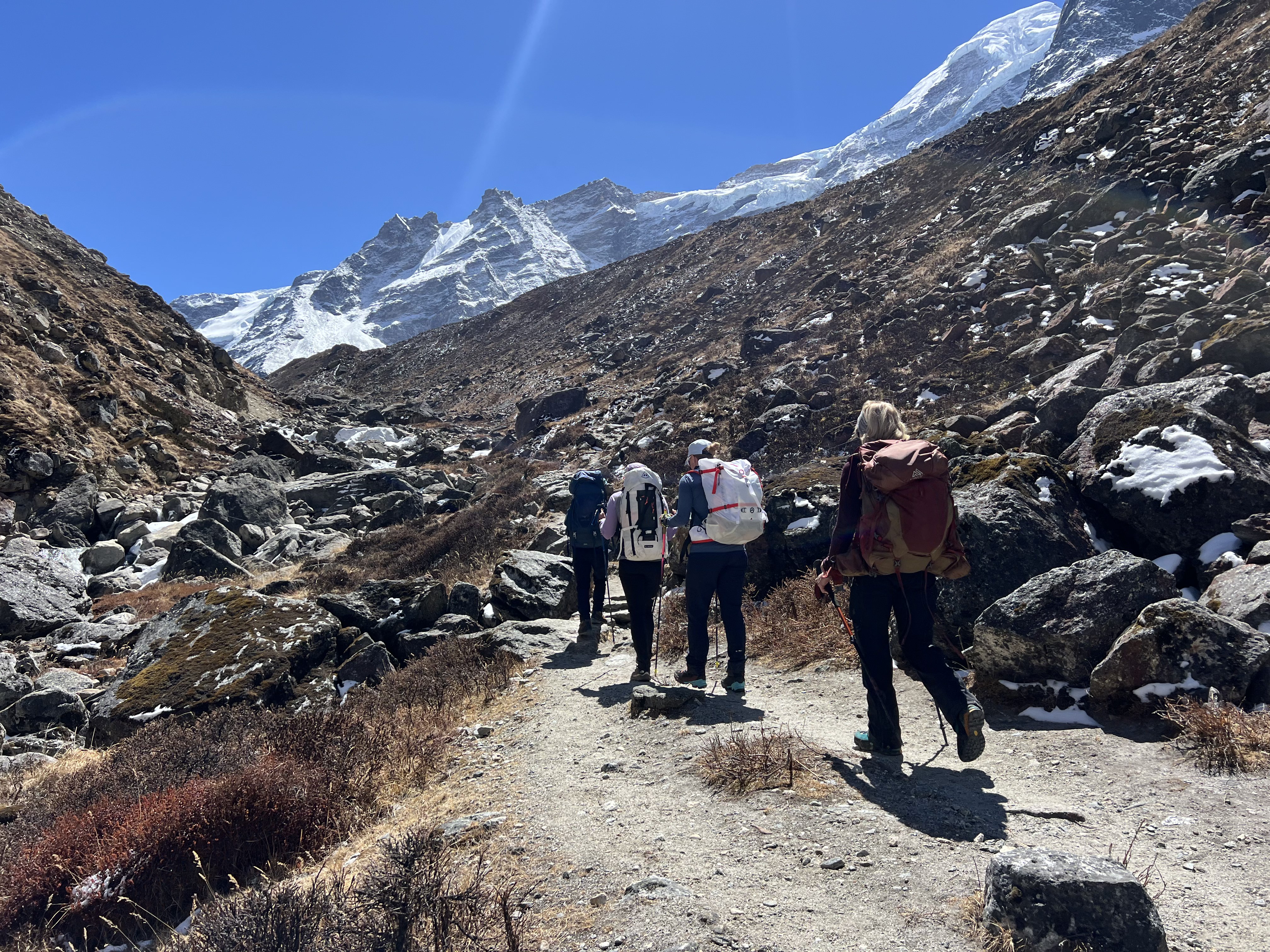
Been on this trek?
Your feedback helps other travelers plan their adventure of a lifetime. Share your experience with us!
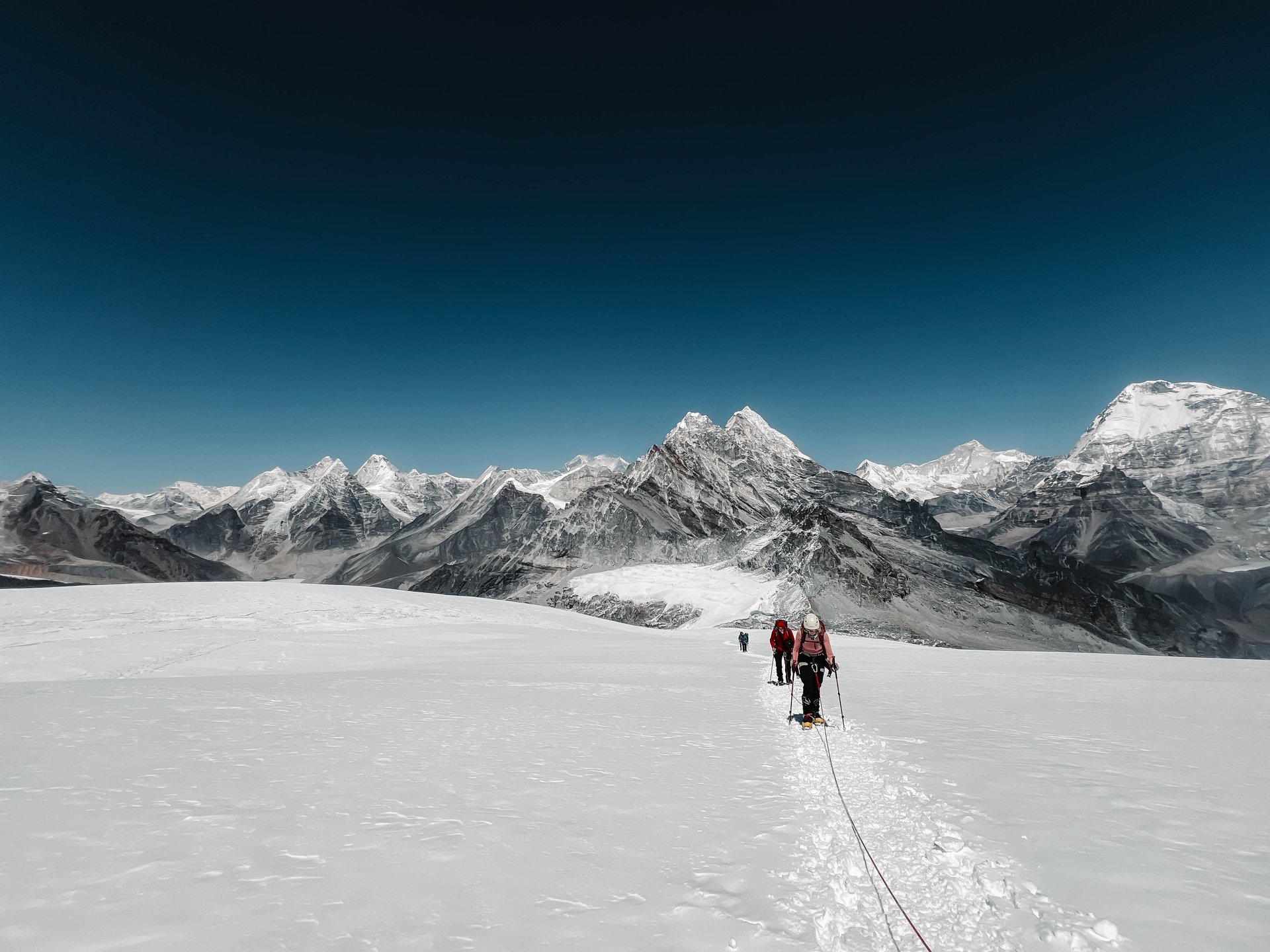
Ready to Start Your Trekking Adventure?
Contact us to book your trek or get more information