
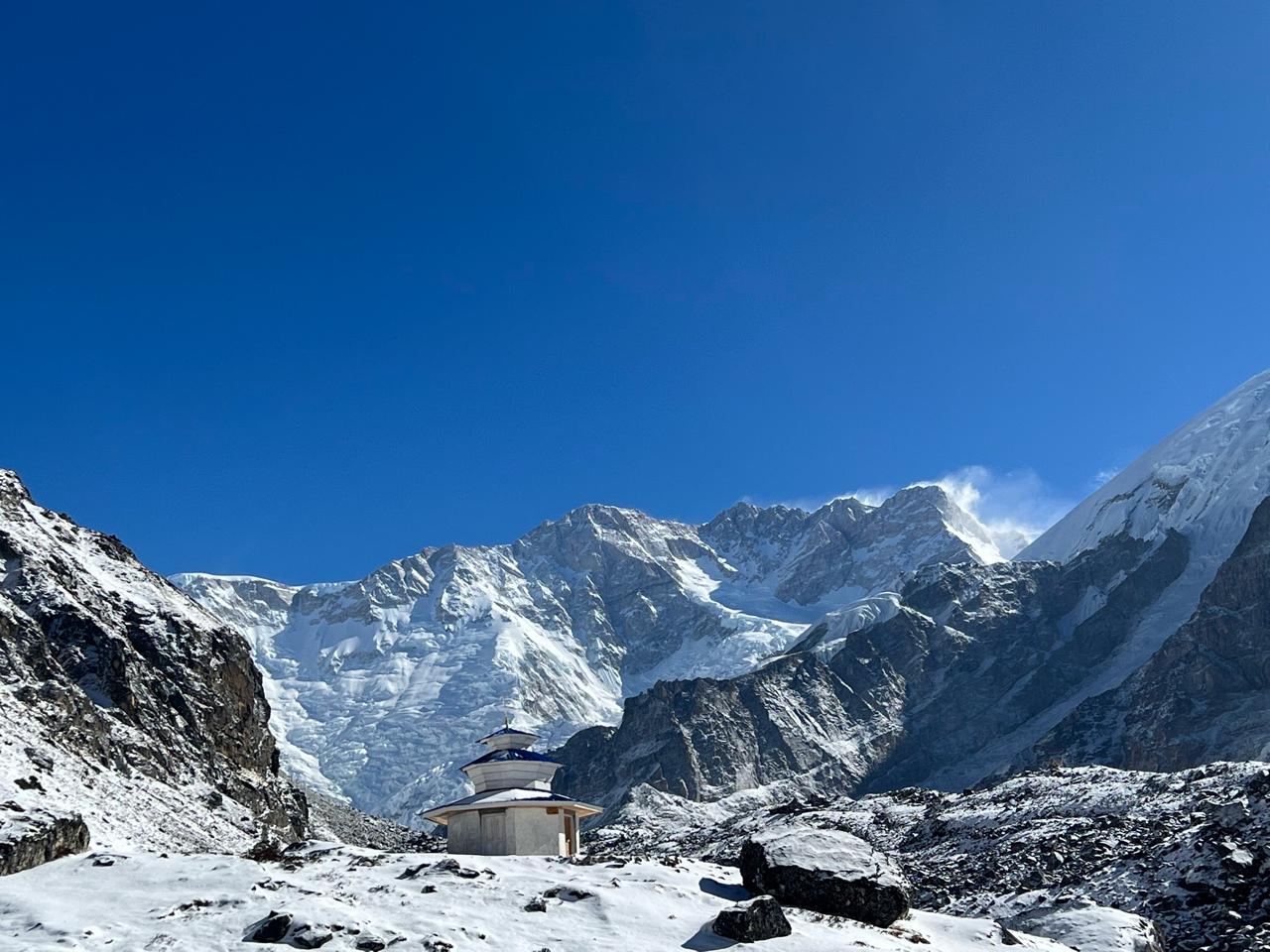
Kanchenjunga Base Camp Trek
Kanchenjunga Base Camp Trek — Both Base Camps, Three Passes | AltiPro Adventures
Trek Overview
What is the Kanchenjunga Base Camp Trek?
The Kanchenjunga Base Camp Trek is Nepal's most remote and physically demanding long-distance trekking route, travelling deep into the far-eastern Himalayas to the base of the world's third-highest mountain — Kanchenjunga at 8,586 metres. AltiPro's 22-day itinerary flies from Kathmandu to Taplejung and then follows a long approach through the subtropical Tamur River valley and the remote forests of the Kanchenjunga Conservation Area to both the North Base Camp at Pang Pema (5,143m) and the South Base Camp at the Yalung Glacier (4,800m). The circuit visits both base camps — a rarity among Nepal's trekking routes — delivering views of Kanchenjunga's towering north and south faces and the glaciers of one of the largest mountain massifs in the world.
Fully guided with an experienced high-altitude guide with Kanchenjunga valley expertise, Sherpa support for upper camps, personal porter for each trekker, full camping equipment and meals for high-camp stages, teahouse accommodation in the lower valley, all Kanchenjunga Conservation Area permits and TIMS, and the Taplejung domestic flight. Maximum 12 trekkers. Rated Challenging.
About Kanchenjunga
Kanchenjunga (8,586m) is the third-highest mountain on Earth and the highest peak on the Nepal-Sikkim border. It is one of the most geographically isolated of the 8,000m peaks — the far-eastern position of the range means the massif is accessed from the Taplejung valley in eastern Nepal, requiring two days from Kathmandu including the domestic flight. The mountain has five summits connected by a massive horseshoe ridge that encloses the Yalung and Zemu glaciers.
The north face above Pang Pema is one of the most dramatic mountain walls in the Himalayas — a continuous 3,000-metre rise from the Kanchenjunga Glacier to the summit, entirely unobscured by satellite peaks. The views from Pang Pema are arguably more dramatic than those from Everest Base Camp, and are seen by only a fraction of the trekkers who visit the Khumbu each season.
Why Choose AltiPro Adventures for the Kanchenjunga Base Camp Trek?
Dual Base Camp Circuit
AltiPro's 22-day itinerary visits both the North Base Camp at Pang Pema (5,143m) and the South Base Camp at the Yalung Glacier (4,800m) on a single circuit — providing a complete experience of the full Kanchenjunga massif from both sides.
Kanchenjunga Valley Expertise
AltiPro's team has Kanchenjunga-specific route knowledge for both approach valleys, acclimatisation staging between 3,500m and 5,143m, and high-altitude camp management at Pang Pema and the Yalung Glacier.
Full Camping Support
Above Ghunsa on the northern approach and Tortong on the southern approach, AltiPro carries complete camping equipment — high-altitude tents, cooking gear, and food for all remote stages where no teahouse facilities exist.
Sherpa Support
High-altitude Sherpa support for the upper camp stages at Pang Pema and the Yalung Glacier — providing safety margins and load carrying capacity that the remoteness of the Kanchenjunga circuit demands.
Complete Logistics
All Kanchenjunga Conservation Area permits and TIMS, Taplejung domestic return flight, all accommodation and meals — completely organised by AltiPro with no logistical gaps on this most demanding of Nepal's trekking circuits.
Far Eastern Wilderness
The Kanchenjunga region sees a fraction of the visitors of the Khumbu or Annapurna. The pristine forest of the Kanchenjunga Conservation Area, the traditional communities of the Tamur valley, and the extraordinary isolation of the upper base camp make this unlike any other trek in Nepal.
Kanchenjunga Base Camp Trek — 22-Day Route Overview
The circuit flies to Taplejung, follows the northern approach via the Ghunsa River to Pang Pema, crosses to the southern approach via the Sinion La or Mirgin La, and descends via the Yalung Glacier and South Base Camp to complete the full Kanchenjunga circuit.
Days 1–3: Kathmandu → Taplejung → Chirwa → Sekathum
Domestic flight from Kathmandu to Taplejung, then begin the approach through the subtropical Tamur River valley through Chirwa and Sekathum — a dramatic transition from the lowland heat to the Himalayan foothills forest.
Days 4–8: Sekathum → Amjilosa → Ghunsa (3,595m)
The northern approach follows the Ghunsa Khola upstream through increasingly remote and spectacular forest gorge terrain to Ghunsa — the last permanent village on the northern approach and the highest teahouse settlement on the circuit.
Days 9–12: Ghunsa → Kambachen → Lhonak → Pang Pema (5,143m)
Above Ghunsa, camping begins. The upper Ghunsa valley climbs through Kambachen and Lhonak to Pang Pema — the Kanchenjunga North Base Camp at 5,143m — with the full unobscured north face of Kanchenjunga directly above. One of the most dramatic mountain views accessible to trekkers anywhere in the world.
Days 13–16: Cross to Southern Approach — Sinion La / Mirgin La → Tortong
The pass crossing from the northern to southern approach is the technical crux of the circuit — a high-altitude crossing with outstanding views before the descent into the Simbua Khola valley and the first views of Kanchenjunga's south and west faces.
Days 17–19: Tortong → Yalung Glacier → South Base Camp (4,800m)
The southern approach climbs to the Yalung Glacier and South Base Camp at 4,800m — a completely different perspective on the Kanchenjunga massif, with the southwest face and the Yalung ridge visible from the camp.
Days 20–22: Descent → Taplejung → Kathmandu
Descent via the Simbua Khola valley to Taplejung for the domestic return flight to Kathmandu, completing the 22-day Kanchenjunga dual-base-camp circuit.
How Difficult is the Kanchenjunga Base Camp Trek?
The Kanchenjunga Base Camp Trek is rated Challenging. The 22-day sustained effort, the dual base camp circuit with two high-altitude crossings, the remoteness above Ghunsa and Tortong, and the altitude at Pang Pema (5,143m) make this the most demanding trekking itinerary AltiPro offers. No technical climbing is required. The primary challenges are sustained fitness, acclimatisation, and remoteness.
Best Season for the Kanchenjunga Base Camp Trek
Spring (April–May): The primary season — stable conditions and clear skies for views of the Kanchenjunga massif from both base camps.
Autumn (October–November): The clearest post-monsoon months — outstanding Kanchenjunga views and settled conditions throughout the circuit.
Kanchenjunga Base Camp Trek Cost
Complete dual-base-camp Kanchenjunga circuit — all permits, Taplejung flight, accommodation, meals, high-altitude guide, Sherpa support, and personal porter included.
Includes all Kanchenjunga Conservation Area permits and TIMS, Taplejung domestic return flight, teahouse accommodation in lower valley and full camping above Ghunsa and Tortong, all meals on trek, licensed high-altitude guide, Sherpa support, and personal porter. International flights and personal gear not included. Contact AltiPro for full pricing.
Kanchenjunga Base Camp Trek — Frequently Asked Questions
Common questions about the Kanchenjunga Base Camp Trek with AltiPro Adventures.
How long does the Kanchenjunga Trek take?
22 days with AltiPro from Kathmandu return, including the Taplejung domestic flights and all trekking, high-camp, and both base camp days.
How remote is the Kanchenjunga Base Camp Trek?
Among the most remote trekking routes in Nepal. Above Ghunsa on the northern approach and Tortong on the southern approach, there are no teahouse facilities. AltiPro carries full camping equipment for all stages above these villages.
Is prior experience required?
Yes — strongly recommended. AltiPro requires prior trekking experience above 4,500m and multi-week sustained fitness. This is not suitable as a first or second Himalayan trek.
Does the trek visit both base camps?
Yes — AltiPro's 22-day circuit visits both the North Base Camp at Pang Pema (5,143m) and the South Base Camp at the Yalung Glacier (4,800m) on a single itinerary.
When is the best time for the Kanchenjunga trek?
April and May for the primary spring season. October and November for the clearest post-monsoon conditions on the circuit.
What is Pang Pema?
Pang Pema is the Kanchenjunga North Base Camp at 5,143 metres, in the upper Ghunsa valley directly below the north face of Kanchenjunga. It is the highest point of the AltiPro Kanchenjunga circuit.
How does Kanchenjunga compare to Everest Base Camp?
The Kanchenjunga trek is significantly more remote, longer, and sees far fewer visitors than EBC. The north face views from Pang Pema are arguably more dramatic than the Everest Base Camp view — seen by a tiny fraction of the trekkers who visit the Khumbu each season.
Can I fly to the trailhead?
Yes — AltiPro's itinerary includes domestic flights from Kathmandu to Taplejung for both the approach and return, removing 2 to 3 days of road travel each way.
Highlights
- Pangpema — Kanchenjunga North Base Camp (5,143 m / 16,873 ft)
- Oktang Viewpoint (4,780 m) — All Four Kanchenjunga Summits
- Three High Passes — Sinion La, Mirgin La, Selele La
- Jannu Himal / Kumbhakarna Base Camp Side Trip (4,500 m)
- Drohmo Ri Ridge Ascent (~5,500 m) — 360° North Face Panorama
- Ghunsa — Tibetan-Heritage Sherpa Village at 3,475 m
- Limbu & Rai Heritage — Southern Approach Villages
- Kanyam Tea Gardens — Nepal's Finest Tea at the Circuit's End
Detailed Itinerary
Click on each day to view details
| Day | Program | Meals | Accom. | |||||||||||||||||||||||||||||||||||||||||||||||||||||||||||||||||||||||||||||||||||||||||||||||||||||||||||||||||||||||||||||||||||||||||||||||||||||||||||||||||||||||||||||||||||||||||||||||||||||||||||||||||||||||||||||||||||||||||||||||||
|---|---|---|---|---|---|---|---|---|---|---|---|---|---|---|---|---|---|---|---|---|---|---|---|---|---|---|---|---|---|---|---|---|---|---|---|---|---|---|---|---|---|---|---|---|---|---|---|---|---|---|---|---|---|---|---|---|---|---|---|---|---|---|---|---|---|---|---|---|---|---|---|---|---|---|---|---|---|---|---|---|---|---|---|---|---|---|---|---|---|---|---|---|---|---|---|---|---|---|---|---|---|---|---|---|---|---|---|---|---|---|---|---|---|---|---|---|---|---|---|---|---|---|---|---|---|---|---|---|---|---|---|---|---|---|---|---|---|---|---|---|---|---|---|---|---|---|---|---|---|---|---|---|---|---|---|---|---|---|---|---|---|---|---|---|---|---|---|---|---|---|---|---|---|---|---|---|---|---|---|---|---|---|---|---|---|---|---|---|---|---|---|---|---|---|---|---|---|---|---|---|---|---|---|---|---|---|---|---|---|---|---|---|---|---|---|---|---|---|---|---|---|---|---|---|---|---|---|---|---|---|---|---|---|---|---|---|---|---|---|---|---|---|---|---|
| 1 | Arrive Kathmandu (1,350 m) — Welcome Briefing | Dinner | Hotel, Kathmandu | |||||||||||||||||||||||||||||||||||||||||||||||||||||||||||||||||||||||||||||||||||||||||||||||||||||||||||||||||||||||||||||||||||||||||||||||||||||||||||||||||||||||||||||||||||||||||||||||||||||||||||||||||||||||||||||||||||||||||||||||||
|
Welcome to Nepal. An AltiPro representative meets you at Tribhuvan International Airport and transfers you to your 4-star hotel in Kathmandu. The evening begins with a welcome dinner and comprehensive trek briefing covering the Kanchenjunga Circuit, permits, gear requirements and altitude protocols.
2
|
Fly Kathmandu → Bhadrapur (91 m); Drive → Taplejung / Suketar (2,420 m) |
Breakfast, Lunch, Dinner |
Lodge, Suketar |
|
| Morning flight from Kathmandu to Bhadrapur Airport (91 m) in eastern Nepal — approximately 50 minutes. Drive from Bhadrapur through scenic eastern Nepal hills, cardamom valleys and the tea country of Ilam to Taplejung / Suketar (2,420 m) — approximately 6–8 hours. Suketar is the southern trailhead for the Kanchenjunga circuit. Overnight at a lodge.
3
|
Trek Suketar → Lali Kharka (2,265 m) |
Breakfast, Lunch, Dinner |
Tea House |
|
| The Kanchenjunga trek begins. The trail descends from Suketar through terraced Limbu villages, traditional farmland and the first views of the distant Kanchenjunga massif on the northern horizon. The lower approach is characterised by warm village culture, cardamom agriculture and classic eastern Himalayan jungle. Lali Kharka (2,265 m) is the first overnight camp. 4–5 hrs walking.
4
|
Trek Lali Kharka → Kande Bhanjyang (2,130 m) |
Breakfast, Lunch, Dinner |
Tea House |
|
| Descend to the Pa Khola river crossing, then climb through the Limbu village of Kunjari to the ridge top at Kande Bhanjyang (2,130 m). The trail passes through traditional farming communities — terraced rice and cardamom fields — with the Kanchenjunga massif slowly growing on the northern horizon. 5–6 hrs walking.
5
|
Trek Kande Bhanjyang → Phumphe Danda (1,858 m) |
Breakfast, Lunch, Dinner |
Tea House |
|
| An undulating ridgeline trail through subtropical forests and small farming hamlets. The landscape alternates between open ridge panoramas and sheltered forest valleys typical of the lower Kanchenjunga approach. Phumphe Danda (1,858 m) is a small settlement with warm teahouse hospitality and excellent valley views. 5–6 hrs walking.
6
|
Trek Phumphe Danda → Sherpagaun (1,678 m) |
Breakfast, Lunch, Dinner |
Tea House |
|
| The trail crosses valleys and passes through dense eastern Himalayan jungle as the landscape shifts towards the classic Kanchenjunga approach corridor. Sherpagaun (1,678 m) is a small Sherpa settlement with a different cultural texture from the Limbu and Rai communities of the lower approach. 5–6 hrs walking.
7
|
Trek Sherpagaun → Yamphudin (2,080 m) |
Breakfast, Lunch, Dinner |
Tea House |
|
| The trail enters the upper Kanchenjunga approach corridor, climbing to Yamphudin (2,080 m) — a Rai and Sherpa settlement that serves as the last significant village before the wilderness begins. Traditional homestay-style teahouses offer local cooking and cultural warmth. From Yamphudin the trail enters bamboo and rhododendron forest and leaves the cultivated valley behind. 4–5 hrs walking.
8
|
Trek Yamphudin → Tortong / Torongding (2,995 m) |
Breakfast, Lunch, Dinner |
Tea House |
|
| The trail climbs from Yamphudin through bamboo and rhododendron forest following the Simuwa Khola upstream. In spring the rhododendrons are spectacular — deep red and pink blooms against the first glimpses of high snow-covered ridges above. Tortong (2,995 m) is a small teahouse settlement at the edge of the high-altitude approach. 5–6 hrs walking / 915 m ascent.
9
|
Trek Tortong → Tseram / Cheram (3,870 m) |
Breakfast, Lunch, Dinner |
Tea House |
|
| The valley widens dramatically above Tortong as the treeline approaches. Kabru (7,412 m) and Rathong (6,678 m) appear above the forest edge for the first time — dramatic and close. Tseram / Cheram (3,870 m) is the primary acclimatisation base for the South Base Camp section, with comfortable teahouses and outstanding views of the Kanchenjunga southern massif. 5–6 hrs walking / 875 m ascent.
10
|
Acclimatisation Day at Tseram (3,870 m) |
Breakfast, Lunch, Dinner |
Tea House, Tseram |
|
| A mandatory rest and acclimatisation day at Tseram before the South Base Camp push. AltiPro guides lead an optional side hike to the Yamgachha Khola valley (up to approximately 5,000 m) for altitude adaptation and panoramic views. Altitude monitoring throughout. Rest, hydrate and eat well in preparation for the South Base Camp day tomorrow.
11
|
Trek Tseram → Ramche (4,580 m) — Kanchenjunga South Base Camp |
Breakfast, Lunch, Dinner |
Tea House, Ramche |
|
| The approach to Kanchenjunga South Base Camp at Ramche (4,580 m / 15,026 ft) beside the edge of the Yalung Glacier. Rathong (6,678 m) and Kokthang (6,148 m) tower immediately above the camp. The south wall of Kanchenjunga fills the valley head. Overnight at Ramche — the first of two extraordinary base camp positions on this circuit. 3–4 hrs walking / 710 m ascent.
12
|
Day Hike: Ramche → Oktang Viewpoint (4,780 m) → Tseram (3,870 m) |
Breakfast, Lunch, Dinner |
Tea House, Tseram |
|
| The finest day on the southern side of the circuit. The day hike from Ramche to the Oktang Viewpoint (4,780 m) delivers all four summits of Kanchenjunga — the main summit (8,586 m), West (Yalung Kang 8,505 m), Central (8,482 m) and South (8,476 m) — closing the head of the Yalung Glacier in a single panoramic arc. Descend from Oktang to Tseram for the pass crossing preparation. 5–6 hrs total.
13
|
Trek Tseram → Sinion La (4,646 m) → Mirgin La (4,400 m) → Selele La (4,480 m) |
Breakfast, Lunch, Dinner |
Tea House |
|
| The interior traverse — the physical backbone of the full Kanchenjunga circuit. Three consecutive alpine passes connect the South Valley to the North: Sinion La (4,646 m) is the highest; Mirgin La (4,400 m) and Selele La (4,480 m) follow in succession. Long-distance views west toward Makalu (8,485 m) from the passes are remarkable. The crossing links two completely different mountain environments — a transition that defines the Kanchenjunga circuit. 8–9 hrs walking.
14
|
Trek Three Passes Area → Ghunsa (3,475 m) |
Breakfast, Lunch, Dinner |
Tea House, Ghunsa |
|
| Descend from the high-pass zone through sub-alpine rhododendron forest into the wide Ghunsa Khola valley and the village of Ghunsa (3,475 m) — the largest Tibetan-heritage Sherpa settlement in the upper Kanchenjunga valley, and the cultural centrepiece of the north side. Wi-Fi, local monastery, warm teahouse hospitality and a noticeably different cultural atmosphere from the southern approach greet the group on arrival. 4–5 hrs walking.
15
|
Trek Ghunsa (3,475 m) → Kambachen (4,050 m) |
Breakfast, Lunch, Dinner |
Tea House, Kambachen |
|
| Follow the Ghunsa Khola deeper into the northern valley beyond Ghunsa. The trail enters raw, open glacial terrain as Kambachen (4,050 m) approaches. The vertical rock spire of Jannu Himal / Kumbhakarna (7,710 m) begins to dominate the northern skyline from the valley floor — one of the most dramatic individual mountain appearances available on any Nepal trek. Blue sheep are commonly spotted on the valley walls; snow leopard tracks are occasionally seen in the moraine. 4–5 hrs walking.
16
|
Side Trip: Jannu Himal (Kumbhakarna) Base Camp (4,500 m) — Return to Kambachen |
Breakfast, Lunch, Dinner |
Tea House, Kambachen |
|
| One of the Kanchenjunga circuit's greatest hidden rewards. The side trip from Kambachen to Jannu Himal Base Camp (4,500 m) provides a direct close approach to the sheer vertical rock spire of Kumbhakarna (7,710 m) — one of the most technically difficult mountains in the Himalaya and one of the most dramatic summit walls in Nepal. Return to Kambachen for the night. 5–6 hrs total round trip.
17
|
Trek Kambachen (4,050 m) → Lhonak (4,780 m) |
Breakfast, Lunch, Dinner |
Tea House, Lhonak |
|
| The approach to Pangpema intensifies. The trail climbs through glacial moraine terrain with Kanchenjunga (8,586 m) and Kangbachen (7,903 m) coming into full, overwhelming view as the valley narrows toward the glacier. Lhonak (4,780 m) is a small teahouse outpost in an extraordinary glacial landscape — one of the highest-altitude rest positions on the full circuit. Snow leopard habitat begins at Lhonak. 4–5 hrs walking / 730 m ascent.
18
|
Trek Lhonak → Pangpema (5,143 m / 16,873 ft) — Kanchenjunga North Base Camp |
Breakfast, Lunch, Dinner |
Tea House, Pangpema |
|
| Pangpema (5,143 m / 16,873 ft) — the highest point of the Kanchenjunga circuit and one of the most dramatic high-altitude positions accessible to non-technical trekkers anywhere in the Nepal Himalaya. The trail follows the lateral moraine of the Kanchenjunga Glacier to the foot of the colossal North Wall. The panoramic arc — Kanchenjunga main summit, Kangbachen (7,903 m), Kirat Chuli (7,365 m) and Nepal Peak (7,168 m) — fills every direction. Overnight at Pangpema. 3–4 hrs walking / 363 m ascent.
19
|
Day Hike: Pangpema → Drohmo Ri (~5,500 m) → Return to Lhonak (4,780 m) |
Breakfast, Lunch, Dinner |
Tea House, Lhonak |
|
| The optional Drohmo Ri ridge ascent (~5,500 m) is the highest point of the entire Kanchenjunga trek — a 360-degree panorama of Kanchenjunga's north face, the Wedge Peak, Nepal Peak and the full northern glacier cirque that closes the circuit with an extraordinary final high point. Those who prefer can rest at Pangpema. All return to Lhonak (4,780 m) for the night to begin the long descent.
20
|
Trek Lhonak (4,780 m) → Ghunsa (3,475 m) — Long Descent |
Breakfast, Lunch, Dinner |
Tea House, Ghunsa |
|
| A long but celebratory descent from Lhonak via Kambachen back to Ghunsa (3,475 m) — retracing the northern valley with the perspective reversed, new details emerging from the familiar terrain. The dramatic altitude drop (1,305 m) from Lhonak to Ghunsa in a single day brings relief, warmth and the lush vegetation of the lower valley rapidly back. 6–7 hrs walking.
21
|
Trek Ghunsa → Gyabla (2,725 m) → Amjilosa (2,510 m) |
Breakfast, Lunch, Dinner |
Tea House |
|
| Descend from Ghunsa through the Tibetan-heritage village of Phale, then continue through bamboo forest and river gorge terrain to Gyabla (2,725 m) and the lower settlement of Amjilosa (2,510 m). The descent from the Kanchenjunga Conservation Area is rapid and the vegetation becomes lush and tropical within hours. 5–6 hrs walking.
22
|
Trek Amjilosa → Ranipul → Drive to Taplejung (1,820 m) |
Breakfast, Lunch, Dinner |
Lodge, Taplejung |
|
| Trek from Amjilosa through Ranipul — exiting the Kanchenjunga Conservation Area at the lower valley checkpoint. Jeep transport from Ranipul / Taplejung road-head drives to Taplejung (1,820 m). The trek section is complete. The circuit covers approximately 220 km of trail from Suketar to Taplejung via both base camps and three high passes. Overnight at a comfortable lodge in Taplejung.
23
|
Drive Taplejung → Kanyam Tea Gardens → Bhadrapur |
Breakfast, Lunch, Dinner |
Lodge, Kanyam or Bhadrapur |
|
| Drive from Taplejung through the rolling green hills of Ilam to Kanyam (1,200 m) — Nepal's premier tea estate, producing some of the finest organic teas in Asia. An optional overnight at Kanyam allows time to walk the tea gardens at sunrise and sample fresh Himalayan tea at source. Continue to Bhadrapur for the morning flight tomorrow.
24
|
Fly Bhadrapur → Kathmandu — Farewell Dinner |
Breakfast, Farewell Dinner |
Hotel, Kathmandu |
|
| Morning flight (50 minutes) from Bhadrapur to Kathmandu. Transfer to hotel in Thamel. Afternoon free for last-minute shopping, Pashupatinath or Boudhanath visit, or rest. Farewell dinner with the AltiPro team in the evening — Kanchenjunga Circuit Trek certificate presented. A fitting celebration of one of Nepal's most extraordinary and least-trekked circuits.
25
|
Buffer Days & Final Departure from Kathmandu |
Breakfast |
Hotel, Kathmandu |
|
| Buffer days built into the AltiPro itinerary for possible flight delays at Bhadrapur, weather disruptions on the Kanchenjunga passes, road disruptions or any other contingency. If no buffer days are consumed, these days are free in Kathmandu for sightseeing or rest. Final departure transfer to Tribhuvan International Airport. AltiPro arranges all airport transfers for departure flights. | ||||||||||||||||||||||||||||||||||||||||||||||||||||||||||||||||||||||||||||||||||||||||||||||||||||
Services
Includes
- ✅ Kanchenjunga Restricted Area Permit (RAP), Kanchenjunga Conservation Area Permit (KCAP) and TIMS Card — all processed by AltiPro in Kathmandu before departure. Nepal government taxes and company service charges included.
- ✅ 4 nights 4-star hotel in Kathmandu (BB, 2 nights pre-trek + 2 nights post-trek). Welcome and farewell dinners in Kathmandu. Full board teahouse and lodge accommodation throughout the Kanchenjunga Circuit (Suketar to Taplejung). 3 meals per day (BLD) throughout the trek — breakfast, lunch, dinner. Hot drinks (tea, coffee) with every meal. 2 litres boiled or purified water per member per day.
- ✅ Airport transfers in Kathmandu by private vehicle. Domestic flights: Kathmandu–Bhadrapur return for all members and staff. Private jeep: Bhadrapur–Taplejung/Suketar and return. All staff transport throughout the circuit.
- ✅ Government-licensed English-speaking trek leader for the full duration. Porter support: one porter per two clients (max 12–15 kg per porter). All trek staff and porter wages, insurance, food and equipment. Comprehensive first aid medical kit. Emergency satellite phone (guide-carried). Kanchenjunga region trekking map and AltiPro duffle bag.
Excludes
- ❌ International flights to and from your home country not included. Nepal entry visa fees not included (available on arrival at Tribhuvan International Airport). Lunches and dinners in Kathmandu beyond the included welcome and farewell dinners not included. Extra Kathmandu accommodation for early arrival or late departure not included.
- ❌ Comprehensive travel and medical insurance including emergency helicopter evacuation is not included — mandatory for all participants. Drone and special filming permit fees not included. Costs incurred due to flight cancellations, natural disasters or political disruptions not included. Extra porter days if personal baggage exceeds the included allowance not included.
- ❌ Personal trekking gear (sleeping bag –15°C minimum for above Tseram and Lhonak, trekking poles, waterproof boots, down jacket, head torch, personal satellite messenger device) not included. Personal expenses: drinks beyond included meals, laundry, hot shower fees (NPR 300–500 per use), Wi-Fi, battery charging at teahouses, souvenirs and personal purchases not included.
- ❌ Gratuities for trek leader, porters and local staff are not included — recommended at approximately 10% of the total trip cost. This constitutes a significant portion of guide and porter income in Nepal's trekking economy and is customary on all AltiPro treks.
Gear Lists & Useful Information
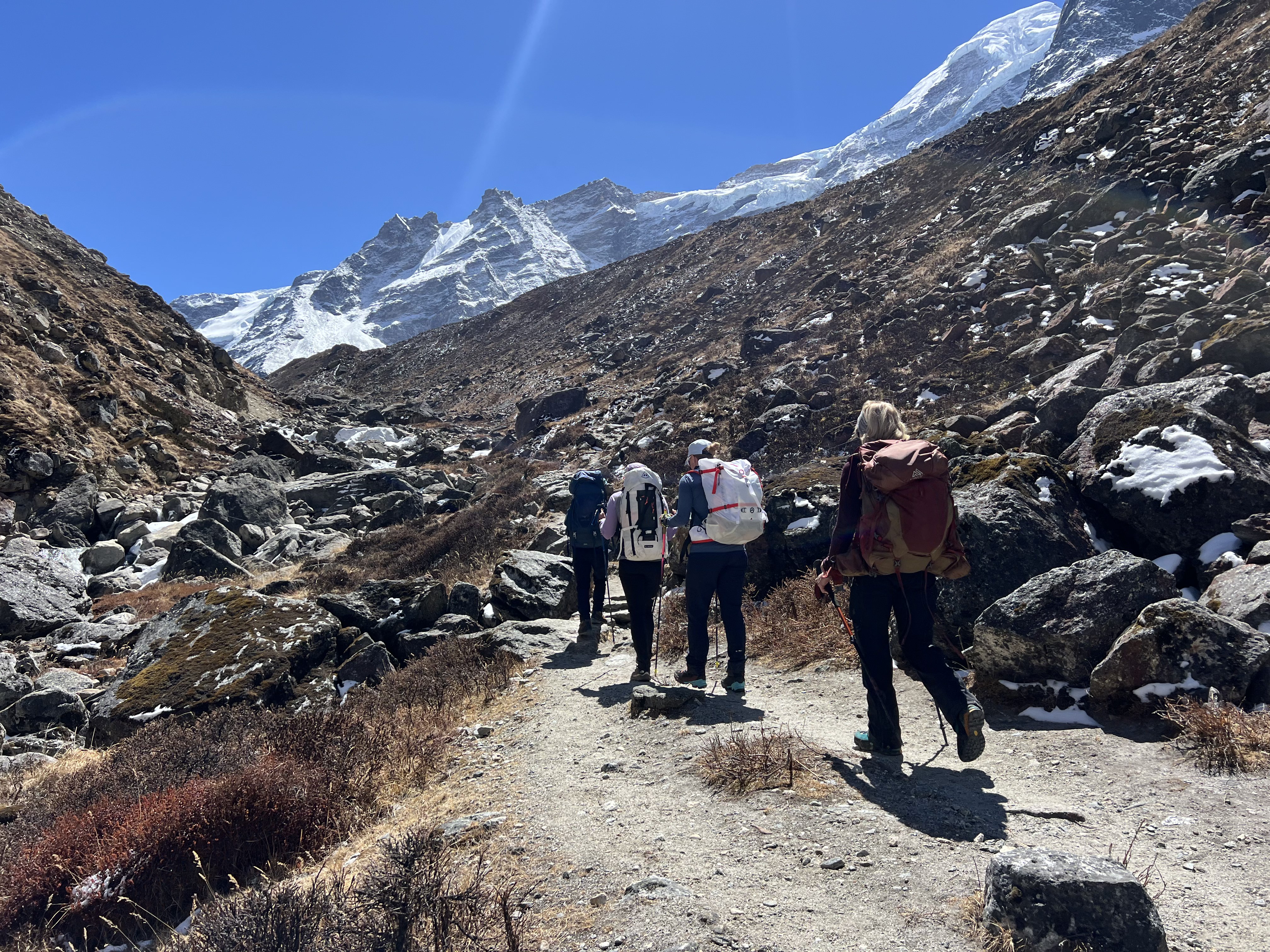
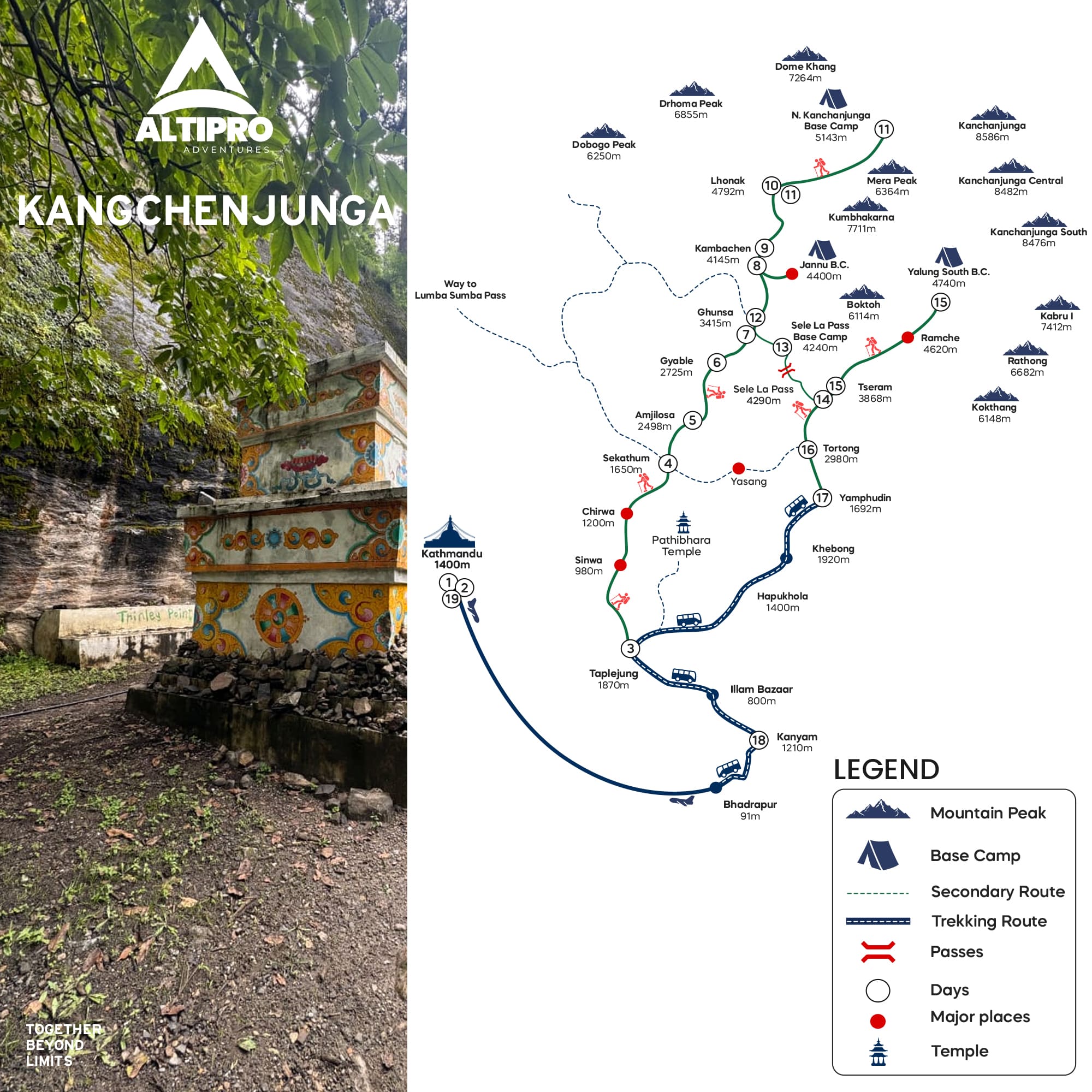
Route Map
Frequently Asked Questions
Find answers to common questions about this trek
Nepal's regulation requires a licensed guide and authorised operator for all trekking in the Kanchenjunga Restricted Area, regardless of group size. Solo trekking without a guide is not permitted. AltiPro provides a dedicated Trek Leader with a minimum group of 2 participants, and can accommodate solo bookings by joining small private groups.
Yes. The Kanchenjunga Base Camp Trek is not recommended as a first Himalayan trek. Prior experience on at least one high-altitude multi-day trek (such as Everest Base Camp or Annapurna Circuit) is advisable. AltiPro's Trek Leaders manage pace and acclimatization carefully, but physical preparation significantly enhances your experience.
The trek is graded Challenging to Strenuous. It involves multi-day trekking at altitudes above 4,000 m, three high mountain passes (Sinion La 4,646 m, Mirgin La 4,400 m, Selele La 4,480 m), and a maximum altitude of 5,143 m at Pangpema. Strong physical fitness, prior multi-day trekking experience, and no serious altitude sensitivity are strongly recommended.
Mobile signal and Wi-Fi are available in Taplejung, Kanyam, and Ghunsa village. Beyond these settlements — particularly on the southern approach and on the trail above Lhonak — connectivity is largely unavailable. AltiPro's Trek Leader carries a satellite phone for emergencies. We recommend a Nepali SIM card for connectivity in lower sections.
Accommodation throughout the trekking route is in local tea houses and basic lodges. Standard rooms feature twin-sharing bunks with simple mattresses and shared bathrooms. In Taplejung, Ghunsa, and Kanyam, slightly more comfortable lodges with private rooms and attached bathrooms are available. AltiPro books the best available options at each stop.
The optimal seasons are Spring (mid-March to late May) and Autumn (late September to mid-November). Spring brings blooming rhododendron forests and stable weather; Autumn offers the clearest skies and sharpest mountain views. AltiPro operates custom departures throughout both seasons.
The optimal seasons are Spring (mid-March to late May) and Autumn (late September to mid-November). Spring brings blooming rhododendron forests and stable weather; Autumn offers the clearest skies and sharpest mountain views. AltiPro operates custom departures throughout both seasons.
The trek reaches 5,143 m (16,873 ft) at Pangpema, the Kanchenjunga North Base Camp. The Oktang Viewpoint above the South Base Camp at Ramche reaches approximately 4,780 m (15,682 ft). Both are attained after structured acclimatization days built into the AltiPro itinerary.
To legally trek this circuit, three government permits are mandatory:
- Kanchenjunga Restricted Area Permit (RAP): Legally requires a minimum of two trekkers or a solo trekker with a licensed guide.
- Cost: ~$20 USD per person, per week.
- Kanchenjunga Conservation Area Permit (KCAP): Supports local environmental and community development.
- Cost: ~$30 USD per person.
- TIMS Card (Trekkers' Information Management System): The national tracking permit required for safety and rescue management.
- Cost: ~$20 USD per person.
Been on this trek?
Your feedback helps other travelers plan their adventure of a lifetime. Share your experience with us!
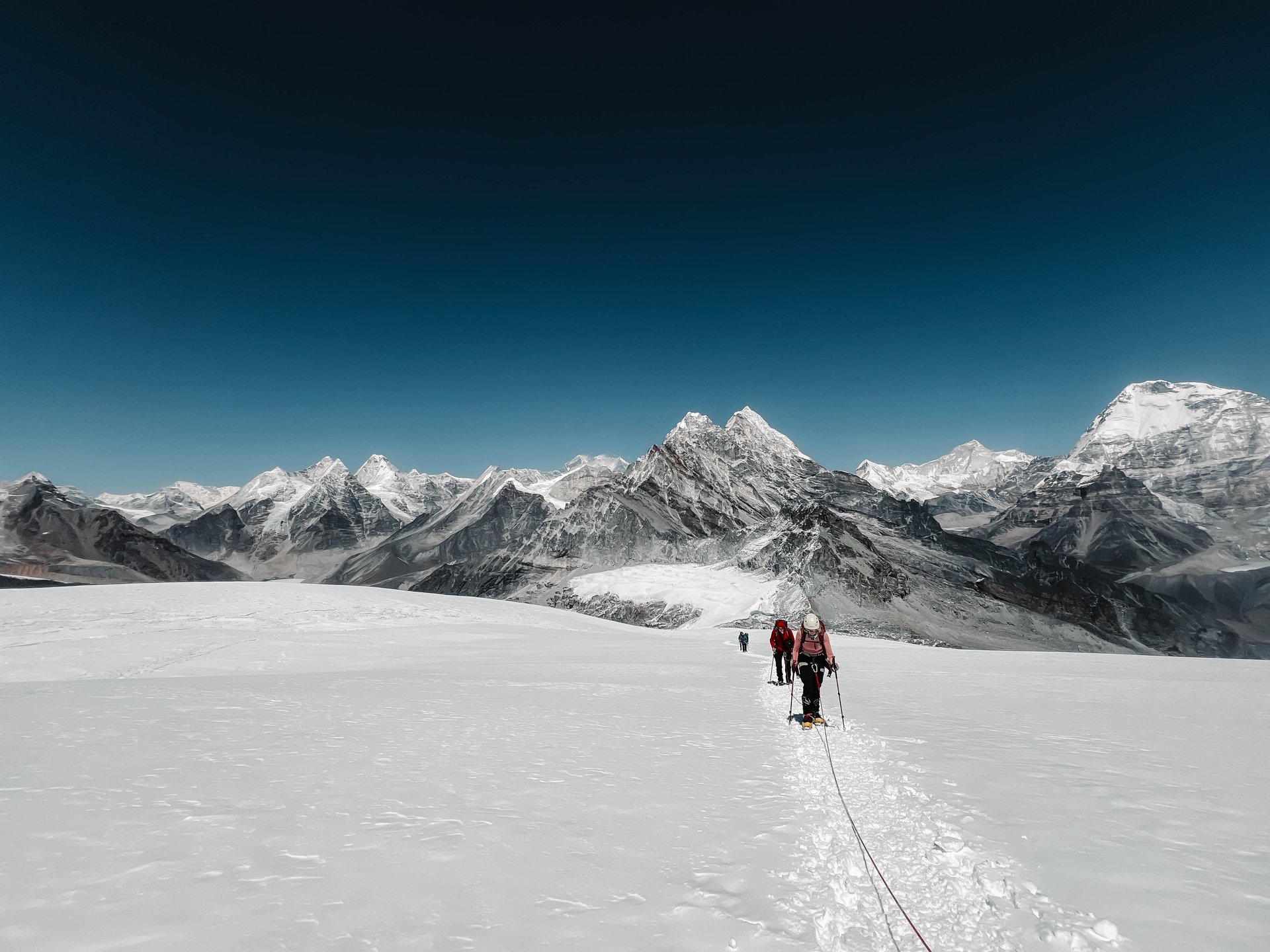
Ready to Start Your Trekking Adventure?
Contact us to book your trek or get more information